

Welcome Joshua Schulze
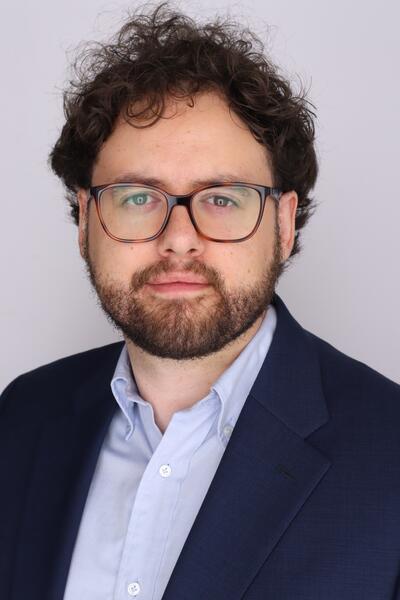
We’re excited to welcome Joshua Schulze this fall as our new Assistant Professor of Teaching in Film. Below, search chair Jon Lewis shares why Joshua will fit right in here:
“Joshua’s research focuses on film workers who often go uncredited and un-noticed – the ‘below, below the line’ workers brought in to do the dirty work on location shoots. His attention to often obscure primary sources – his proper, old-school historical research is very much in line with SWLF’s Core classes in cinema studies.”
Read on for Joshua’s takes on the questions we pose to all new faculty, from his interest in postwar Hollywood to his eclectic taste in film.
Looking back on your campus visit, is there a moment that stands out to you? An interaction or an impression that made you think that you could really be happy here?
I had a really wonderful time visiting Corvallis, so it’s hard to choose one moment in particular. Something I definitely noticed when I had dinner with faculty members, or in the moments before and after my presentation, and even during the campus interview, was just how close and collegial everyone seemed. People asked questions and spoke about each other’s life, work, and family, and it gave me a sense of how close-knit of a community SWLF was. This was something that stuck with me, and played a big role in my decision to join SWLF. Everyone has been so warm and welcoming, and I feel lucky to have been given the chance to become a part of the community!
What are you looking forward to about joining our faculty?
I already touched on it a little, but I’m truly excited to get to know everyone and their work in more detail. Although I’m primarily a film scholar, I studied literature as part of my bachelors degree in the UK, and have experience on the creative writing end as a screenwriter, too. There’s such a great range of expertise, interests, and exciting research projects happening in SWLF, so I’m keen to make time to learn as much as I can about them. For example, there’s a lot of great work being done from an eco-critical and environmental humanities perspective in the department, which is something I have a long-term interest in. That, and hearing more about the work the master’s students are doing, is another thing I’m looking forward to.
Can you share a few films that you love, that you would happily re-watch every year, that helped shape your love of cinema?
Tough question! I’ve been told I have quite eclectic taste (at least, that’s the word I use—I believe what people actually told me was that my taste was “confusing” and “made no sense”), so I’ll mention what I hope are some representative examples. The Iranian film A Moment of Innocence (1996) is one I always come back to, and it never fails to leave me speechless. It’s one of numerous outstanding Iranian films from the 1990s that wrestle, in a quite metatextual way, with the representational limitations of cinema itself. It also has, for me, the best ending in film history. I also love Robert Altman’s McCabe & Mrs Miller (1977), which is the "anti-western” par excellence, and also one of the moodiest and most solemn movies I’ve ever seen—Vilmos Zsigmond’s gorgeously grainy, snowy photography, the Leonard Cohen soundtrack, the chemistry between Warren Beatty and Julie Christie—it’s a classic. What else? Memories of Murder (2003) had a big impression on me when I was younger, and made me want to write about Bong Joon-ho for my undergraduate dissertation. Letter from an Unknown Woman (1948) is, for me, the true masterpiece of ‘classical’ Hollywood, and utterly heartbreaking, too. The Reluctant Debutante (1958) is a film that never fails to make me laugh. As a horror fan, John Carpenter is like a god to me—In the Mouth of Madness (1994) is probably my favorite. I adore Clueless (1995); it’s the Citizen Kane of high school movies. I’ll stop there before things get out of hand.
What is the pleasure of research for you? Where might your research take you in the years ahead?
As a film historian, I feel most invigorated and energized in an archive. I was lucky enough to travel to various libraries and archives around the country during my PhD, but I’m always looking forward to the next trip. It’s a cliché, but the exciting thing about archival research is that you never quite know what you’re going to find, so it’s best to go in with an open mind and to be patient—it’s about loving and taking pleasure in the process of research. As for the future, I’m hoping to turn my dissertation into a monograph, which will focus on Hollywood’s collaboration with the automobile, defense, and domestic volunteering industries during World War II from a labor perspective. Beyond that, I’m interested in thinking about postwar Hollywood and the shift to an outsourcing model as part of de-industrialization, particularly in the 60s and 70s, when a lot of production labor moves to other parts of the world.
What would a dream teaching day look like for you? What might students have read? How might they engage with it in and you in class? (Lots of directions to take this. I’d just love for readers to get a sense of your teaching style.)
As someone who finds a lot of joy in teaching the fundamentals of film analysis, I love watching students pick apart a particular scene or moment in detail together. We might read something like Victor Perkins’s Film as Film, which is the ultimate guide for interpreting films on their own terms. Helping students hone their close reading skills as a group, with each student finding something different in the frame—a particular prop, a detail about costume, performance, or the way the camera moves—is immensely gratifying as a teacher. I can’t tell you how many times a student has picked up on something about a film I’ve seen dozens of times before but had never noticed. Then, when each student contributes their perspective to the scene, we reach a point of having a built a community understanding of the text, which represents the unique perspectives and expertise of whoever is in the classroom. That’s the goal that I strive for!