

Making Mischief by Design:
Inside OSU’s New Zine-Making Course
If you walked past a room at the top of the stairs in Moreland Hall this last winter term, you might have seen—and heard—something unusual going on: students sitting on the floor, cutting images out of magazines and pasting them into tiny collages, folding and stapling paper together into little booklets, and talking excitedly over a an early 90s riot grrrl soundtrack. These students were busy writing and designing zines in Zines: Making Mischief, a new course taught for the first time this year.
Zines (pronounced “zeens”) are self-produced, low-or no-cost amateur publications that have been around for a long time but have seen a recent resurgence. Emerging variously as late-19th century “little literary magazines,” Harlem Renaissance publications, science fiction fan-zines in the 1930s, and punk zines in the 70s, 80s and 90s, “zines” are small print run magazines, often made by one person, and often as an expression of D.I.Y. culture. Zines are also typically free—or almost free—and created for the purpose of expression. Zine makers have something they want to say, and zines help them say it.
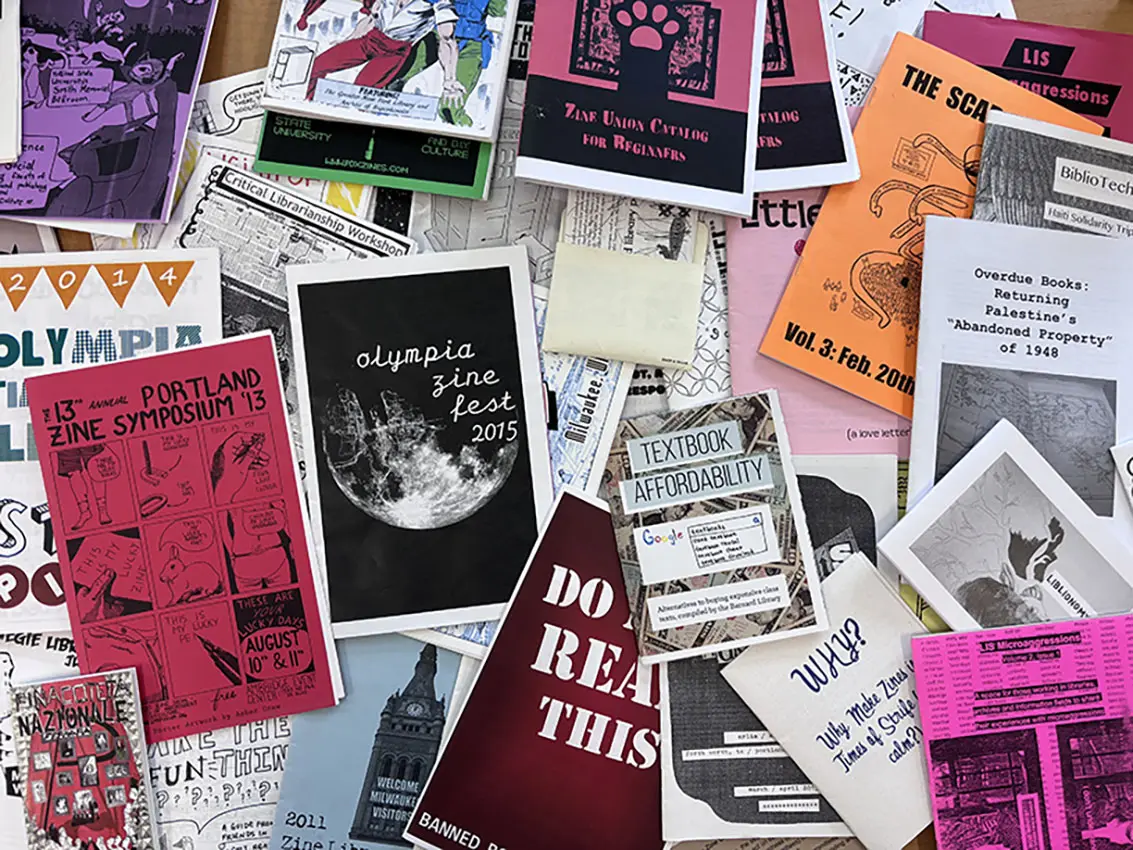
That expressive impulse is what encouraged Ehren Helmut Pflugfelder, Professor in the School of Writing, Literature, and Film, to create a class on zines. “Zines are absolutely having a moment in today’s culture,” Ehren explained. “They can provide a meaningful creative outlet for people in a world where media, and the expressive forms that go along with it, can often seem alienating.”
Because zines are easy to make and typically traded (or sold for a few dollars), they’ve frequently been a tool of those marginalized to speak out or push back against mainstream culture. Often connected with punk subculture, or riot grrrl subculture, Zines have been a key communication tool for those speaking up against oppression, and can help build community, too.
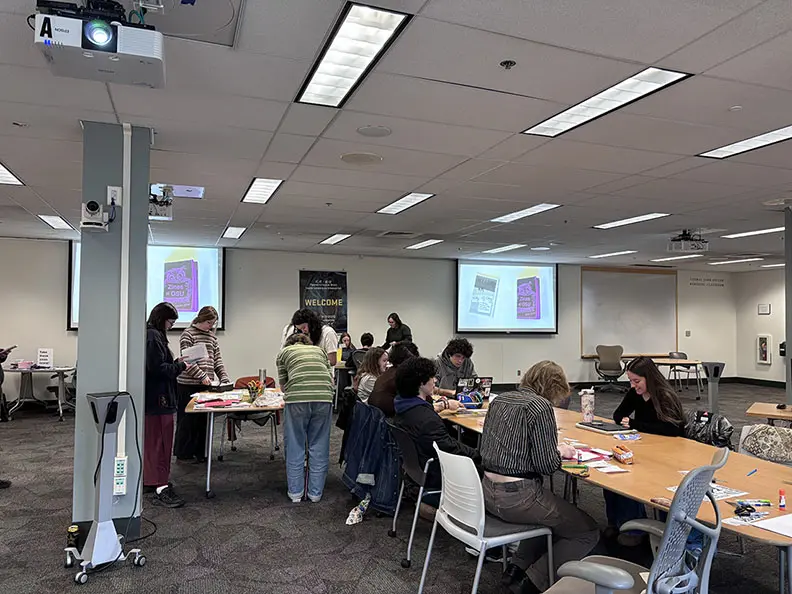
Students also made zines inspired by an in-class experience with the Letterpress Studio run by Associate Professor Karen Holmberg. Students explored type cases, experienced running the big letterpress, and created their own zine cover pages. Getting hands-on with production technologies, whether scissors and gluesticks, typewriters, thread and binding needles, long-arm staplers, or the impressive letterpress hand presses emphasizes that not all forms of modern communication have to be digital.
Unlike social media, zines are often made by hand, using found materials and utilizing crafting techniques that can be accomplished at home. You might see zines designed as a collage, or as “bricolage,” where the juxtaposition of divergent visuals is used to generate critical commentary. Some materials for zines are cut-and-pasted out of magazines, old yearbooks, and seed catalogs, but others are sourced specifically for the zine each student has in mind.
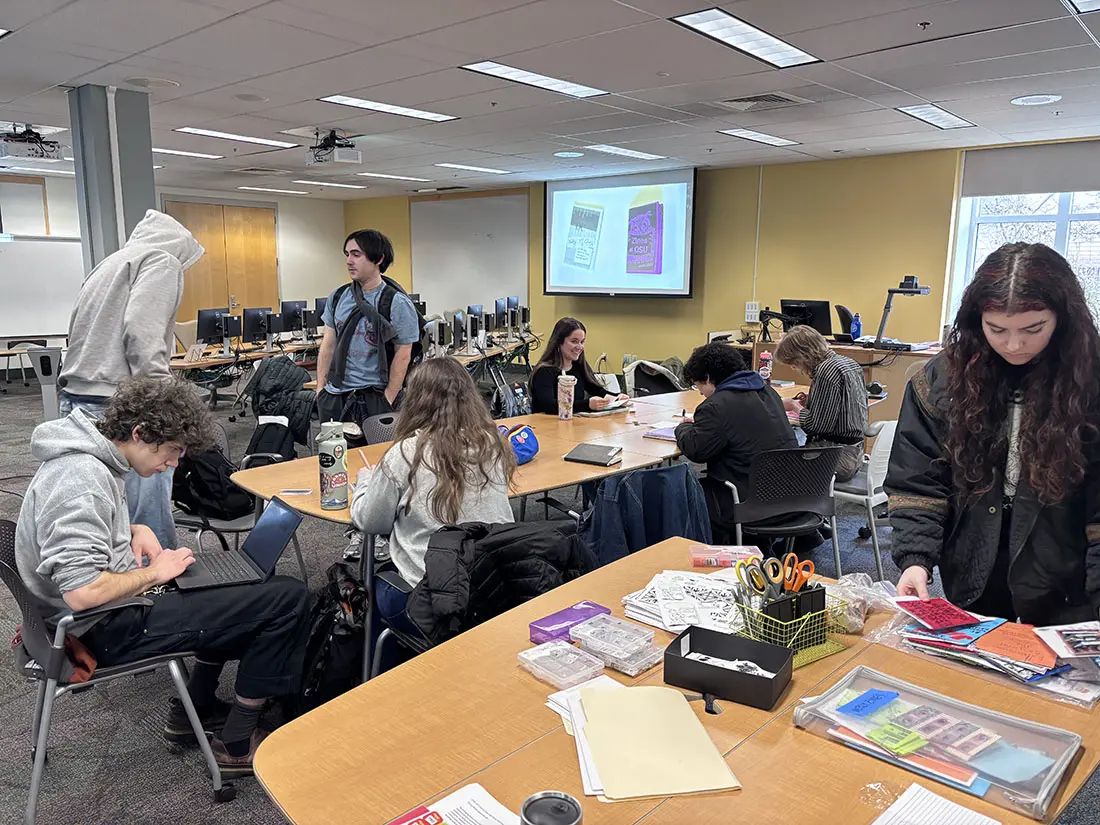
“There is no one thing a zine has to be about,” explained Ehren. “Zines can be about personal ideas and thoughts, a movie the zine writer is nerding out about, or something that angers them.” In Zines: Making Mischief, students create both “weekly zines” on different themes, and a larger print run zine that they share with the entire class. “We’ve made perzines (personal zines) and fanzines (about something students are fans of), but also made collaborative zines, zines that investigate communities, research-oriented zines, and zines that can’t really be classified,” Ehren shared.
The research zines were made with the help of Associate Professor and Student Engagement and Community Outreach Librarian Kelly McElroy. McElroy, a longtime zinester, led an in-library workshop about archiving and collecting zines, both at OSU and beyond. Students explored how to consider their own archival methods, and how libraries should treat the hand-made expression of individuals. Rather than making a PDF of their zines, some students opted to create short videos that preserve more of the materiality of their projects.
It’s that materiality, that handmade quality, that makes zines stand out in a landscape of digital media. SWLF students seem to agree. The class was so popular that there will surely be more mischief-making to come.