CLA Research: Public comment demonstrates overwhelming support for protecting public lands

By Colin Bowyer on Sept. 15, 2025

Associate Professor of Political Science Erika Allen Wolters co-authors a new study that explores the motivations behind the public’s opposition to auctioning protected land adjacent to Grand Teton National Park

Image
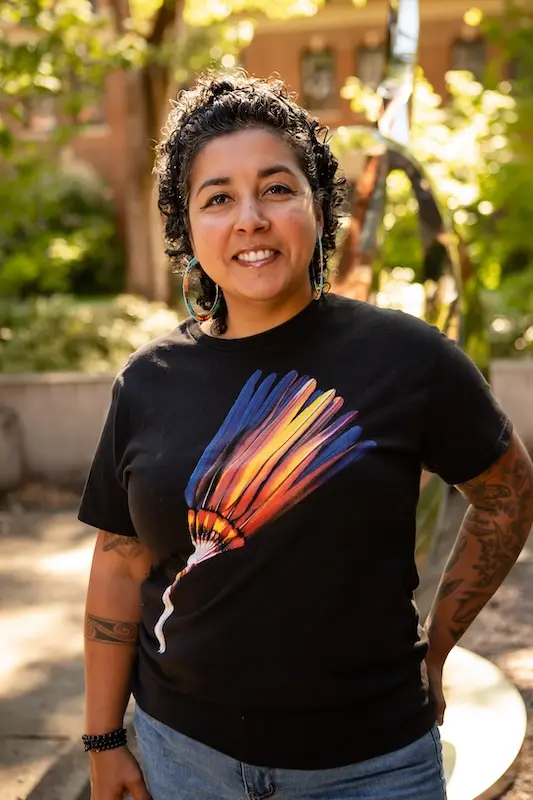
person leaning up against wall smiling at camera

Erika Wolters

By Colin Bowyer, Communications Manager - September 16, 2025

Protected public lands in the Western U.S. are under direct pressure from human development, which threatens habitats, migration corridors, and ecosystem health. Oftentimes in more rural, nature abundant spaces, where housing demand is high and availability is low, land development involves converting public land to housing. Yet, public support of federal or state-owned and managed land in the 11 states that compromise the American West is generally high, with most people opposed to removing the protected status of public lands. 

In 2023, one square mile of state-owned land in Wyoming was considered for private sale because the market value was significantly greater than the current revenue streams. The tract, known as the Kelly Parcel, shares its boundaries with Grand Teton National Park and is considered part of the Greater Yellowstone Ecosystem. Complicating the originally proposed sale to the National Park Service (NPS), which previously bought land around Grand Teton National Park from the State of Wyoming, was this parcel’s proximity to Jackson, Wyoming, where some of the highest land values exist in the U.S. The appraised value of $100 million for the one square mile parcel effectively pushed NPS out of contention and opened up the parcel to auction off for potential private investors. Prior to an action by the state, Wyoming representatives released a plan to auction off the parcel, which allowed for a public comment period.

Combing through nearly 7,000 in-person, mail, and online comments, Erika Allen Wolters, associate professor of political science at the School of Public Policy, Kevin Pirch, professor of political science at Eastern Washington University, and Devin Holterman, postdoctoral researcher at the University of Northern British Columbia, identified several themes and subthemes that were common concerns of people who expressed opposition to the sale. The authors’ findings were published in the Journal of Rural Studies in October 2025.

“Even though, comparatively, this is a small piece of land,” said Wolters, “this parcel assumes outweighed importance because of what the land represents. Particularly for those opposed for reasons of natural preservation and anti-development. People are keenly aware of the increased threat to development on public lands, both for this relatively small parcel and more broadly throughout the West.”

Respondents’ concerns were grouped into five major overarching themes: economic issues, anti-development, natural preservation, access, and pragmatic solutions (i.e. the mechanisms of the potential sale). Many comments in opposition overlapped and blurred the lines between the themes. Recorded by in-person remarks, as well as email and direct-mail correspondence, respondents especially highlighted the financial benefits of tourism and grazing, while also suggesting that a private sale would exclusively benefit the wealthy, cut off access, and hurt local flora and fauna.

“This can be viewed as a class issue and the wealth component of Northeastern Wyoming makes this a really unique, extreme case,” explained Wolters. “Rural gentrification and amenity migration is happening in towns and regions throughout the West and the notion of access to public lands is becoming a bigger concern. In our study, there were clear responses that you could identify as rural resentment.”

Previous studies have shown that conservation of public and protected lands is a bi-partisan issue, with broad levels of opposition. As the American West faces development challenges to public and protected lands, a majority of the public oppose the transition away from protected places for privatization. Current efforts to transfer ownership of federally protected lands in the U.S. have been met with swift and decisive anti-privatization and anti-growth opposition. 

“As more instances of public land are considered for private sale,” Wolters said, “people are asking themselves what is the West going to look like in 5 - 10 years? What do we want it to look like for the next generation? The potential Kelly Parcel sale reinforced the idea that efforts to transfer ownership of public lands will continue to meet with strong opposition, suggesting that modifying public lands for any reason will require substantial buy-in of the public.”

In December 2024, the National Park Service announced that they purchased the Kelly Parcel from the State of Wyoming for $100 million dollars with help from the Grand Teton National Park Foundation.
CLA Research: COVID anxiety and mental wellness

By Colin Bowyer on Sept. 8, 2025

Research by scholars at the School of Communication shows a link between COVID anxiety and avoidance with stress, loneliness, and depression.

Image
man in black shirt smiling at the camera

Colin Hesse

By Colin Bowyer, Communications Manager - September 10, 2025

The ability to express and receive messages of affection is paramount for the health and wellness of both individuals and their relationships. Previous studies have found that the social isolation caused by the quarantine restrictions during the COVID-19 Pandemic, especially in 2020 and 2021, significantly disrupted people’s abilities to share adequate affection. Thus, creating a deficit in affectionate interaction that was associated with loneliness, depression, anxiety, and stress. Few studies, though, have examined whether current levels of anxiety related to COVID would continue to relate to that deficit in affection. 

In a new study published in Communication Quarterly, Colin Hesse, director of the School of Communication, and Salvatore Petruzzella, communication master’s student, as well as Kory Floyd, professor of communication at Washington State University,  find a direct correlation between COVID anxiety, avoidance behaviors, and mental health, whereby higher levels of loneliness, stress, and depressions were recorded in individuals with prolonged anxiety around COVID. 

From the pandemic’s onset starting in March 2020 in the U.S. to the present day, individuals reported experiencing large amounts of health-related anxiety. Originally coupled with new policies regarding protective masks and social distancing to mitigate the impact of the virus, individuals began to have fewer interactions with people outside the household and decreased their amount of engagement with friends face-to-face. This was more apparent for individuals with higher levels of COVID anxiety, who continue to distance more than others and for longer periods of time.

Unsurprisingly, individuals continue to experience benefits and drawbacks to the behavioral changes. For benefits, social distancing lower exposure to the coronavirus. For drawbacks, there has been a relational increase in loneliness, addiction, and depression.

“It’s not fundamentally wrong to have anxiety or fears about morbidity and mortality surrounding the pandemic,” explained Hesse. “As a social species, being around other people and expressing affection is important to our mental wellness. It’s clear that the quarantine restrictions put in place cause more separation, which hurt people’s overall mental health.”

Surveying over 300 people IN 2024, Hesse, Petruzzella, and Floyd measured participants’ COVID anxiety, avoidance behavior, and mental health indicators. The results supported the authors’ original hypotheses: (1) those with higher COVID anxiety distanced themselves more from other people, (2) this avoidance caused individuals to receive less affection, and (3) the lack of affection was related to higher rates of stress, loneliness, and depression.

The wider implications suggest that COVID anxiety can continue to impact a host of behaviors, including fewer social activities, but affectionate communication may buffer the negative health consequences from that COVID-19 anxiety. Understanding the connections between social distancing and mental wellness might help recommendations for public health behaviors during a subsequent pandemic.

“There are innumerable studies about the effects of COVID during and shortly after the height of the pandemic,” said Hesse. “We wanted to look at the continuing effects of the pandemic and show how close interpersonal communication is important to all of us. Studying how COVID anxiety still affects individuals in a post-pandemic world and its direct link to mental wellness is still important to take into account.”


Brook Ferris: Finding focus behind the lens

By Colin Bowyer on Sept. 8, 2025

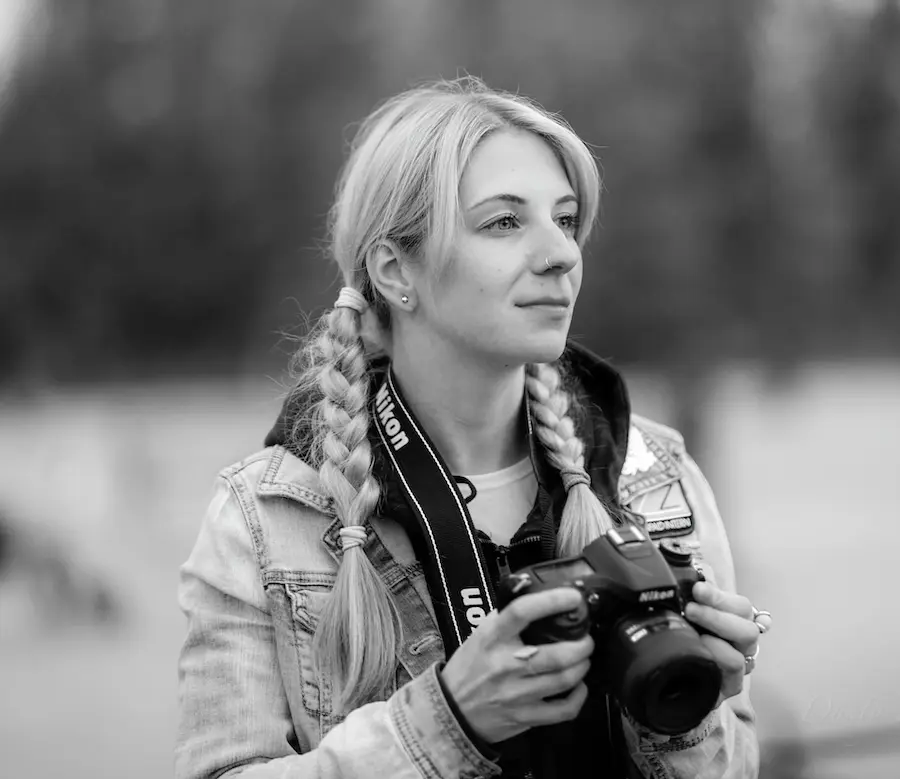
Non-traditional undergraduate student Brook Ferris left behind her career as a pharmacy technician to pursue photojournalism at the College of Liberal Arts

Image
black and white image of a woman holding a camera

Brook Ferris

By Taylor Pedersen, CLA Student Writer - September 10, 2025

Brook Ferris spent nearly a decade in a pharmacy, working behind the scenes helping patients fulfill their medications and navigate insurance plans. It was an enduring job that rarely let up. But in the background, something else had been quietly developing: a growing desire to tell stories—not with prescriptions, but with pictures.

“I had taken this two-week solo trip through Washington,” Ferris recalled. “I planned it all around photography; specific places, scenes, lighting. When I got back, it hit me: why am I not doing this full-time?”

Now in her final year at the College of Liberal Arts, Ferris is prepared to graduate with a degree in photography and a minor in journalism. A non-traditional student and Alaskan transplant, she has already built an impressive portfolio that fuses art, science, and social commentary, and she’s just getting started.

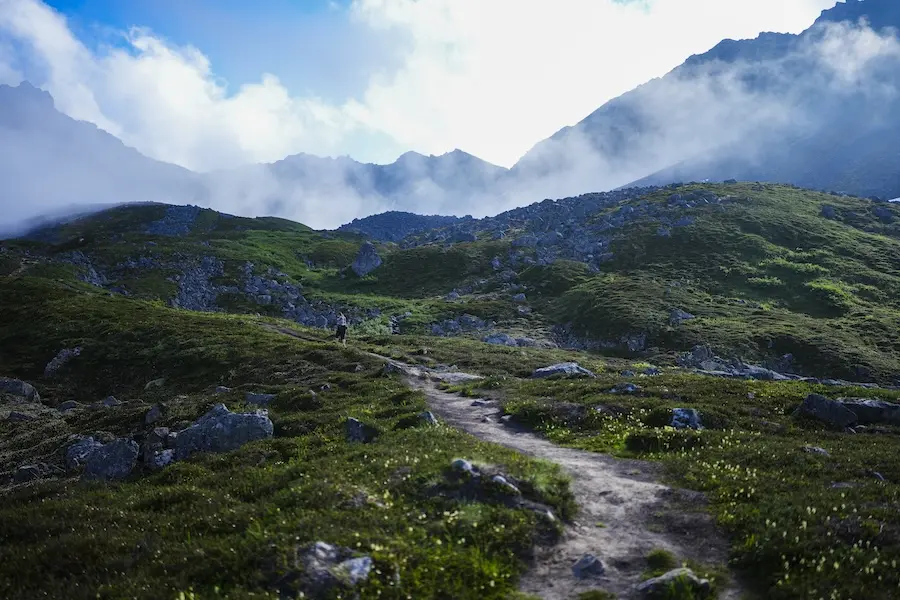
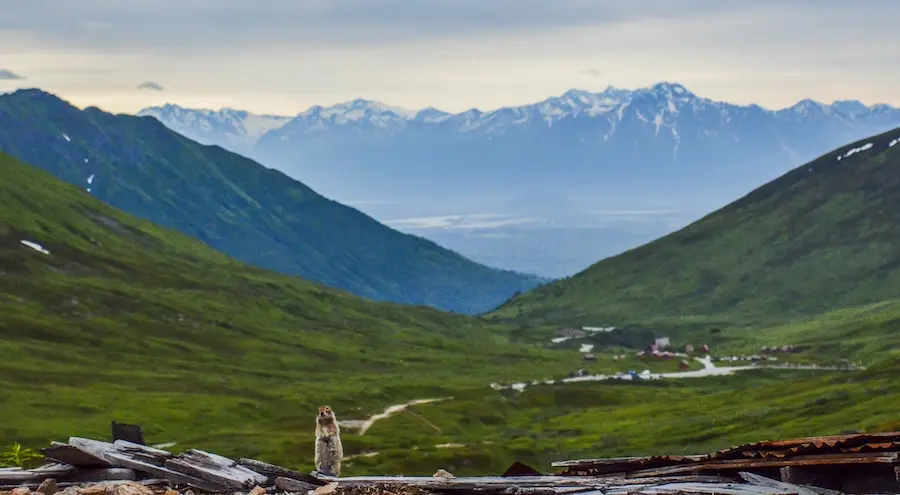
Ferris grew up in Palmer, Alaska, about an hour north of Anchorage, where wilderness wasn’t something you sought; it was simply there. Her childhood was spent camping, fishing, and hiking, often alongside her father, who introduced her to landscape photography.

Though Ferris always had an artistic eye, she didn’t pursue it right away. After high school, she followed her brother to Portland and began working in customer service before becoming a licensed pharmacy technician. For nearly a decade, Ferris worked in the mail-order pharmacies of Walgreens, then at Providence Health Plans, both in the Portland area.

“I cared so deeply about the people I was helping,” she said. “But when you’re constantly dealing with things like unaffordable life-sustaining medications or complicated insurance problems, it starts to take a toll.”

Photography offered a way to slow down, look closely, and—most importantly—connect with others in a way that felt authentic and human.

Ferris started over at Portland Community College, earning an associate’s degree in photography before transferring to Oregon State, the only university in the state to offer a B.F.A. in the subject. She admitted that returning to school in her thirties was intimidating.

“In my first term, I was convinced I’d never make friends,” she laughed. “But then I started meeting other older students. And slowly, I made friends of all ages. That’s been one of my favorite things about Corvallis: the multi-generational friendships I’ve built here.”

On campus, Ferris is far from just a student. She’s worked as a lab technician under OSU photography instructor Evan Baden, interned with former National Geographic editor-in-chief Chris Johns, ‘74, and been named both a PRAx Art+Sci Fellow and a Reser Creative Scholar. Her work blends aesthetics with inquiry, artistry with advocacy.

Ferris’ projects range widely in topic and tone, but they share a common goal: to represent what often goes unseen.

Her Art+Sci fellowship took her into riparian zones, where water meets land, to document the environmental aftermath of wildfires. Despite not having a science background, Ferris embraced her position as an artist, asking “the dumb questions.”

“I’m not a scientist,” she said. “So I always try to figure out how to explain something in a way that I myself would understand. That helps me translate complex environmental stories into something a wider audience can engage with.”

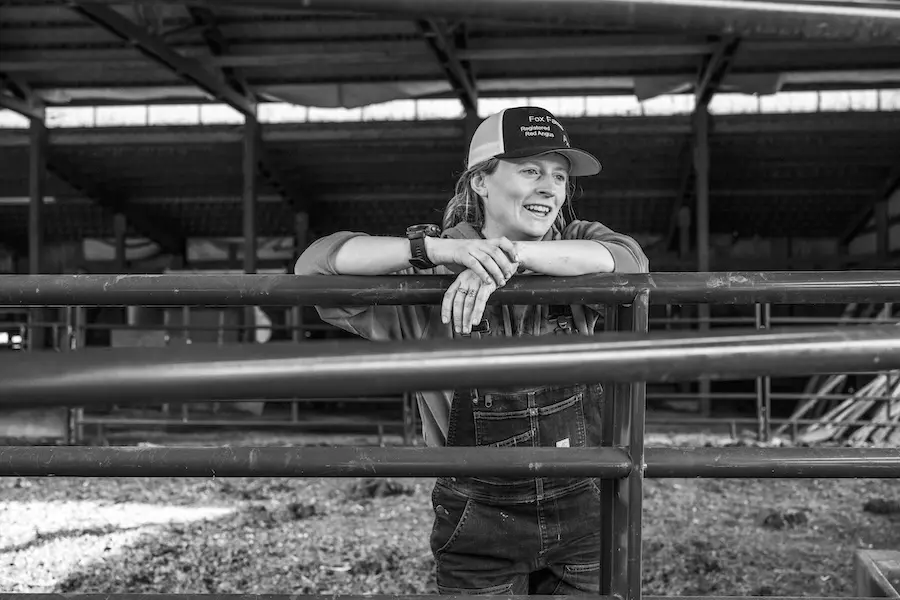
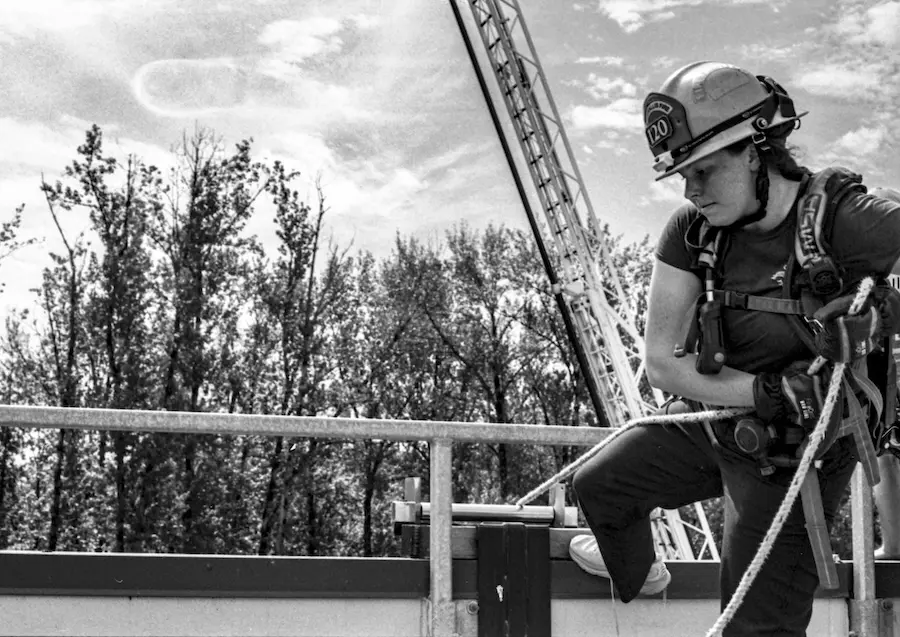
Another long-term project, “Anything You Can Do, We Can Do Bleeding,” focuses on women in male-dominated professions. It was inspired in part by Ferris’ upbringing in a male-heavy populated state and her first job at a shooting range.

“In photo history, we rarely see women represented in these jobs,” she said. “But I knew they were out there. So I started reaching out to the Corvallis Fire Department and the Tangent Fire Department. I was amazed by how excited these departments were to show off their female firefighters.”

Ferris credits much of her growth to the mentors she’s worked with, each one sharpening a different aspect of her craft.

“Chris Johns taught me how to think like a journalist. Evan Baden challenges my visual standards. I joke that he’s fancy, but it’s made me raise my own bar. And Kerry Skarbakka is like the strategist. He’ll sit with me for hours to sort through images and ask what’s working.”

This blend of influences has helped Ferris find her voice: visually rich, narratively grounded, and socially engaged.

Ferris doesn’t shy away from difficult topics. One of her current projects, "Trigger Warning," confronts police violence by examining objects mistaken for weapons. Inspired by national headlines, the series involves photographing people holding everyday items: a hairbrush, a sandwich, alongside portraits of those holding actual firearms. The images blur, reflect, and challenge assumptions.

“I’m in the process of collecting more and more items mistaken for weapons,” she said. “The project asks: when a life-or-death decision is made in a split second, what really counts as a threat?”

She’s also interested in continuing work with Indigenous communities, something rooted in her upbringing and shaped by her experience living in both rural Alaska and urban Oregon.

As graduation approaches, Ferris is looking ahead to a full-time career in photojournalism. Her goal is simple, but urgent: tell the stories that aren’t being told.

“I want people to see one of my photos and think, ‘That’s a great photo,’” she said. “But beyond that, I want them to think about our connections to each other, to the environment, to history. Everything overlaps. I want my work to remind people that they matter, that we all do.”

Image
a woman firefigher spraying a hose of water

Becky Myrold is the Deputy Fire Marshall at the Corvallis Fire Department. | Anything You Can Do, We Can Do Bleeding by Brook Ferris

Image
black and white photo of woman on a farm leaning against a fence

Amanda Fox is a grad student at OSU obtaining her Ph.D. in animal science, as well as an ROTC cadet on campus. | Anything You Can Do, We Can Do Bleeding by Brook Ferris

Image
a woman firefighting on top of a building

Samantha Schmeusser is a firefighter and paramedic with the Corvallis Fire Department. | Anything You Can Do, We Can Do Bleeding by Brook Ferris

Image
landscape photography of mountains in Alaska

"Mom's Path Through the Peaks" by Brook Ferris

Image
landscape of mountains with a groundhog in the foreground

"Eyes on the Last Frontier" by Brook Ferris

Image
landscape photo of Alaskan mountains

"My Stomping Grounds" by Brook Ferris

Image
a shadow of a hand holding an object

A rolled up umbrella photographed in Ferris' home studio | Trigger Warning by Brook Ferris

Image
a shadow of a handing pointing an object

An iPhone photographed in Ferris' home studio | Trigger Warning by Brook Ferris

Image
a shadow of an object being held

A 45-caliber pistol photographed in Ferris' home studio | Trigger Warning by Brook Ferris

Walking in parallel worlds

By Colin Bowyer on Sept. 4, 2025

Assistant Professor of Indigenous Studies Luhui Whitebear writes about her experience navigating a land-grant institution and how Indigenous feminism has been at the forefront of tribal sovereignty

Image
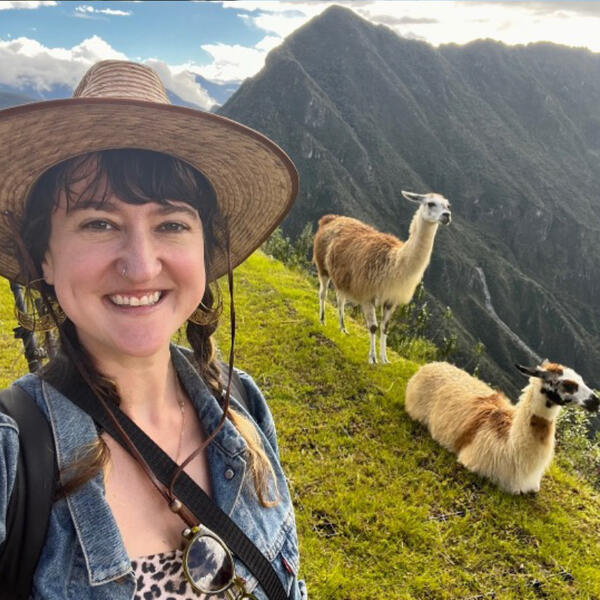
woman in a black shirt and jeans smiling at the camera

Luhui Whitebear

By Colin Bowyer, Communications Manager - September 5, 2025

In two new articles, Luhui Whitebear, ‘03, ‘13, M.A. ‘16, Ph.D. ‘20, draws from her lived experiences as an Indigenous scholar and activist to illustrate how institutional spaces, oftentimes colonial structures, marginalize Indigenous ways of knowing and being. 

In “A Story of Parallel Worlds: Decolonial Possibilities Navigating Institutional Spaces,” written in 2022, but published in July 2025’s issue of Decolonial Possibilities: Indigenously Rooted Practices in Rhetoric and Writing, Whitebear describes these institutions as “parallel worlds” — places where Indigenous people must constantly navigate between their cultural identities and the dominant norms of academia.

“As I think of decolonial possibilities while navigating institutional spaces,” Whitebear writes, “I think of the ways in which they are created: who creates them, the parameters around them, and the institutional limitations. However, I also think of the ways in which institutional practices are connected to land—whose land we are on and the larger implications this has in working from a decolonial lens.”

Through her experience at Oregon State, Whitebear outlines how working at the kaku-ixt mana ina haws cultural center, as well as helping craft the university’s land acknowledgment, has centered the impact of settler colonialism, alongside the necessity of protecting and honoring Tribal sovereignty. 

In Whitebear’s chapter in The Routledge Handbook of Contemporary Feminist Rhetoric, titled “As Long As the River Runs: Rhetorics of Indigenous Feminist Activism,” they center on the enduring resistance of Indigenous women against settler colonialism, particularly through feminist activism rooted in Indigenous knowledge systems.

“I wanted to write about treaties and how Indigenous women have always been political through their experiences navigating with settlers,” explained Whitebear.

Women in Indigenous communities have continuously resisted settler colonial efforts aimed at genocide, natural resource extraction, and assimilation. This community-centered resistance is framed not only as survival but as a form of rhetorical and activist power. Whitebear also introduces the importance of rhetorical sovereignty, whereby Indigenous peoples reclaim their narratives and rhetorical spaces by challenging dominant discourses in academia, media, and policy. 
The title metaphor, “as long as the river runs,” reflects how Indigenous feminist activism is embodied, ongoing, and tied to land, water, and cultural survival.

“Ultimately,” explained Whitebear, “the chapter is a call to action for institutions to recognize and support Indigenous epistemologies, and for Indigenous scholars to continue carving out spaces of possibility and resistance within academia.”


New CLA Faculty Starting in Fall 2025

By Keith Van Norman on Sept. 3, 2025
Ables
Scott Ables
Lecturer
School of History, Philosophy, and Religion

Scott Ables is interested in the history of Christianity, historical, and systematic theology. His research focuses on the intellectual history, cultural context, and theological program of the eighth century theologian John of Damascus, especially his treatment of Christology and Trinitarianism in the light of conciliar schism and desired Nicene peace in his local Syro-Palestinian context, while exploring John on sectarianism, polemic, heresy, canon, tradition, and pilgrimage. Ables teaches students to think historically, critically, and that writing is thinking, so don’t let someone or something else do it for you.

bader
Alyssa Bader
Assistant Professor
School of Language, Culture, and Society

Alyssa Bader received her Ph.D. in anthropology from the University of Illinois at Urbana-Champaign. Her research program integrates genomic, archaeological, and community-held knowledge to investigate relationships between diet and health in past and contemporary Indigenous communities. This community-collaborative research includes reconstructing the diet and microbiome of past peoples using ancient DNA and stable isotope methods, and assessing how the oral microbiome of communities today has been shaped by traditional foods. Bader is Alaska Native (Tsimshian) and focuses her research on the Pacific Northwest coast, primarily in southeast Alaska and British Columbia, where she has several partnerships with Indigenous nations and organizations.

A central component of Bader’s research program is developing resources and guidance for ethical and just genomic research in collaboration with Indigenous nations. She is an alum and current instructor of the Summer internship for Indigenous peoples in Genomics (SING) USA program. Previously, she held positions as an assistant professor of anthropology at McGill University, a postdoctoral research associate at the University of Colorado Boulder, and an NSF postdoctoral research fellow at the Sealaska Heritage Institute in Juneau, Alaska.

Chen
Chris Chen
Assistant Professor of Emerging Media and Technology
School of Communication

Chris Chen’s research examines how individuals use and perceive emerging media technologies, particularly artificial intelligence. Chen is especially interested in how the design of AI media technologies influences users’ perceptions and trust in the systems. Her most recent publications have appeared in SSCI journals, including Communication Research, Human-Computer Interaction, International Journal of Human-Computer Studies, New Media & Society, Social Media + Society, and Behaviour & Information Technology. She has also presented at major international conferences, such as AEJMC, ICA, NCA, and ACM Conference of Human Factors in Computing Systems (CHI). Chen’s work has been featured in mainstream media outlets like National Geographic and USA Today.

Brian Elliott
Brian Elliott
Instructor
School of History, Philosophy, and Religion

Brian Elliott has taught college-level philosophy continuously since 1998, initially at the University of Edinburgh and University College Dublin, before moving to Oregon in 2008. He held a full-time faculty position at Portland State University from 2011 to 2025. Building on a foundation in modern and contemporary European thought in the phenomenological tradition, Elliott's research and publishing profile has branched out to encompass architecture and urbanism, literature and culture, and political theory. He is the author of numerous articles and seven monographs in these areas, including Benjamin for Architects (Routledge, 2011), Natural Catastrophe: Climate Change and Neoliberal Governance (Edinburgh University Press, 2016), and The Roots of Populism: Neoliberalism and Working-Class Lives (Manchester University Press, 2021). His latest book projects, scheduled for publication in 2025, are A Child’s Place in Nature: From Romanticism to the Anthropocene (Bloomsbury) and a new edition of Art and Its Significance (SUNY Press).

Follo
Mary Follo
Instructor
School of Public Policy

Mary Follo received her Ph.D. in political science from the University of Oregon. She specializes in American politics and public policy, specifically with a focus on housing policy. Follo teaches a wide variety of classes, including research methods, presidential and congressional politics, public administration, and conspiracy theories in U.S. politics.

Erik Fredner
Erik Fredner
Assistant Professor
School of Writing, Literature, and Film

Before coming to Oregon State, Erik Fredner earned his Ph.D. in English from Stanford, did a postdoc at the University of Virginia, and was visiting assistant professor of data science at the University of Richmond. Erik studies literature and literary culture using computational methods, including large language models. His research has been published in PMLA, Nineteenth-Century Literature, and elsewhere. His first book project shows how statistical thinking influenced U.S. literature over the long nineteenth century. Fredner collaborates on computational literary studies projects with colleagues at the Stanford Literary Lab, the University of Pennsylvania Price Lab for Digital Humanities, and elsewhere.

Dr. Anna-Christine Grant
Anna-Christine Grant
Instructor
School of History, Philosophy, and Religion

Anna-Christine Grant earned her Ph.D. in history at Carnegie Mellon University, then taught as a visiting assistant professor at Occidental College in Los Angeles before coming to OSU. Her expertise is in modern Russian and French history, particularly histories of cities, childhood, and crime.

guasco
Anna Guasco
Assistant Professor of Marine Studies
Marine Studies

Anna Guasco is an interdisciplinary researcher working across blue humanities/critical ocean studies, political ecology, geography, and environmental history. She earned her PhD in Geography at the University of Cambridge as a Gates Cambridge Scholar. Her teaching and research interests center around environment-society issues, with particular interests in conservation, wildlife, environmental justice, memory, and oceans/coasts. Her current book project examines narratives, histories, and justice issues circulating around the migration and conservation of gray whales along the North American Pacific Coast. She is a member of the inaugural editorial team for the H-Oceans network, and she previously worked as a park ranger at Channel Islands National Park. 

Cordero
Dannelle Gutarra Cordero
Instructor
School of Language, Culture, and Society

Dannelle Gutarra Cordero is joining the ethnic studies program as a full-time instructor. Prior to OSU, she was lecturer in African American studies, Latin American studies, & gender and sexuality studies at Princeton University, while also being affiliated with the global health program, the Center for Digital Humanities, and the Center for Health and Wellbeing at Princeton University. Having earned a Ph.D. in history from the University of Puerto Rico, they were a visiting fellow at Harvard University and are currently a fellow of the Higher Education Academy and the Royal Historical Society. Her book, titled She Is Weeping: An Intellectual History of Racialized Slavery and Emotions in the Atlantic World, was published by Cambridge University Press in 2021 and was named finalist for the Outstanding First Book Prize of the Association for the Study of the Worldwide African Diaspora.

Keifer
Cara Keifer
Clinical Assistant Professor
School of Psychological Science

Cara Keifer earned her Ph.D. in clinical psychology from Stony Brook University. She completed her clinical internship and postdoctoral fellowship at the Yale Child Study Center where she went on to serve as a clinical assistant professor. She has clinical expertise in the assessment and differential diagnosis of developmental disabilities. Her research has focused on using EEG and event-related potentials to better understand social cognition in neurodiverse and neurotypical children and adults.

tim kelly
Tim Kelly
Assistant Professor
School of Visual, Performing, and Design Arts

Hailing from Norwich, U.K., Tim is a theatremaker, designer and technologist with work spanning disciplines including lighting, video, performance, and interactive media. Their research explores work that plays with form and sits at the intersection of performance, accessibility, and technology. They received their M.F.A. from the University of Maryland earlier this year, with their thesis entitled “Captioning the Imagination: Creative Type and Access in Hip Hop Anansi and Beyond.” Tim’s work was seen at PRAx last year in his collaboration with Dance-Squared and has recently appeared in projects and productions in the U.S., U.K., and New Zealand.

Khawar Latif Khan
Khawar Latif Khan
Assistant Professor Teaching
School of Writing, Literature, and Film

Khawar Latif Khan completed his Ph.D. in Communication, Rhetoric, and Digital Media at North Carolina State University, where he also earned an M.S. in Technical Communication. His teaching and research focus on technical communication, user experience, and digital media, with a particular interest in design and social justice. In his doctoral dissertation, Khawar examined how nonprofit organizations in Pakistan navigate collaboration in resource-constrained environments and developed an activity-centered design framework for a knowledge- and resource-sharing platform. His work combines empirical study and design research to highlight how communication, technology, and organizational practices intersect in socially situated contexts. Outside of work, Khawar enjoys exploring new coffee shops, watching and playing cricket, and traveling.
Khan
Shaina Khan
Instructor
School of Language, Culture, and Society

Shaina (shy-nah) Khan, Ph.D. ‘25, earned a B.S. and an M.Eng. in biological and environmental engineering from Cornell University in Ithaca, New York, and an M.A. in women’s, gender, and sexuality studies from the University of Louisville. Khan’s research areas include queer diaspora, anticolonial literature, and conceptions of gender and sexuality in cultures of the Indian subcontinent. She is also a licensed professional engineer with a background in water, waste management, and air quality. Khan received her Ph.D. from Oregon State University, where she served as a graduate assistant with the Hattie Redmond Women and Gender Center for several years.

Kendon Kurzer
Kendon Kurzer
Assistant Professor of Teaching
School of Writing, Literature, and Film

Kendon Kurzer (Ph.D., UC Davis) works at the nexus of Writing Across the Curriculum and multilingual writing. He has served as a Writing Across the Curriculum Director and has taught writing classes in engineering, business, food science, education, and health sciences; developmental/first year writing (primarily for multilingual students); language support courses for international graduate students; and tutor/teacher training courses for 17 years across the higher education landscape. His work has appeared in The WAC Journal, TESOL Quarterly, Assessing Writing, and elsewhere. Kendon is originally from Michigan and is a fan of local farming (you can take the boy out of the farm...).

Maisano
Toni Maisano
Professor of Teaching
School of Communication

Toni Maisano (Ph.D, University of Nebraska-Lincoln) is a qualitative researcher who studies communication about social identity and difference in close personal relationships like the family. She is interested in understanding how religious and political identity and difference impact communication dynamics in these relationships, including how people maintain relationships across significant differences as well as how evolution and change in one’s own religious and political beliefs impacts their sense of identity and how they communicate those changes to others. She will teach courses in family and interpersonal communication, communication theory, social identity and intergroup communication, and communication about mental health, among other subjects.

Wesley Mathis
Wesley Mathis
Instructor
School of Writing, Literature, and Film

Wesley Mathis grew up in the Missouri Ozarks and earned an M.A. at Oregon State University, where he was awarded the Lisa Ede Award for Excellence in Composition Instruction. His teaching and research interests include first-year writing pedagogy, translingual composition practices, and science communication, the latter showcased in publications like “Learning to Write Like a Scientist: A Writing-Intensive Course for Microbiology/Health Science Students” in ASM Journal of Microbiology and Biology Education, Special Issue on Science Communication. Mathis has taught writing at institutions throughout the Willamette Valley for more than a decade.
McDade
Monique McDade
Assistant Professor of Teaching in Early American Literature
School of Writing, Literature, and Film

Monique McDade received her Ph.D. from the University of Nevada, Reno. Her teaching and research centers women writers of the long 19th century, with a focus on the multiethnic American West. Her monograph, California Dreams and American Contradictions: Women Writers and the Western Ideal (University of Nebraska Press, 2023), critiques a 19th-century rhetoric of progress as it is co-opted by violent ideologies such as Manifest Destiny. Prior to joining Oregon State, she completed an Andrew Mellon Postdoctoral Fellowship at Kalamazoo College, where she subsequently served as digital humanities fellow, constructing the Place-Based Teaching for the Humanities website. She employs place-based and community-engaged pedagogies to capture 19th-century cultural histories and to help foster partnerships between academic institutions and the communities they serve. 

Nelson
John P. Nelson
Assistant Professor
School of Public Policy

John P. Nelson is an interdisciplinary scholar with a background in science studies and innovation policy. His research interests include the governance of emerging technologies; the role of science in politics and policymaking; and the evolution of knowledge and technology. Nelson’s current projects focus on ethics and responsibility in development and implementation of artificial intelligence; the effects of AI on scientific and technological progress; and the role of science in democracy. Nelson received his Ph.D. in human and social dimensions of science and technology from Arizona State University. Prior to arriving at Oregon State, he was a postdoctoral fellow in the Jimmy and Rosalynn Carter School of Public Policy at the Georgia Institute of Technology. His most recent book, with Barry Bozeman, is An Advanced Introduction to Innovation and Public Values, published by Edward Elgar.

Rury
Derek Rury
Assistant Professor
School of Public Policy

Derek Rury’s work focuses on the economics of education, particularly how students’ and parents’ beliefs influence their educational decisions and outcomes. He also studies the labor market consequences of those decisions as well as how educational institutions and policy shape the way students think and behave. Derek holds a Master of Public Administration degree from New York University. He completed his Ph.D. in economics at the University of California at Davis and then worked as a postdoctoral fellow in the Harris School of Public Policy at the University of Chicago.

Sana Saboowala
Sana Saboowala
Assistant Professor
School of Language, Culture, and Society

Sana Saboowala is an interdisciplinary scholar in anthropology focusing on how lived experiences impact the body. Her research interests include the impacts of colonialism on the body, oral narratives and health, and the social study of science. She holds a Ph.D. in integrative biology from the University of Illinois Urbana-Champaign, where she explored the molecular embodiment of intergenerational trauma and migration in South Asian immigrants to the United States.

Joshua Schulze
Joshua Schulze
Assistant Professor of Teaching
School of Writing, Literature, and Film

Joshua Schulze was born in South Africa but grew up and studied in England, before completing his Ph.D. in film, television, and media at the University of Michigan. His research focuses on the relationship between race and labor in film and media production cultures, and he is currently working on a book project about Hollywood’s response to the Second World War from a labor perspective, particularly in relation to location shooting. His research has appeared in American Quarterly, Screening the Past, and numerous anthologies, and has been supported by an Andrew W. Mellon Endowed Fellowship from the Harry Ransom Center at the University of Texas at Austin.
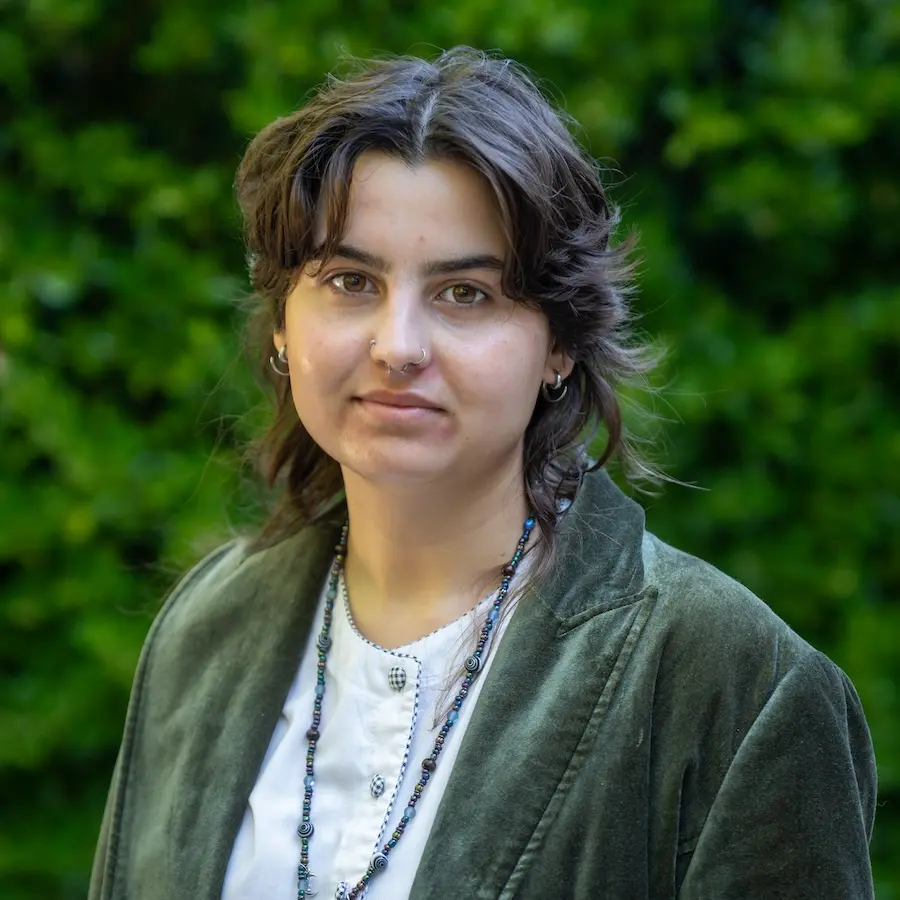
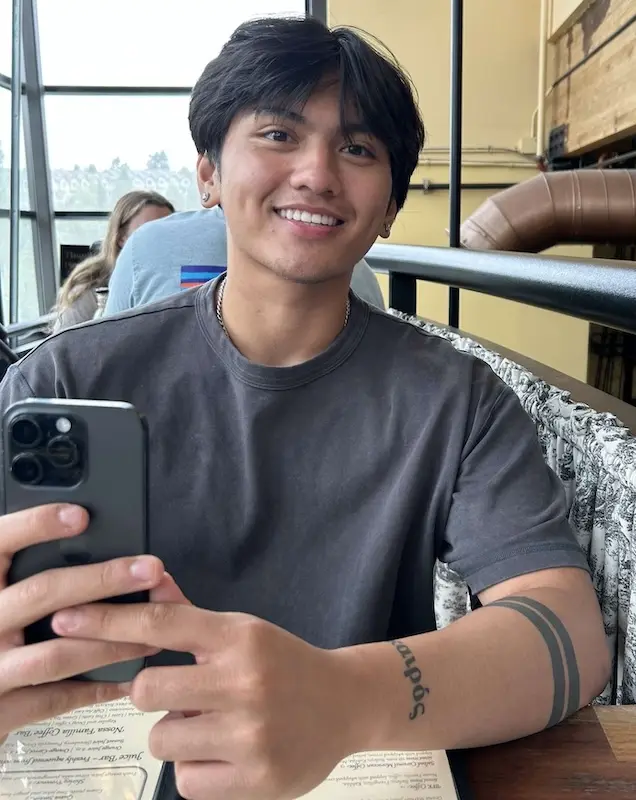
Rebekah Sinclair
Rebekah Sinclair
Assistant Professor of Teaching
School of History, Philosophy, and Religion

Rebekah Sinclair’s research and teaching takes place on interdisciplinary shores where environmental and animal ethics, Native American philosophies, and feminist philosophies meet the sciences. Her recent publications, grant awards, and upcoming courses all critically examine epistemic and normative frameworks that render issues like climate change, invasive species, biological individuality, and ecosystem/species management intelligible in morally and often scientifically problematic ways. She is also currently immersing herself in the blue humanities and philosophy and sci-fi; creating international study abroad courses that center Indigenous persons and knowledges on issues like climate change and biodiversity loss (like PHL 476 in Peru); and developing both on- and off-campus experiential courses, including some at the Oregon coast (PHL 472) and one on Love, Sex, and Desire (PHL 225) that’s run like a Dungeons and Dragons campaign. She can usually be found scuba diving looking for sharks, reading a book that includes space ships, or doing some cliche PNW outdoor activity with her pup.

Peter Wallace
Peter Wallace
Instructor
School of History, Philosophy, and Religion

Peter G. Wallace earned his Ph.D. at the University of Oregon. Over the past four decades, he has taught undergraduate courses in all areas of pre-modern European history from Antiquity to the French Revolution. He has published a monograph on the post-Reformation period in the Alsatian city of Colmar, where he explored the shifting relations between its Protestant and Catholic communities. His articles and essays have covered a variety of historical events in the Swiss, German, and French areas of the early modern Upper Rhine Valley. His textbook, The Long European Reformation, appeared in a third edition in 2019. He is currently working on a revised and enlarged fourth edition.

Vaulting into the School of Communication

By Colin Bowyer on Sept. 3, 2025

Carey, a senior in the School of Communication, shares how the digital communication arts program is supporting her on and off the mat

Image
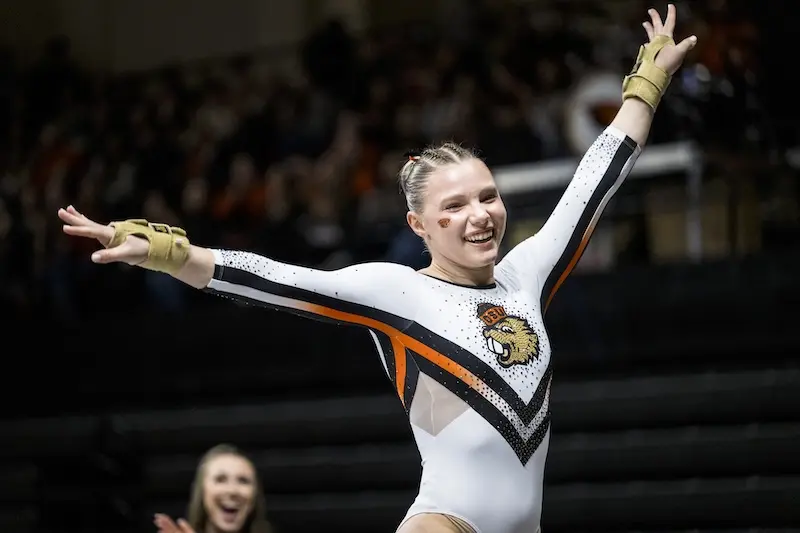
a gymnast performing in a white suit

Carey competing versus UC Davis in February 2025 | Credit: Karl Maasdam, Oregon State Athletics

By Colin Bowyer, Communications Manager - September 19, 2025

While gymnast Jade Carey was winning conference championships for Oregon State and a slew of medals as part of the U.S. Olympic team, she was also working towards earning her degree in digital communication arts (DCA) from the School of Communication.

Now in her final year as a student at OSU, Carey reflects back on her involvement with the DCA program and School of Communication.

When did you decide on majoring in digital communication arts? What attracted you to it?

I decided to major in digital communication arts during the winter term of my sophomore year. I have always had an interest in the way people connect through media, especially being an elite gymnast with social media playing a big role in my life. DCA felt like the perfect fit for combining my athletic experience with my creative side.

What have been some of your favorite experiences of the DCA program?

One of my favorite parts of the program has been how hands-on it is. I have really enjoyed classes where we got to work on real projects like designing content and video editing. One of my favorite classes within DCA was Motion Design Foundations (NMC 385), taught by instructor Carmen Tiffany. This class allowed me to turn some of my gymnastics content into really special projects. All of my professors have been super supportive and patient with teaching such advanced skills. They have worked with my schedule and helped me grow both creatively and professionally.

How has the School of Communication supported your pursuits as a student-athlete?

The School of Communication has been incredibly understanding, supportive, and flexible with my athletic commitments. Whether I was traveling for collegiate competitions or training intensely for the Olympics, my professors and advisors worked with me to make sure I stayed on track academically. They were always encouraging me and gave me the tools I needed to succeed in the classroom while being able to chase all of my athletic dreams.

How will your experience in the DCA program benefit you beyond your time at Oregon State?

The DCA program has given me valuable skills that go far beyond my sport like how to connect with audiences, tell stories, and use digital platforms in a creative way. Whether I stay involved in gymnastics or try something new in the future, I feel prepared for whatever comes next.

As a student-athlete, choosing DCA was one of the best decisions I made. It allowed me to grow outside of gymnastics and express myself in new and creative ways. Being a student-athlete can be challenging, but DCA helps you find your voice and passions beyond your sport.

An adventure in environmental communication

By Colin Bowyer on Sept. 1, 2025

How Aidan Craig Sundine found her passion and path as a communication scholar

Image
woman in grey sweatshirt and scarf sitting in chair and similing at the camera

Aidan Craig Sundine

By Selene Lawrence, CLA Student Writer - October 1, 2025

Recent graduate Aidan Craig Sundine, ‘23, M.S. ‘25, is ready to make a name for herself in the field of environmental communication. Once a marine science student, Craig Sundine flourished after realizing her love of communication studies. She became unstoppable after transferring to OSU, completing her bachelor’s and master’s degrees one year earlier than expected. Now leaving Oregon behind to start her Ph.D. at the University of Utah in fall 2025, Craig Sundine reflects on how her past four years of study shaped her life and the start of her career as a scholar-practitioner.

Born and raised in Seattle, Craig Sundine’s childhood and early education were the primary influences on her academic values, love of nature, and sense of community. “I had a really great opportunity to go to the more alternative schools in Seattle, both for elementary and middle school. I got a lot of support when I was struggling to find ways to love learning. It's definitely shown me that learning isn't just studying and memorization, but it's lifelong, and can be something that you can really embody,” she explained. “There were many learning opportunities related to the outdoors and the local community. I knew about the layers of soil in my backyard in first grade, and how those things impact our food. I really grew up connected to the place I was in.”

Craig Sundine’s appreciation for the natural world guided her decision to apply to the University of Hawaii-Hilo’s marine science major for her undergraduate program. However, her propensity for communication studies was realized early during her time there. While taking a public speaking class her first semester, Craig Sundine’s professor urged her to explore her talents in communication; she changed her major soon after. Following her passion, Craig Sundine felt like she was on the right track, but there still seemed to be something missing. The small university, surrounded by miles of forest and sequestered on the east coast of Hawaii’s largest island, was a big change from Craig Sundine’s home in Seattle. Despite her love for nature, she began to feel isolated. 

A year and a half after beginning her undergraduate studies, the COVID-19 pandemic began, and Craig Sundine’s classes were moved online. She had already been contemplating transferring schools, so she decided to return to the Pacific Northwest, finishing her sophomore year while staying with her extended family in Salem, Oregon. On an impulse, she took a tour of Oregon State University. For Craig Sundine, that was the day when her path would finally become clear. “I saw the library at OSU, and I just cried,” she said. “I was in tears, and I just knew that I had to be here. I had been touring colleges since I was 14 years old. I heard a lot of people talk about this moment when you just knew where you were supposed to be. It wasn’t until I saw the library that I understood what they meant.” A few months later, Craig Sundine transferred to OSU. 

Now at a university with a larger school of communication, Craig Sundine approached her studies with an ever-growing zeal. Just like her first semester at the University of Hawaii-Hilo, her drive as a student and scholar did not go unnoticed for long. “My first quarter here, I was taking visual rhetoric with Dr. Goodnow. Within a few weeks of being in her class, she encouraged me to look into doing a master's here at OSU,” Craig Sundine recalled. “She’s why I went to grad school. From my first term here, it was something that I knew I was going to be doing. I knew that all of my work had to get me ready for it.” In addition to Dr. Goodnow, recently retired professor Dr. Gregg Walker also played a role in shaping Craig Sundine’s academic goals. “I've taught under him; he's given me an astounding number of opportunities to work with him on different projects,” she explained. “He's been huge in helping me figure out the ultimate path I want to have.”

Above all else, Craig Sundine credits her advisor, fellow environmental communication scholar Dr. Yanni Ma, for helping her develop her thesis and build her practice in the field. “She has pushed me when I needed it and has gotten me incredibly far,” said Craig Sundine. “My thesis was my first time creating and running an experiment in quantitative research. To learn about study design, I would read four or five articles every week, then we would sit in her office and she would quiz me. I learned so much. She built a lot of my skills from the ground up.” 

After completing her undergraduate program, Craig Sundine decided to focus on environmental communication in graduate school. Her thesis focused on environmental identity and decision-making around sustainable consumption. “Environmental identity is a subset of place theory. It’s rooted in how a place becomes integrated into self-concept, reflecting the meaning individuals assign to themselves in relation to the natural world,” Craig Sundine explained. “Those with a high degree of environmental identity tend to experience a sense of spiritual connection with nature and a heightened concern for both environmental and humanitarian issues. You can use it to see down the line, to estimate what people are willing to engage in or think about.” 

Knowing that she would be conducting surveys with a student population, Craig Sundine chose to explore sustainable consumption by researching students’ relationships to the fast fashion industry. Her study weighed responses to both positive and negative messaging around engaging in sustainable choices, with messages about both local and global impacts of fast fashion. “The local and global messaging didn't impact students’ thoughts—a lot of that probably has to do with increased globalization—but positive and negative messaging did,” said Craig Sundine. “When it came to emotional response, we saw that negative emotions had a higher impact on people intending to make more sustainable choices. But those negative emotions can result in fatigue, so people are less inclined to carry out those decisions long-term. Positive emotions like hope and excitement can help with that.” Craig Sundine concluded that there is potential for further research on the source of these emotions and the influence of environmental identity, but for now, she’ll be expanding her horizons on other topics of study.

The next stage of Craig Sundine’s academic journey will take her to the University of Utah, where she will continue to explore environmental communication and branch out into risk communication on environmental concerns. “I want to have sustainable consumption as a line in my overarching work,” she said. “There's a lot of connection between the communication department there and other environmental-focused groups on campus, and a lot of crossover in that research. I'm excited to play into the strengths of the place that I'm moving to.” 

Craig Sundine has much to look forward to at the University of Utah, but given her love for OSU, this bittersweet parting may not be the last goodbye. “I really feel like I've built a home here. I'm going to miss seeing the faculty daily and seeing the students the year under me progress day to day,” she said. “I would love to come back and teach at OSU in a decade. I love teaching; it's never been something that I've been scared of. I think that's part of how I know it's what I'm supposed to do. I've learned so much, and I've grown so much as a person while in Corvallis, but I know I have to leave to come back. It'll be good to see what this next stage has in store.”


An Eden with only Eves

By Colin Bowyer on Sept. 1, 2025

Undergraduate student Cecily Evonuk illuminates forgotten queer histories in the rural Pacific Northwest

Image
person wearing a white shirt and a green jacket standing in front of a green bush

Cecily Evonuk

By Taylor Pedersen, CLA Student Writer - September 3, 2025

On a hazelnut farm outside Silverton, Oregon, Cecily Evonuk grew up surrounded by art, agriculture, and stories. Their parents (both artists) fostered a childhood that blurred the lines between creativity and labor, history and imagination. Now, as a senior in the College of Liberal Arts, double majoring in history and women, gender, and sexuality studies (WGSS), with a minor in studio art, Evonuk is weaving those early influences into groundbreaking scholarship on queer communal living in rural America.

“I was a queer person growing up out in the middle of nowhere,” Evonuk said. “So I started to get fascinated with others who also sought rural life as a place to build queer community.”

That fascination became the foundation of Evonuk’s undergraduate research. A deep dive into lesbian and queer communal spaces in the Pacific Northwest: largely undocumented histories of resistance, care, and complexity. While mainstream queer histories often focus on urban centers like San Francisco or New York, Evonuk set their sights on more rural spaces. Their project, which examines communes established in the 1970s in places like Grants Pass and Estacada, Oregon, is as personal as it is political.

“There’s this misconception that queerness only exists in cities,” Evonuk explained. “But rural life, despite its challenges, offered freedoms too. I could dress like a tomboy on the farm, and it was just seen as practical. It didn’t raise questions the way it might have elsewhere.”

The work is academically rigorous and emotionally resonant. Evonuk not only combed through archival material as a Tee A. Corinne Memorial Travel Fellow at the University of Oregon, but also conducted oral history interviews, including a conversation with the now-octogenarian co-founder of a lesbian collective in Grants Pass. That moment, spanning generations of queer experience, was one of the most meaningful in Evonuk’s academic life.

“She told me about how she embraces change, even when some of her friends don’t,” Evonuk recalled. “It really struck me how we connected across time and identity. I could see my future self in her.”

Their research is also surprisingly global. During their fellowship, Evonuk discovered love letters, community newsletters, and artwork that reflected deep interconnection among queer collectives across the U.S., Canada, and even Europe. “The archives were full of beautiful, handmade things. And the fact that these groups communicated across such vast distances without modern technology? It was honestly inspiring.”

But beyond nostalgia, Evonuk believes these histories offer concrete lessons for today. “These communities had robust systems for mutual aid, conflict resolution, and collective care,” they said. “There’s a lot we can learn from them, especially as LGBTQ+ people still face geographic and cultural isolation.”

Evonuk’s work has already reached beyond academia. They’ve presented at the Oregon Historical Society and the Western Association of Women Historians, where audiences were often surprised and delighted to learn about rural queer life in conservative-leaning towns like Grants Pass. “That’s the most fun part,” they laughed. “Challenging assumptions about what queer life looks like, and where it can thrive.”

Their academic pursuits are deeply informed by their creative background. Art and activism, they say, are inseparable. “Studio art, history, WGSS—it’s all in conversation. Art is a record. It’s also a form of resistance. Making art, studying art, writing about it, it all deepens how I understand queer history.”

Looking ahead, Evonuk plans to pursue a Ph.D. and eventually teach. For them, the dream is not just to produce scholarship, but to build spaces: classrooms, exhibits, and books that nurture others the way their professors did for them. “The educators who shaped me made me feel seen. I want to be that person for someone else. And in a time when a lot of what I study is under attack, I want to be part of protecting and sustaining these histories.”

If given the chance to curate an exhibit or write a book based on their research, Evonuk already has the perfect title: An Eden with Only Eves, borrowed from a presentation they gave earlier this year. The project would be collaborative and multimedia, just like the communities it celebrates.

“I’d want it to reflect the complexity of these histories,” they said. “There was beauty, and there were flaws. There was community, but also exclusion. I think we have to hold both truths, and ask how we move forward carrying what was good, and leaving behind what wasn’t.”

With a future as bright as their intellect is sharp, Cecily Evonuk will continue to dive into a new kind of historical storytelling, one that refuses erasure, embraces nuance, and invites everyone to the table.


Bringing psychology to Nepal

By Colin Bowyer on Sept. 1, 2025

Undergraduate student Liberato Domingo combines his interests in religious studies and psychology to expand his academic and personal horizons

Image
person taking a selfie at a restaurant

Liberato Domingo

By Ellie Webb-Bowen, CLA Student Writer - September 3, 2025

Entering his junior year, psychology major and religious studies minor Liberato “Lib” Domingo initially chose OSU to pursue pre-med. Domingo was planning to follow in the footsteps of his parents and other family members who work in healthcare, but when the COVID-19 Pandemic forced him to stay home, he started exploring other interests that he didn’t necessarily have time to invest in before.

Domingo committed himself to a regimental meditation and exercise routine for the purpose of self-development. He also began reading self-help books and journaling, something he hadn’t done before.

“The early months of the pandemic provided me time and space to do a lot of reflecting,” he said. “The natural progression with me being alone led to me being a little bit more introspective.”

Now following the interests discovered during the initial months and years of the pandemic, Domingo’s passion and curiosity for psychology has taken him to Dr. Sabine Huemer's Nature Engagement Studies (NEST) Lab. The research lab focuses on environmental psychology and studying how people’s surroundings, especially natural environments, enhance our well-being. Last spring, Domingo conducted a literature review on the outcomes of meditation in nature versus indoors, and, now, he is following up in that same field by assisting with a NEST Lab study that’s looking at the correlation between time spent meditating outside and one’s own mental health/productivity. 

“My favorite part here at OSU has been being able to build relationships with some of the professors and learn more about their research,” said Domingo. “I also really prefer the smaller classes; I feel more engaged with the content and my peers,” 

Some of Domingo’s favorite classes have been Introduction to Islamic Traditions (REL 214), taught by religious studies instructor Dr. Matthew Lynch and Personality (PSY 370), taught by psychology instructor Dr. Allegro Johnson.  

This upcoming fall term, Domingo is studying abroad in Nepal alongside faculty and peers from the School of History, Philosophy, and Religion. Led by Associate Professor of Religious Studies Dr. Geoffrey Barstow, students will attend the Rangjung Yeshé Institute in Kathmandu, where they will study Buddhist philosophy by traditionally trained monks. 

“I'll be taking Buddhist meditation classes and conducting a deep reading on a very core Buddhist text called the Way of the Bodhisattva,” he noted. “It’s important to engage in different modes of thinking. I’m expecting to experience a very different way of life being in Nepal. I hope to bring back that experience, what I’ve learned, and what habits I’ve picked up, back to OSU. 

After graduating in 2027, Domingo is considering applying to graduate school to become a clinical psychologist or counselor. 

“My interests are in psychodynamic and depth psychology,” explained Domingo. “So, I think this narrows down what schools I’ll be looking at, but I know that the psychology and religious studies programs here at OSU have already expanded my horizons and set me up for success.”


Mapping restrictive covenants in Benton County

By Colin Bowyer on Aug. 26, 2025

A multidisciplinary project led by researchers at the College of Liberal Arts and College of Earth, Ocean, and Atmospheric Sciences aims to locate and digitally map restrictive housing covenants from before 1948

Image
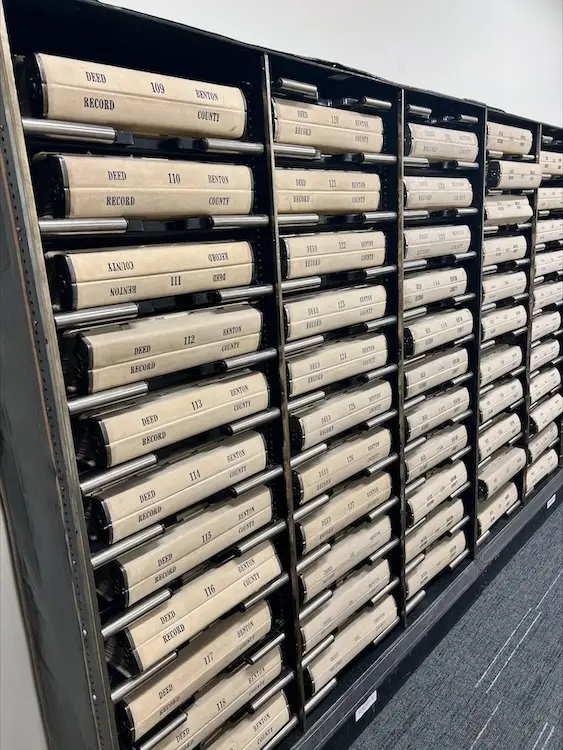
a cabinet full of paper binders

Binders of housing deeds in the Benton County archives

By Colin Bowyer, Communications Manager - August 28, 2025

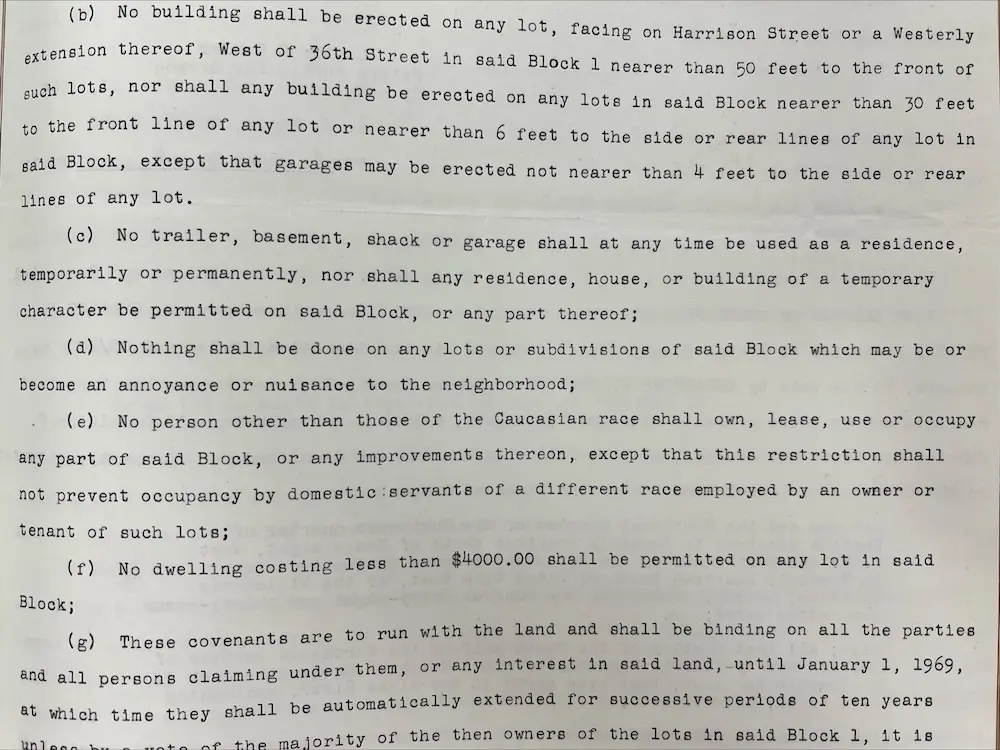
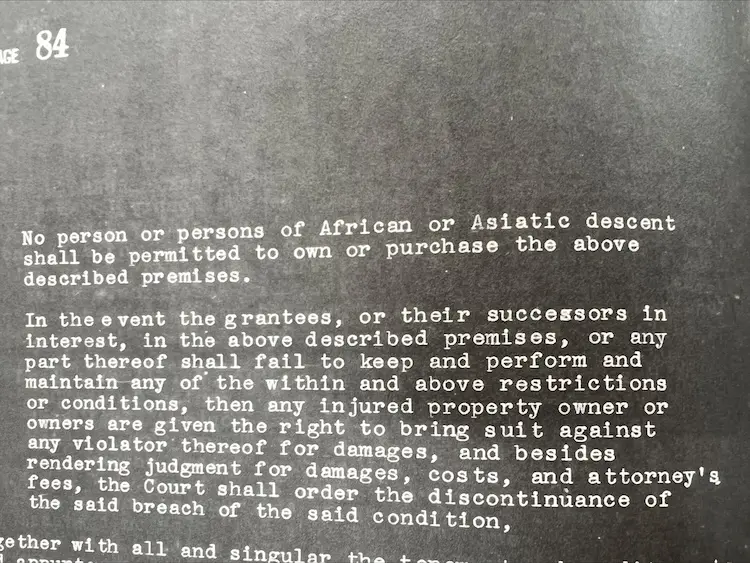
Racial restrictive housing covenants have existed in Oregon since the mid-19th century. Recorded when a lot was created or home was built, these clauses inserted into deeds specifically excluded Black, Pan-Asian, or Indigenous individuals from purchasing lots, as well as building and residing in residential structures. Coupled with the practice of redlining undertaken by banks and realty groups, people of color were systematically prevented from homeownership across the country. It was not until the Federal Fair Housing Act of 1968 that the racial restrictive covenants became illegal, yet, 150 years later, restrictive language continues to appear in land deeds across Oregon.

 In a new multidisciplinary research project, Associate Professor of History Marisa Chappell and Assistant Professor Jim Thatcher in the College of Earth, Ocean, and Atmospheric Sciences are collaborating to map existing restrictive covenants in Benton County, Oregon. 

Inspired by a similar research project in the Seattle region by University of Washington History Professor James Gregory, Chappell and Thatcher, along with three undergraduate research assistants that came to the work through the URSA Engage program, are combing through property records to document racially restrictive covenants throughout the 679 square miles of Benton County.

Chappell and Thatcher chose to look at covenants put in place prior to 1948, because that year the Supreme Court found racial restrictive covenants to be legally unenforceable based on the Equal Protection Clause of the Fourteenth Amendment. In 2024, Oregon congressional bill ​​HB3294 went into effect that required county clerks to review and replace discriminatory language in housing covenants.

“We’re in the midst of a very laborious discovery phase,” explained Chappell. “A majority of the deeds in the archives are not digitized and many are missing or incomplete, which will require us to do some additional digging. Compounding the issue is that restrictive language in housing covenants is not always located in a consistent section of the deeds. You can’t just flip to a specific page and always see one.” 

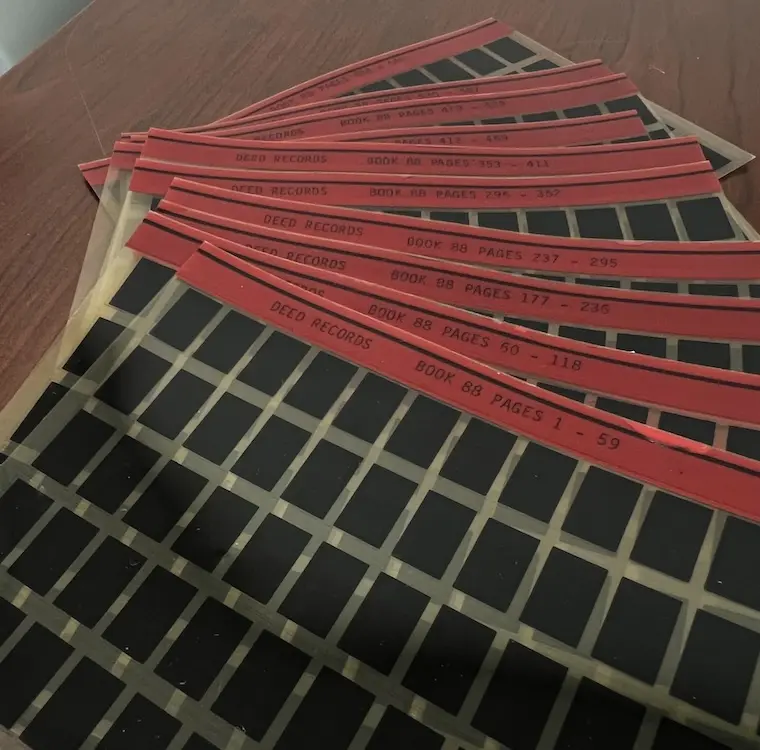
Addie Landstrom, a senior majoring in geography and geospatial science, as well as minoring in sociology, was one of the URSA students who participated in archival research. Landstrom and her peers, Ekansh Gupta and Addison Hancock, conducted a systematic review of over 35 volumes of deed records from 1925 to 1948. After two weeks of reviewing records that had already been digitally scanned by Benton County, their data collection focused primarily on historical deed records accessed via physical book form and microfilm. 

“For me,” Landstrom explained, “being a part of this project was an eye-opening experience in archival work. I learned just how much time and effort goes into a historical map making project like this. Every part of it is significant, even though sometimes you feel like you’re not making any progress.”

Landstrom, Hancock, and Gupta presented their findings at the Undergraduate Humanities Conference in spring 2025. 

Thus far, Chappell, Thatcher and the URSA students have found 19 racially-explicit covenants tied to plots in the city of Corvallis, as well as more than a dozen references to additional racial covenants that have not yet been specially documented. They have also found other restrictive covenants that contributed to racial exclusion with language regarding class and wealth, including rules specifying that the home built on the lot needs to be of a minimum value. 

After the Benton County housing records have been reviewed, the second phase of the project will involve Thatcher’s cartography team, as they try to digitally map where the racial covenants existed in Benton County.

"Finding a match between deeds from the early 20th Century and the land plots that exist today in Benton County is going to be a huge endeavor,” said Thatcher. “Unlike in some more urban areas, the deeds from before 1948 do not necessarily match existing plots today and don't always rely on standardized measuring units, like [the surveying tool] Gunter's chain.” 

For instance, the research team is finding that the plot measurements aren’t consistent across counties in Oregon and occasionally use reference points, such as a named stone wall or street sign, that no longer exist. Even when recognizable measurements are used, the researchers found several deeds that use no longer existing streets or even one that uses the location of a long-gone horse hitching post as a reference point.

“There are so many layers to this project,” Thatcher continued. “The amount of data manipulation needed to create spatial data is certainly a challenge, but we also need archival expertise, data expertise, and geospatial expertise.”

For now, Thatcher is working on developing the methodology for accurately applying the archival data to a modern system of measurement and cartography. Nevertheless, the team hopes to wrap up its archival discovery phase in fall 2025 and work on creating an interactive digital map for winter 2026.

“This project is significant for many reasons,” Chappell said. “But it really goes to show the value of building an interdisciplinary team, as well as think about how data infrastructure and legacies are incorporated into modern society.”

Image
typed text on paper

An example of a restrictive housing covenant in Benton County

Image
housing deeds on microfilm

Pages of housing deeds on microfilm

Image
microfilm text

An example of a restrictive housing deed in Benton County