Kari Hoy

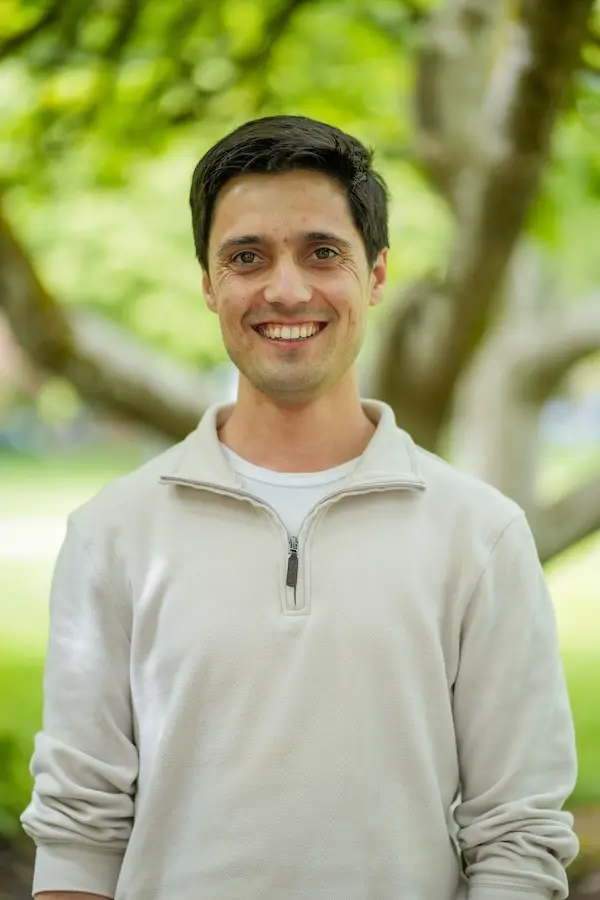
During her senior year, Hoy applied and received an Experiential Learning Scholarship from the College of Liberal Arts, which allowed her to travel to Washington D.C. for Pi Sigma Alpha’s annual conference. Not only did Hoy attend the national political science honors society’s convention, she also participated in a panel discussion focused on the ongoing war on Ukraine, referencing her own research from a class she took on the subject from Dr. David Bernell

By Keith Van Norman on May 20, 2026

Between equations and essays: How Khawar Latif Khan found a language for both

By Colin Bowyer on May 19, 2026

Technical communicator Khan bridges the literary and STEM world through written word by translating complexity into clarity

Image
Khawar Latif Khan

Khawar Latif Khan | Credit: Kiarra Ruff

By Taylor Pedersen, CLA Student Writer - May 21, 2026

Khawar Latif Khan used to sit in engineering lectures and write stories no one was meant to read. In the margins of dense notes on circuits and systems, he doodled with fragments of fiction, strange and unstructured, written quickly before attention snapped back to the front of the room. “The word that I use to describe my creative writing is weird,” Khan said. “It did not make any sense… it was just free writing.”

At the time, he saw writing as just a habit, maybe even a distraction. Growing up in Pakistan, Khan’s academic trajectory was largely decided for him long before he stepped into a university classroom. Students who performed well were funneled into a few options: medicine or engineering. Humanities and creative fields existed, but were much less visible, less stable, and lacked support.

“If you’re good in academics, you kind of have these three or four different areas to choose from,” Khan said. “No one was really thinking about the humanities and social sciences.”

He chose engineering simply because it was presented to him. At his college, Pakistan Institute of Engineering and Applied Science, the options narrowed even further to choosing between electrical and mechanical engineering. He enrolled in electrical engineering and stayed for four years. By the time he realized it wasn’t what he wanted to do, it felt too late to leave. There were no alternative programs to pivot toward and no visible models of what a different path could look like. He finished, but between lectures and exams, Khan made himself a private promise: If he couldn’t change direction now, he would later. He didn’t know exactly what it would be, only that it had to be different.

That promise carried him further than he expected. After graduating, Khan applied to graduate school and received a Fulbright Master's Scholarship, one of the most competitive academic awards in the world. It was, by any measure, a turning point. But it came with a condition: the funding applied only to engineering. Khan accepted.

“I’d be lying if I said I wasn’t feeling good about it,” he said. “I was really happy.” 

The scholarship brought him to North Carolina State University, where he enrolled in a electrical engineering program. For the first time, he was in a new country, surrounded by new possibilities. And for the first time, the promise he had made to himself began to feel urgent. Within three weeks, he knew he couldn’t stay in engineering.

“I wasn’t feeling good in the classes,” Khan said. “It’s not that I wasn’t getting good grades. It was more about not feeling that I belonged in that particular space.”

Changing direction wasn’t close to simple. His scholarship, his visa status, and his academic standing were all tied to engineering. Walking away from the program meant sorting through layers of bureaucracy, uncertainty, and risk. But the alternative, staying, felt worse. A conversation with a friend, Hammad Abbasi, helped clarify the stakes. 

“People die to get an opportunity to come to the U.S.,” Khan recalled him saying. “If you don’t make the most of it, that will be a disservice to yourself.”

So Khan started looking. He searched through course catalogs and program descriptions, looking for something that felt even slightly aligned with the interests he had carried privately for years. That’s when he found it: a master’s program in technical communication. He had never heard of the field before.

“I was like, the name seems interesting,” he said. “Then I started looking into it.” 

Technical communication, as Khan described it, is the practice of translating complexity into clarity; explaining scientific or technical processes in language that everyday people can understand. It was, in many ways, exactly the bridge he had been searching for: a space where his engineering background could coexist with his instinct for writing. More importantly, it showed him that the divide he had experienced growing up, the separation between STEM fields and the humanities, wasn’t as fixed as it had seemed.

“I saw people with backgrounds in engineering and computer science coming here to learn writing and communication,” Khan said. “That helped me understand this is not a path that is unheard of.”

With support from faculty and approval from the Fulbright program, Khan made the switch. He went on to complete his master’s degree and later earned a Ph.D. in communication, rhetoric, and digital media, building a career at the intersection of technical expertise and human understanding. Now, as an assistant professor of teaching in the School of Writing, Literature, and Film, he brings that same intersection into the classroom.

Khan often teaches engineering students. People who, not long ago, were sitting where he once sat. He recognizes the mindset, the problem-solving approaches, and oftentimes black-and-white thinking. Because of that, he’s able to meet them in a way that feels relatable. 

“When I tell them that I have a background in engineering, they feel like they are learning from someone who knows what it feels like,” he said. 

His teaching pushes beyond familiarity. He asks students not just to explain what they’ve built, but why it matters, who it affects, and what its consequences might be. In an age defined by rapid technological development, Khan sees technical communication as more necessary than ever.

“There are a lot of things that are in a black box,” he said. “People may not know what’s going on inside, but they need to understand the impact.” 

That belief shapes not only how he teaches but how he thinks about the future of his field. He’s particularly interested in closing the gap he once felt so strongly; the distance between technical disciplines and the humanities.

Today, it’s a gap he’s actively working to close, making that path more visible and accessible for others.

From Rip City to the NBA: College of Liberal Arts alumnus helps bring fans closer to the game

By Colin Bowyer on May 15, 2026

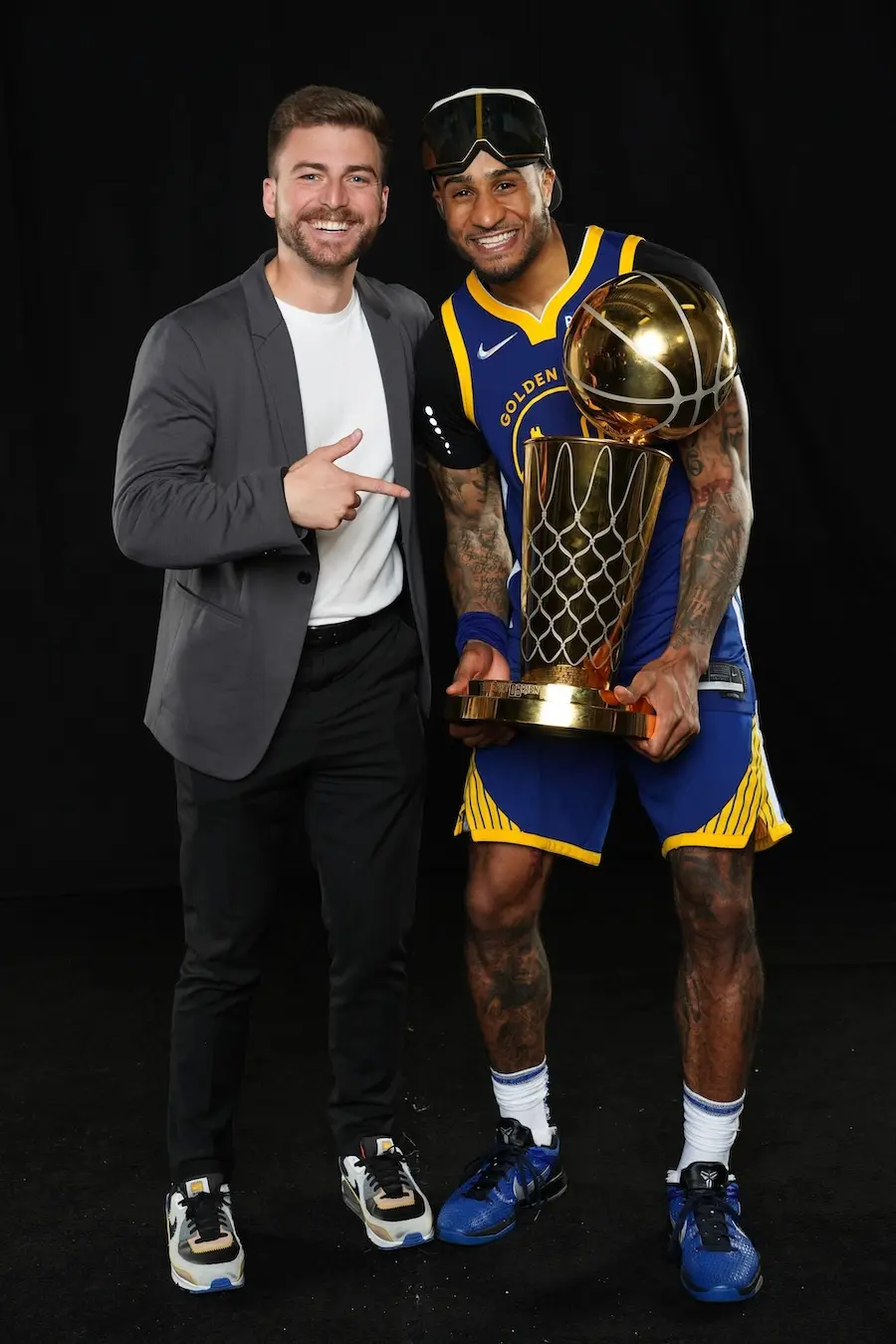
As Director of Broadcasting Partnerships for the NBA, School of Communication alumnus Matt Derhalli uses his degree in new media communications to shape how millions tune in and watch pro basketball

Image
Matt Derhalli with Gary Payton

Matt Derhalli with former OSU basketball player and NBA Champion Gary Payton II,'23

By Hoku Tiwanak, CLA Student Writer - May 19, 2026

Matt Derhalli, ‘15, grew up in Tualatin, Oregon, where the Portland Trail Blazers were the “connective tissue” between family, friends, and just about everything else. Little did he know that his fandom and  love for the game would unexpectedly translate into a future career.

Some of his earliest memories are tied to the electric atmosphere of the Rose Garden, now called the Moda Center. Sitting among thousands of Blazers fans, he felt drawn to the environment. “It’s rare to walk into a room with 20,000 people who all share the same passion,” he said. “That sense of community stood out to me very early on.”

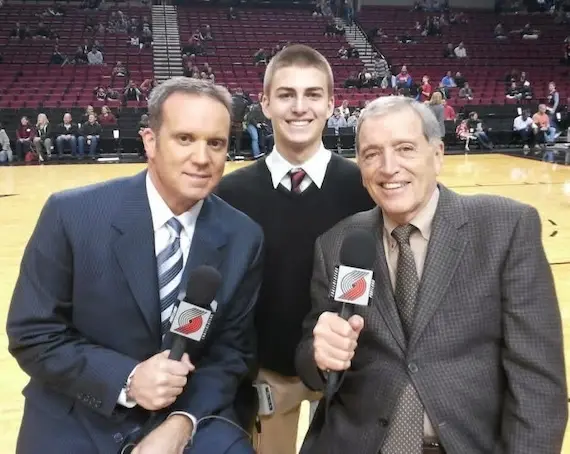
Wanting to work in the professional sports world in some capacity, Derhalli had the foresight to get involved early. In high school, he job-shadowed longtime Blazers play-by-play broadcaster, Mike Barrett, ‘91. That connection would later lead to a student assistant role in communications for the Oregon State athletics department. Attending OSU was always in the cards, given his family had always been Beaver fans, but the opportunity to start gaining professional experience in sports right away really solidified his decision.  

Derhalli started as a business major, but after spending time in his communications role, he realized he wanted his coursework to better reflect the work he was doing with Beaver athletics. Switching majors, he said, allowed him to “push in one direction” and fully invest in the skills he wanted to build.

“Communication is everything,” he said. “To communicate well, you also have to know how to write well.” He ultimately pursued a degree in new media communications (NMC), now called digital communication arts, with a minor in writing. 

Supporting Derhalli in his decision to switch majors and through the rest of the NMC program was former liberal arts advisor Louie Bottaro. 

“I can count on one hand the teachers and professors who changed my life, and Louie was certainly one of them,” remembered Derhalli. “He pushed me to make that leap and go all in on this career.”

Derhalli described being in the NMC in the early 2010s,  when the media landscape felt like it was changing daily, as being “at the right place at the right time.” 

“Work and school were running alongside one another,” recalled Derhalli. “I would be learning about a new platform or technology in my classes, then using it in my job.”

Through a connection with former OSU basketball player and College of Liberal Arts alumnus Lamar Hurd, ‘06, Derhalli’s first major step into professional sports media came during the summer of his junior year, when he interned with ROOT Sports Rocky Mountain, the former television partner of the Colorado Rockies. It was his first true immersion into daily broadcast production, and it affirmed to him that he was on the right path.

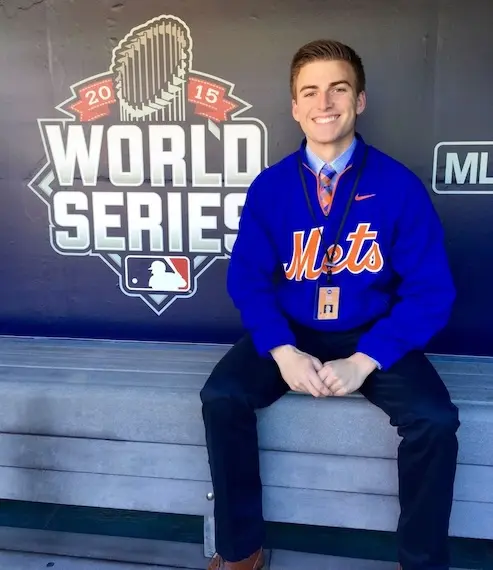
Just a few months later in early 2015, he landed a marketing and communications role with the New York Mets while still finishing his final term at OSU. The transition from college student to full-time professional wasn’t easy. Moving across the country, never having been to New York City, while still finishing his classes, was a steep learning curve and a major culture shift. The Mets went on to make the World Series that season, for the first time since 2000.

“You get to the thing you’ve been working toward, and suddenly you’re all in,” he said. “You have to grow up quickly.” 

With all of his professional experience in the baseball world, Derhalli believed that working in basketball seemed unlikely, but then, an entry-level role at the National Basketball Association opened, and Derhalli went all in. He had applied to and didn’t get a summer internship at the NBA years prior, even getting former Trail Blazers legend and NBA Hall of Famer Bill Walton to write him a letter of recommendation. He was not going to let this opportunity pass. He called all of his contacts, trying to find out more information and look for an “in.” After a series of challenging interviews, he got it. 

His first role was working in the broadcasting department for the NBA’s minor league, called the G League. Now in his 11th season, Derhalli serves at the intersection of storytelling and strategy for the entire NBA. As Director of Broadcasting Partnerships, Derhalli works closely with broadcasters like ESPN, NBC, and Amazon to manage day-to-day production and coordinate access to players, coaches, and behind-the-scenes moments.

His role is about balance; he helps maximize compelling broadcast content while ensuring teams and players feel respected and comfortable. He describes himself as a bridge between the league, the networks, and the stories fans see on screen. Derhalli is heavily involved in the day-to-day execution of broadcasts — coordinating microphones, cameras, interviews, and other production elements — while also driving strategy focused on innovation, maximizing team and player participation, and advocating for broadcast partners to continue elevating and growing the NBA’s overall television product. Much of Derhalli’s focus is also on managing the day-to-day relationship with ESPN, across game and studio coverage, broadcast access, planning, and collaboration around marquee events, such as All-Star Weekend, the NBA Finals, the NBA Draft and Summer League, among others.

One of his many career highlights is the 2020 NBA Bubble during the COVID-19 Pandemic. Derhalli spent 107 days inside the controlled environment, helping build and operate one of the most unprecedented setups in sports history.

“We built this unique community, almost like an NBA utopia,” he said. The experience gave him rare, close-up access to players and teams, deepening relationships and a perspective few people get to have.

Even after a decade in the league, Derhalli remains excited and driven. Each season brings new challenges, new lessons, and opportunities for growth. “At the same time that I am growing professionally, I’m still growing personally,” he said. 

The NBA isn’t just a job; it’s been a lifelong passion. He credits the networking and relationships he built for opening doors and guiding his early career. “I feel a responsibility to represent where I’m from and everyone who helped me get here,” he says.

“Oregon State means a lot to me,” Derhalli finished. “It has been and always will be a huge part of my life. I still carry with me what it taught me and everything I learned through NMC.”

Image
Matt Derhalli in a baseball dugout

Derhalli while working with the New York Mets for the 2015 season

Image
Matt Derhalli

Derhalli with Portland Trail Blazers commentators Mike Barrett (left) and Mike Rice (right) in 2010

How Terry Horstman turned a love of sports into a life in storytelling

By Colin Bowyer on May 12, 2026

As a School of Communication alumnus, Horstman has gone on to work in several national sports organizations and is now a reporter covering the Minnesota Lynx

Image
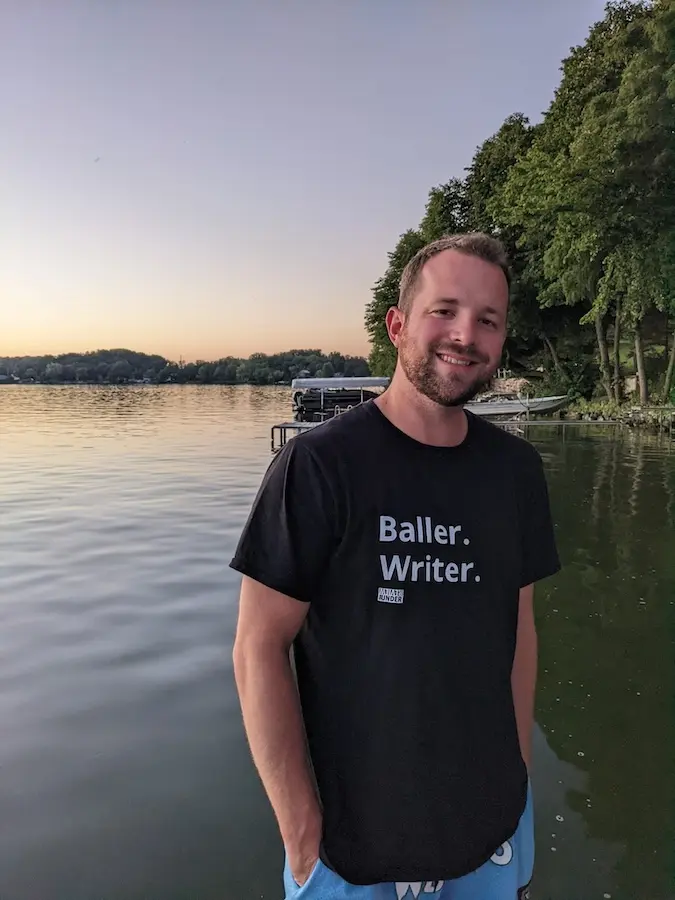
Terry Horstman standing on a dock

Terry Horstman

By Taylor Pedersen, CLA Student Writer - May 20, 2026

Long before he was in press boxes and pursuing book deals, Terry Horstman, ‘11, was in his driveway, shooting baskets. The way he described his days as a child was playing basketball until dark, getting called inside, and then retreating upstairs, not to do homework, but to write.

“I would just write about basketball,” Horstman said. “It wasn’t like, ‘I love writing, I’m a writer now.’ It was just a way to spend more time with the game.”

Horstman grew up in Minneapolis, fully invested in the highs and lows of Minnesota sports, dreaming of going pro. By high school, he let go of this dream and realized that writing didn’t take him away from sports, but rather deepened his connection to them.

“It really became this tool to do anything,” he said. “It opened up other worlds.”

His path to Oregon State University was, by his own admission, accidental.

“I don’t really know how I ended up there,” he said, laughing. “But I loved it from the moment I arrived.”

He arrived undeclared, then eventually ended up in the then-emerging new media communications (NMC) program, now called digital communication arts. He described it as a “startup major” in the late 2000s. Platforms like YouTube and Twitter were just beginning to change how stories were told and consumed, and Horstman was right at the start of it.

“There was so much optimism,” he said. “We were studying these things as they were being rolled out. You almost felt a part of it.”

The program offered a diverse catalog of courses in animation, A/V production, 3D modeling, media theory, entrepreneurship, and more, many of which were taught by Horstman’s favorite faculty members, including the late-Bill Lodges, as well as former professors Ron Seymour and Pam Cytrynbaum. 

But Horstman kept circling back to writing.

“If you want to be a writer,” he said, “you pretty much already are.”

He tested that philosophy at The Daily Barometer, where Horstman became a reliable reporter covering Oregon State basketball.

“I walked in, and they were like, ‘What do you want to do?’ And I said, ‘sports.’ And they said, ‘Great, go do it.’ Looking back, at any other university with a more traditional journalism program there would be students lining up and waiting for years to cover that beat.”

Horstman described the men’s basketball team at that time as “dreadful,” but that didn’t matter. It was a trial by fire: press conferences next to veteran reporters, stressful and unfamiliar deadlines, and early mistakes, including a misquote in his first story that he still remembers.

“I’ve never misquoted someone since,” he said.

More importantly, it gave him something harder to teach: confidence.

“You realize pretty quickly you have as much of a right to be there as anyone,” he said.

Horstman would go on to cover the basketball team’s 2009 championship run in the College Basketball Invitational (CBI) under first-year head coach Craig Robinson, beating the University of Texas at El Paso in a best of three series. He would also step in to help with covering other OSU athletic events, like men’s soccer and football, including the team's upset win against the No. 1 ranked University of Southern California in 2008. During the week, Horstman also co-hosted a weekly sports talk show on KBVR-FM with his sports editor at The Daily Barometer, Kye Johnson, ‘10.

After graduation, Horstman found himself bouncing between marketing and media relations internships and in several new cities like Portland, Chicago, and New York. He worked with the Portland Timbers in their inaugural MLS season, then the Trail Blazers, then U.S. Soccer, then Major League Soccer. The 2011 season Horstman interned with the Trail Blazers was especially hectic; the season began playing on Christmas Day because of an ongoing labor dispute known as a “lockout,” then, in the middle of the season, the Trail Blazers moved on from long-time prospect Greg Oden and ended up firing the head coach, Nate McMillan. A “masterclass of working in media relations,” Horstman put it. 

“It made me pretty adaptable,” he said. “But it also helped me realize what I didn’t want.”

What he didn’t want, it turned out, was to be in public relations.

“I didn’t want to be the person putting the policies together,” he said. “I wanted to be the one telling the story. There was a point where being the guy granting media credential requests just didn’t seem like a good use of my NMC degree.”

That realization brought him back to Minneapolis and back to school. He decided to take the jump and commit fully to writing, by pursuing an M.F.A. in creative writing at Hamline University in 2016, while also working simultaneously in the university’s administration. During that time, he co-founded a sports literary magazine called the Under Review with colleague Meghan Maloney-Vinz, while receiving valuable web-design guidance from former classmate JP Bertram, ‘11.

“The look and feel, as well as the content, was truly inspired by my time at OSU,” said Horstman. “While in NMC, I remember my peers were making movies and creating video games and, truthfully, I thought that there was nothing original that I could create. Launching a creative magazine with a sports slant was not something I thought about then, but it’s been so fulfilling to be the editor for the Under Review.”

Today, Horstman teaches creative writing in the Twin Cities and at the University of Wisconsin-River Falls and covers the Minnesota Lynx, Minneapolis’ WNBA team, for the women’s sports publication The IX Sports. He’s also under contract with the University of Minnesota Press to write a book chronicling this season of Lynx basketball , inspired by many of the titles he read while falling in love with books years ago, but especially Pulitzer Prize winning reporter David Halberstam’s 1981 book The Breaks of the Game about the Trail Blazers 1979 - 1980 season. For the Lynx, this season is going to be a special one; it’s the 30th anniversary of the WNBA, and the first under a new collective bargaining agreement, and the Lynx’s coach, Cheryl Reeve, is on the doorstep of breaking the all-time wins record.

The currently untitled Lynx book will be Horstman’s second book-length publication. His essay collection, This is Where the Fantasy Begins: an ode to Michael Jordan’s Playground was published in 2025 by Lion Bridge Publishing. 

“I love sports because they’re a perfect container for stories,” he said. “They explain the human condition in a lot of ways.”

He’s less interested in wins and losses than in what surrounds them: the history of the Lynx organization, its ties to the Minneapolis community, and the evolution of women’s sports.

“There’s been a lot of progress,” he said. “And still a lot more to go.”

To Horstman, the worlds of teaching, journalism, and creative writing naturally overlap.

“Nothing makes you better at writing than having to explain it to a room full of students,” he said.

There’s a running joke among writers, he added: at some point, you realize you’ve assigned yourself homework for the rest of your life.

“It never goes away,” he said. “But if you love it, that’s the point.”

Alongside his reporting about Minneapolis sports, Horstman is still closely connected with OSU athletics. In 2021, Horstman started Belligerent Beavs, a podcast all about OSU athletics, with Bertram and another former classmate Benny Wehage, '11.  

Ask Horstman how he defines success now, and the answer is not sales numbers, not awards, but instead, looking at something and knowing you gave it everything you had. In an industry increasingly driven by profit, for Horstman, the work still matters most: showing up to the page, day after day, with energy and intent.

“You can’t control who reads it,” he said. “You can only control how you write it.”

Back in that Minneapolis driveway, the goal was to keep playing for as long as possible. These days, the medium has changed, but the instinct and the passion remain the same.

How Sierra Lever is shaping the entertainment industry

By Colin Bowyer on May 11, 2026

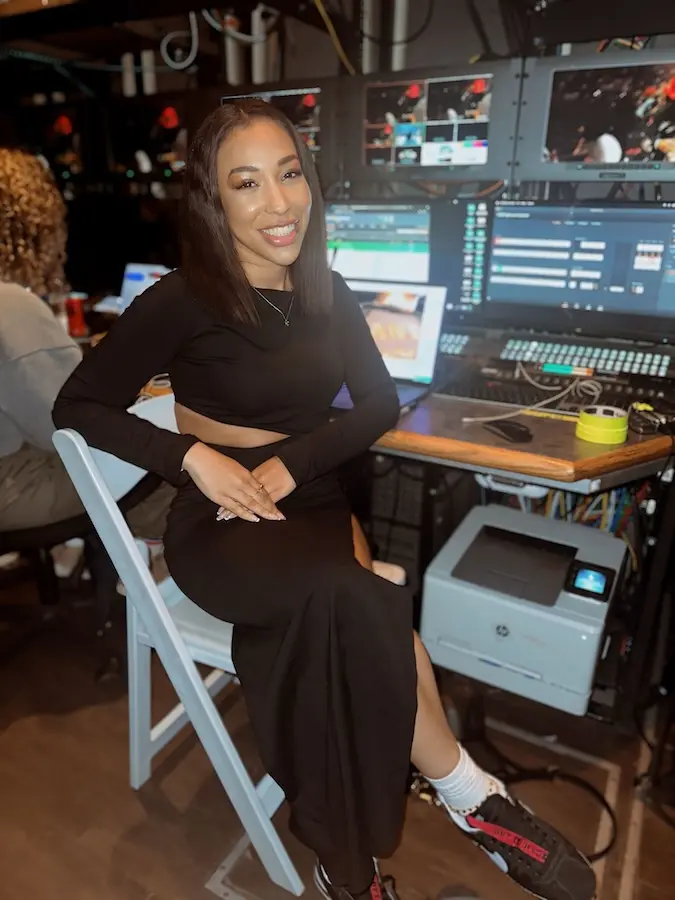
After years of working as Head of Hip-Hop and R&B at Amazon Music, Sierra Lever is now focused on building something she can call her own

Image
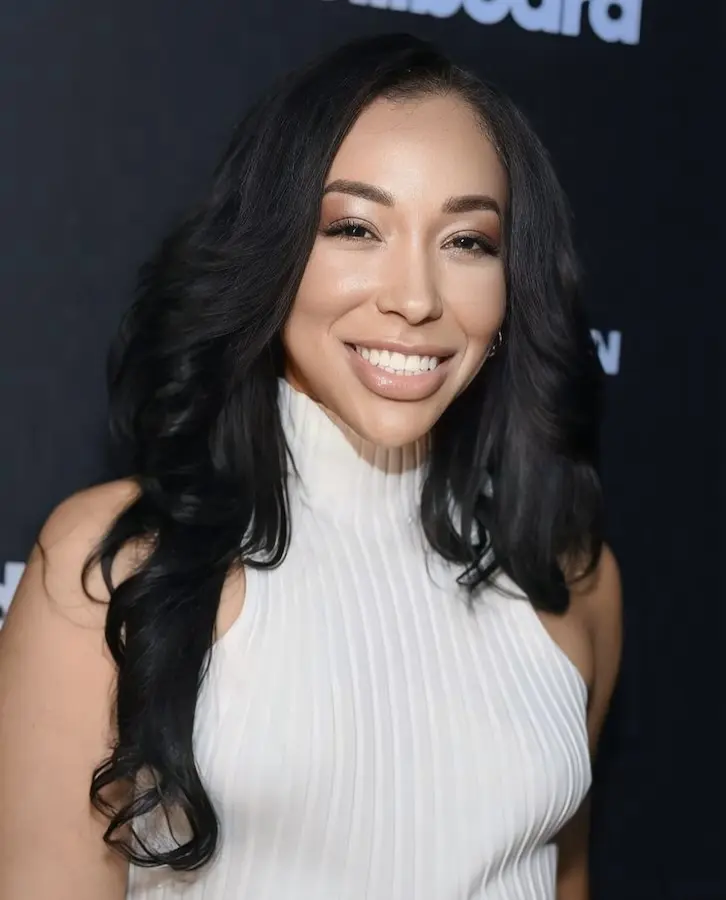
Sierra Lever

Sierra Lever

By Hoku Tiwanak, CLA Student Writer - May 11, 2026

College of Liberal Arts alumna Sierra Lever, ‘12, recently launched Category 1 Entertainment, a company that helps artists shape the marketing rollouts for their albums and tours while thinking beyond traditional promotion. Her goal is to get artists to expand their influence not just as musicians, but as cultural voices. “What other gifts can they share with the world?” Lever said.

In today’s music industry, where thousands of songs are released every day, breaking through the noise takes more than a radio feature or tour dates. Lever believes artists need a strategy that spans social media, livestreams, in-real-life experiential moments, partnerships, and storytelling across platforms.

Her entrepreneurial move came after nearly five years at Amazon Music, where she was the Head of Hip-Hop and R&B. She worked directly with artists and their teams to develop partnerships, livestream events, and promotional campaigns designed to attract and retain listeners on the platform.

Lever’s career in bringing artists and audiences together started years earlier. At just 17, Lever described herself as a “party promoter.” She wasn’t a musician herself, but many of her friends were. Instead of performing, she found a different role in the music ecosystem, bringing people together and creating spaces where artists could shine.

“Commonality over music tastes is what built my community of friends,” said Lever. “Even though I didn’t sing or play an instrument, I loved showing off their talents and supporting them.”

She started booking nightclubs in Portland with local and regional musicians, often pooling money with friends to secure venues. Lever quickly learned that credibility mattered. She would arrive prepared with a DJ set and a detailed plan for the night, negotiating with venue managers about ticket prices and profit splits.

“The biggest challenge was figuring out pricing,” she recalled. Booking venues was expensive, so she often scheduled events on weekdays when costs were lower.

Portland’s creative culture helped shape her vision. While the arts scene in the city was diverse and thriving, Lever saw an opportunity within hip-hop since its presence was much lower at the time. “There were so many talented musicians,” she said. “I wanted to help bring them to the rest of the world.”

One of her early mentors was OG One, a Portland DJ closely connected to the city’s music community. Lever also credits Self Enhancement Inc. with helping her see broader possibilities for her future. The Portland-based program supports youth from underserved communities through young adulthood, including organizing college visits. 

Through the program, Lever visited Oregon State University for the first time. The campus in Corvallis felt like the right distance from home; close enough to stay connected to Portland but far enough to push herself into new opportunities.

At OSU, Lever majored in new media communications (NMC), now called digital communication arts, because she was drawn to varied aspects of storytelling, media production, and television. The NMC program provided all the foundational knowledge she was looking for to enter into the entertainment and events industry. Skills from hands-on courses on proper lighting placement and sound design could be applied to create better events, while classes on technical writing and media law gave her a leg up on the business side.

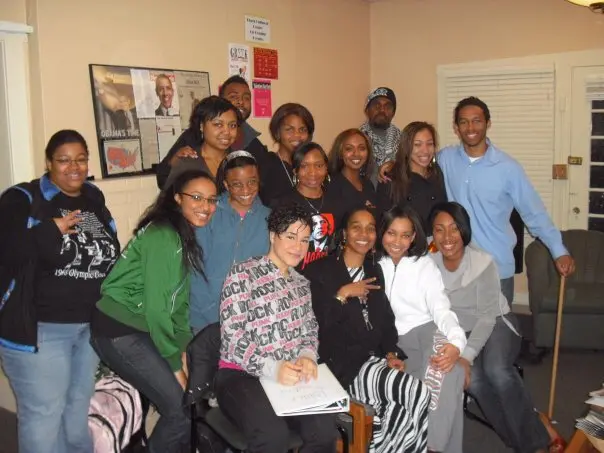
She continued to put on local events while being an active member of the Black Student Union and working at the Lonnie B. Harris Black Cultural Center on campus, as well as the ticketing office for OSU Athletics. 

During her senior year, Lever served as festival coordinator for the Memorial Union Program Council, where she helped organize large campus events. One of the biggest challenges she faced was advocating for hip-hop artists to perform on campus. “It wasn’t always easy to get hip-hop on the lineup,” she said. “But I kept fighting for it because I knew what students like myself would want to hear.”

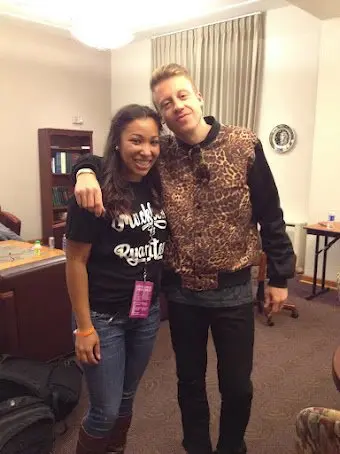
After months of planning, Lever successfully booked Macklemore and Ryan Lewis to perform for OSU’s Flat Tail Festival (Dam Jam) in 2012 on the Memorial Union Quad, drawing a crowd of more than 10,000 people. The lineup she booked was also inclusive to the wide variety of music tastes students held, including artists from folk rock, R&B, pop, and rap. 

She also partnered with another OSU student, Matt Dagger, on campus to organize a concert featuring Bay Area hip-hop legend Too $hort at the Benton County Fairgrounds. The event was hosted to honor a friend and OSU student-athlete, Fred Thompson of Richmond, California, who passed away earlier that year. Lever was the event’s co-organizer and lead for talent relations, which also included driving Too $hort and Thompson’s parents to and from the airport, as well as organizing hotel accommodations and much more. 

While at OSU, another critical mentor entered Lever’s life, concert promoter Ibeth Hernandez. Hernandez booked artists at major Portland venues like the Roseland Theater and McMenamins Crystal Ballroom. Hernandez allowed Lever to attend events, interview artists, and troubleshoot problems during concerts. “Shadowing her work showed me what was possible; I got the backstage experience and opportunity to talk to artists and others within the industry,” Lever said.

After graduating from OSU, Lever stayed in Portland and took a job at an events agency before transitioning to Nike as a contractor working in event coordination. The job market of the early-2010s continued to be tough to navigate and Lever wasn’t breaking into the industry as quickly she felt she could. 

“I was looking more in TV production jobs at the time and they just weren’t appearing,” shared Lever. “At the same time, I felt that there was so much more to learn about the entertainment and sports industries.” 

She ended up pursuing a master’s degree in sport venue and event management at Syracuse University in upstate New York. The program allowed her to explore both sports and entertainment production in detail. From managing event budgets to camera positioning, Lever learned more about operational strategies that are extremely important in her role today.

While in graduate school, Lever applied for an internship at the National Academy of Recording Arts & Sciences, Inc. (Recording Academy), the organization behind the Grammy Awards. An avid music listener growing up, she always watched and wanted to work for the Grammys. She had applied to the internship before as an undergraduate without success, but decided to try again, this time with a master’s degree under her belt.

After submitting her application, Lever started searching for any possible way to connect with someone at the Recording Academy. One day, while digging through the internet for contacts, she came across an employee’s email address on an old Tumblr post, not really expecting a reply. She decided to send a message anyway and eventually landed an interview a week before the Grammy Awards.

Her story really impressed one of the Recording Academy’s representatives. She secured an internship with the Los Angeles chapter, which was an experience Lever describes as “unforgettable,” the internship required her to rotate through the Recording Academy’s many departments. During awards season specifically, she handled submissions from record companies representing artists like Adele and Sam Smith, then organized listening sessions with voting members of the academy. 

“I really enjoyed my time there and amongst serious music lovers like myself,” Lever said. “But it was a grueling internship. I think I rotated through a handful of departments over the course of a year. I got exposed to teams handling aspects of the music business that I was attracted to and others that I wasn’t interested in.”

“This is a tough industry to break into and I began to really think, ‘how am I going to survive here and make a living?’ I was only there for a year, but there were other interns and temps who had been rotating for years. That year, I think I discovered more about myself than ever before.”

Securing that first full-time gig in the entertainment industry proved challenging, but Lever would go on to work with major players in the music industry, including the Los Angeles Philharmonic, Capitol Records, Motown Records, and Columbia Records. Eventually, she joined Amazon Music, where she served as a key liaison between hip-hop artists and the music side of the tech giant.

She moved up to working with artists and teams of Kendrick Lamar, Beyonce, and Erykah Badu’s of the world. Lever built partnerships with artists and their teams while developing strategies to grow Amazon Music’s audience. The goal was to attract new listeners and retain existing subscribers through exclusive performances, livestreams, and promotional campaigns.

One of her projects included negotiating a livestream deal with Lil Wayne and his group, the Hot Boys, who had not performed together in over 15 years. She also worked on partnerships tied to major cultural moments, including a livestream connected to Kendrick Lamar’s “Pop Out” concert.

After nearly five years with the company, she wanted to create something she could truly call her own. Her new venture, Category 1 Entertainment, focuses on helping artists plan and execute marketing strategies for album releases and tours. Lever says the music landscape today is more competitive than ever, especially how social media has also transformed the industry.

“Ten years ago, it was more about radio and TV appearances,” she said. “Now it’s about a full 360-degree strategy across platforms.” Through Category 1 Entertainment, Lever hopes to help artists think beyond traditional promotion.

“I’m so grateful for all of the experiences I’ve had, including in NMC. I’m constantly inspired by other people who hustle and go after it. It was the right time for me to expand and execute on all of the ideas I’ve been holding onto.”

Lever continues to be a mover and shaker in Los Angeles in the wider-music industry, landing her recently on Billboard’s 40 Under 40 list and on Rolling Stone’s Voices of Influence.

For students hoping to break into the entertainment industry, her advice is to take the leap and be resourceful. “Create things on campus or in your community and always put your best foot forward,” she said. “Seek opportunities in entertainment hubs like Los Angeles and New York, even if it means leaving your comfort zone.”

“Home is always there,” Lever said. “But you have to push yourself to go find people in new places.” Above all, she tells young creatives to hold onto their ambitions. “Protect your dreams.”

Image
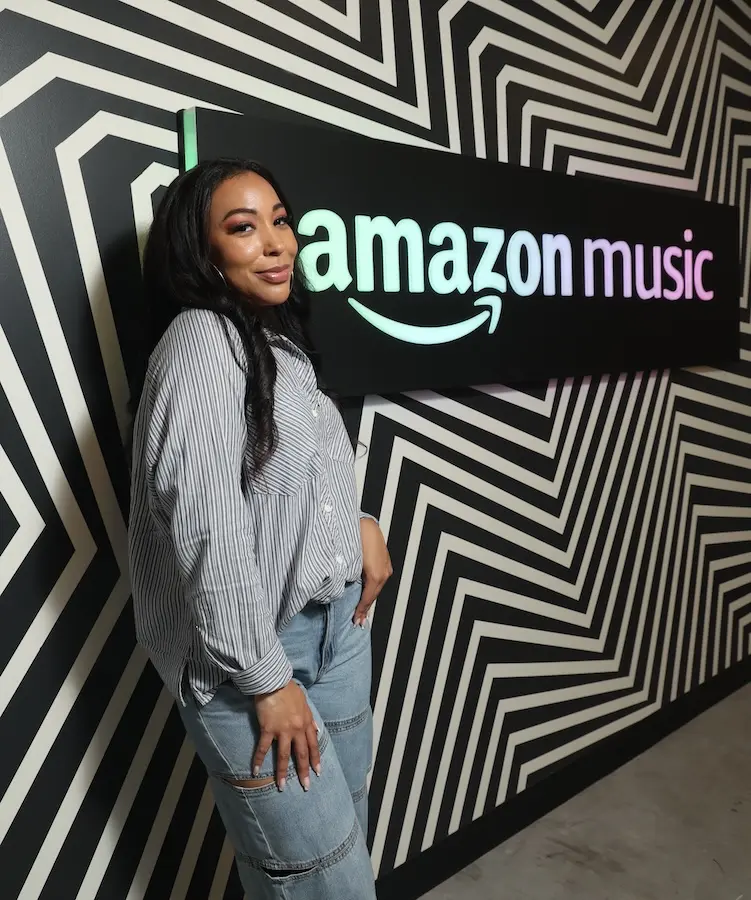
Sierra Lever in front of a sign that says Amazon Music

Lever on her last day at Amazon Music (2025)

Image
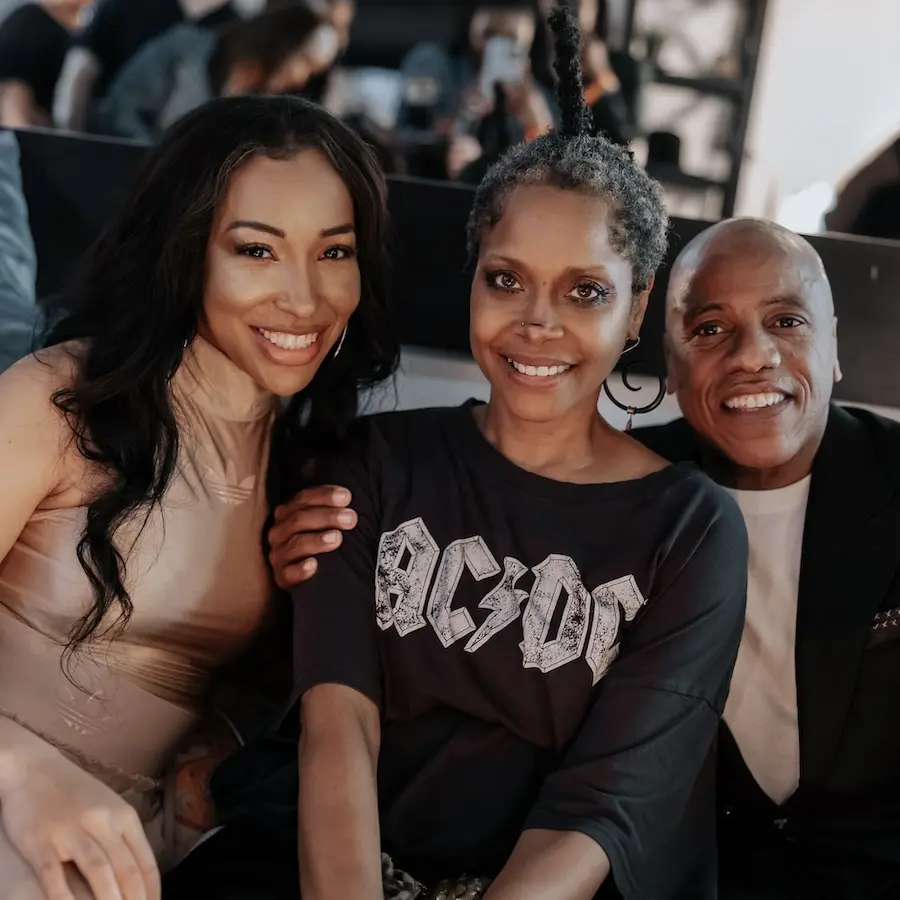
Sierra Lever, Erykah Badu, and Kedar Massenburg

From left to right: Lever, musician Erykah Badu, and former President of Motown Records Kedar Massenburg at Erykah Badu's "Echos 19" Juneteenth Livestream Performance in Dallas (2025)

Image
Sierra Lever in a recording studio

Lever as executive producer of Kendrick Lamar's "The Pop Out" (2024)

Image
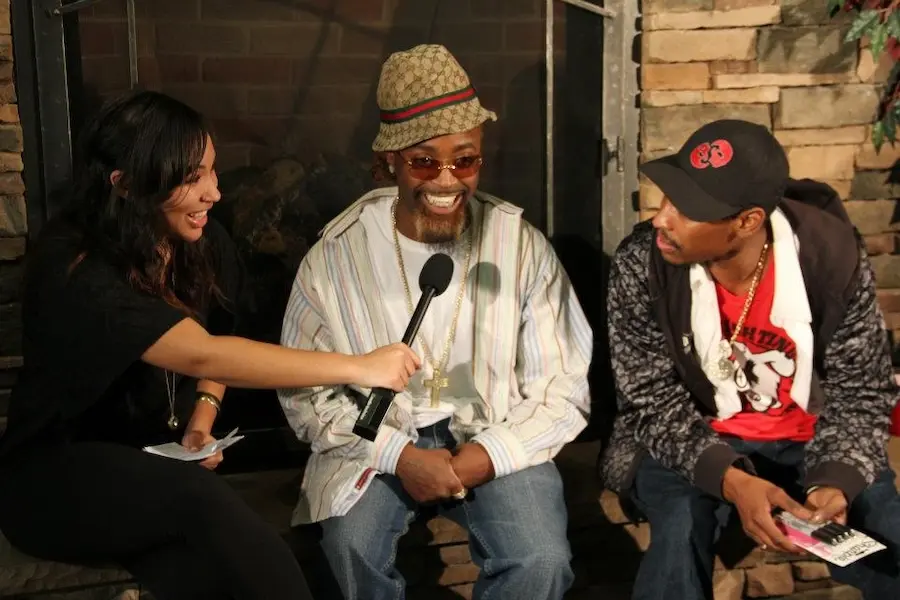
Sierra Lever interviewing the Ying Yang Twins

Lever interviewing The Ying Yang Twinz on KBVR-TV's The Blonde Bomshells (2012)

Image
Sierra Lever with Macklemore

Lever backstage at OSU's Flat Tail Festival with headliner Macklemore (2012)

Image
Sierra Lever with a group of people

Lever with friends from OSU's Lonnie B. Harris Black Cultural Center (2010)

What it took to get here: Makayla Flannagan at OSU

By Colin Bowyer on May 7, 2026

First-generation student Makayla Flannagan reflects on hardship, support, and finding stability in Corvallis and at the College of Liberal Arts

Image
Makayla Flannagan

Makayla Flannagan | Credit: Ahmed Rashid

By Taylor Pedersen, CLA Student Writer - May 11, 2025

Makayla Flannagan remembers the first night she slept in her freshman dorm room. Her roommates had gone out, the building was loud: doors opening, voices down the hall, but her room was quiet. She lay on her back, staring at the ceiling.

“All I could think was, wow,” she said. “I did it.”

It was the first time in her life she could remember enjoying taking a deep breath. Born in Portland’s Alberta District, Flannagan spent much of her childhood moving between Oregon and Alabama, navigating two very different worlds while taking on responsibilities that most teenagers never face. By the time she was in high school, she was the primary provider for her family.

Her father lives with an autoimmune disease. Her younger sister, nearly a decade behind her in age, would eventually come to depend on her daily. Her mother, who often lived in a different state, passed away when Flannagan was 17, just as college applications were due. In between, there was school, work, and survival.

“I think it taught me a different type of work ethic from a young age,” Flannagan said. “And a sense of independence that’s affected every facet of my life.”

There was no baseline to compare it to, she added. It was simply the life she knew. In Portland, she was surrounded by extended family; her father’s side, all close-knit and deeply involved in raising her. In Alabama, that network disappeared. She moved between apartments, schools, and relatives she barely knew, at one point attending four different schools in four years. Making friends, for Flannagan, became both a necessity and a skill.

“I’ve always been outgoing,” she said. “But I think moving around made me that way. I was always trying to find where I fit in.”

Alabama also introduced to her a different cultural and political environment. Church functioned as a social hub, but her family didn’t attend, placing her on the margins of community life. It was isolating, but instructive.

“It taught me a lot of tolerance,” she said. “I value being able to talk to anybody, regardless of their beliefs.”

By 17, Flannagan was working full-time as a line cook while finishing high school through a dual-enrollment program. In the kitchen, she was often the youngest person in the room, and at one job, the only woman.

“I had to fight for respect,” she said. “And I didn’t always get it.” 

The work was grueling, but it gave her something she needed: structure, independence, and distance from home. It also improved her ability to manage time, navigate conflict, and advocate for herself, all skills she would carry into college.

Additionally, Flannagan was born with spina bifida, a spinal condition typically treated at birth. But her family couldn’t afford the medical care needed, and the diagnosis came late. For years, she struggled to walk without fully understanding why and couldn’t fully walk properly until she was 15.

When she finally received surgery, the change was profound.

“The world opened up,” she remembered.“If I hadn’t gotten that treatment, I might have partial paralysis in my legs,” she said. “Healthcare is a human right. I don’t think that should be an opinion.”

The day her mother passed had an incredible impact on her as well.

"That was the worst day of my life,” Flannagan recalled. 

Following that day, she saw only two paths in front of her: one was to stay “in a bad place forever” or better herself and push through. She chose the latter, by knowing that she was going to be the only person to get herself out of those circumstances. 

She graduated early, worked, and kept moving. When she arrived at Oregon State University, stability felt almost surreal. She’d been emancipated for years and was prepared to live alone; but, for the first time, food was consistent, healthcare was accessible, and her living space was maintained. 

“I wasn’t hungry,” Flannagan said. “The bathroom gets cleaned every weekday. That was crazy to me.”

The absence of constant stress allowed something new to emerge: possibility. She didn’t have to work her first two years. She could focus on school, on friendships, on imagining a future that wasn’t defined by scarcity.

Flannagan arrived intending to study horticulture, drawn in part by her experience using cannabis-based products to manage chronic pain. Hemp, she believed, held potential as a sustainable material for textiles, construction, and medicine. Over time, she pivoted to political science instead, hoping to engage with cannabis policy from a legal and regulatory perspective. She later added minors in history and anthropology. Then, a freshman-year Holocaust history course became a turning point and sparked a greater interest in history.

“I just loved it,” she said. “I liked sitting there and taking notes. I hadn’t felt that way in other classes.”

Now, her capstone project focuses on something far removed from hemp: the criminalization of pregnancy within Alabama’s carceral system. The topic grew out of earlier conversations on medical ethics, about who is protected under the law, and about how systems define harm. She points to Alabama’s “chemical endangerment” law, which was originally intended to protect children from exposure to ingredients used to make methamphetamine, but is now increasingly applied to jailing pregnant women.

“It’s a legal loophole,” she said. “You can be charged because you’re pregnant.” 

The research is ongoing, complex, and overwhelming, but it connects so many things that have shaped her thinking: health, inequality, and the consequences of policy. 

As an ambassador for the College of Liberal Arts, Flannagan now speaks to prospective students, many of whom share aspects of her background. Her approach is direct. 

“I tell the truth,” she said. 

She talks about resources, but also about the difficulty of finding them. She shares her own experiences navigating financial insecurity and institutional barriers. She hands out materials specifically for first-generation students. For a long time, she said, she felt out of place, surrounded by peers whose families had histories with higher education. But that has changed. 

“I woke up one day and was like, what am I doing?” she said. “This is my life. I’m here just like everybody else.”

Now, she sees her background as a point of pride.

“I worked really hard to be here,” she said.

After graduation, Flannagan is considering the Peace Corps. Whatever comes next, her goals are less about a single career path and more about impact. 

She knows she won’t change systems overnight. But she believes in incremental change: in conversations, in representation, in making resources visible.

“I just want to make things less scary,” she said. “More inviting. And change how we think about ourselves.”

Understanding government to create change

By Colin Bowyer on May 5, 2026

School of Public Policy Instructor Mary Follo teaches applied and actionable knowledge to help students better navigate the political process

Image
Mary Follo

Mary Follo | Credit: Natalia Bueno

By Jessica Krueger, CLA Student Writer - May 15, 2026

Interested in learning about how the government works? Want to make a real difference in your community? Consider taking a class with Mary Follo, a new instructor in the School of Public Policy, who teaches American political science and public policy. 

“It’s important to me that students leave with actionable knowledge,” Follo said. In her classes, students learn how to write policy memos and to present their ideas in a clear and composed way, often through debates. “At the end of the day, I want my students to be comfortable and confident speaking to others about politics,” Follo said. 

“Students should major in public policy and political science because they are the foundations of everything we do,” continued Follo . “Government regulation impacts us on a daily basis. It's important to understand that, and to understand laws and voting. If you go into policy, there are so many amazing opportunities to make lasting changes for yourself and the general public.”

Follo teaches Public Administration (PPOL 372), State and Local Politics (PS 331), Congressional Politics (PS 311), United States Government and Politics (PS 201), as well as electives on housing policy and public policy research methods. Her favorite part of teaching, Follo said, has been to witness students as they have light bulb moments, as they make interesting connections or come to understand complex concepts. 

Follo joined the School of Public Policy as an instructor in the fall of 2025 after completing her Ph.D. in political science at the University of Oregon. As a doctoral student, Follo held graduate research and teaching positions while contributing to ongoing academic and public conversations about housing policy.

Her dissertation, titled “The Politics of Placement: State Preemption of Housing Policy,” looks at how cities’ implementation (or lack there-of) of state-mandated zoning laws varies depending on a city’s size and location. Focusing her study on four cities in Oregon: Eugene, Lebanon, Baker City, and Portland, Follo explained that, when scholars try to make sense of housing policy and different perceptions of it, they often point to the urban-rural divide. In her study, however, it was actually the size of a city that mattered most, rather than its location. 

Follo hopes that her research will lead to more nuanced outcomes in housing policy. “We need to increase resources or have some kind of steps so that smaller and medium size cities aren't just forced into zoning changes that they don't have the infrastructure for,” Follo said.

When preemption occurs (that is, when the state overrides local-level policy) housing prices can increase, which negatively impacts people’s ability to rent or purchase an apartment or home. 

Prior to studying political science and housing policy at UO, Follo completed a Master of Public Policy at University of California , Irvine. After enjoying a class on land-use policy, Follo decided to focus her research on that. It helped that, having grown up in southern California where there are a lot of issues regarding land use, she was relatively familiar with the subject already. Follo completed her undergraduate degree at UC Irvine as well, graduating in 2014 with a double major in criminology and psychology. 

Follo decided she wanted to pursue public policy research after interning for Orange County’s Board of Supervisors. During this experience, Follo realized she enjoyed studying politics more than she wanted to become an actual politician. “Ideally, policy is always improved, but that is not always how it works out,” Follo said. “I noticed during my internship that by the time a policy would make it through the policy cycle, it often had undergone drastic changes. I am interested in how we can overcome changes to policies—how we can take great policies and get them all the way through the policy cycle.”

In her spare time, Follo enjoys baking, beading, running, and reading. Her favorite book is Pride and Prejudice by Jane Austen. “It’s always relevant,” Follo said. “People are always dealing with the same problems.” Follo also recommends The Running Ground: A Father, a Son, and the Simplest of Sports, a memoir by Nicholas Thompson that reflects on the author’s relationship with his father and the joys of running.

Follo, who has been running since she was in high school, appreciates the sport’s capacities to relieve stress and build community. Like many in the Corvallis area, she enjoys hiking and trail running in the McDonald-Dunn Research forest and in the Alsea Falls and Marys Peak wilderness areas.

Choosing a marine major at Oregon State

By Colin Bowyer on May 4, 2026

Student testimonials highlight the wide range of marine-related majors at OSU and the journeys that led them there

By Colin Bowyer, Communications Manager

Marine studies, marine biology, aquatic biology, fisheries, oceanography, and environmental sciences: What are the differences among them? With nearly ten marine-related majors on campus, it can be overwhelming for ocean-lovers when it comes time to choose a major. 

Marine studies looks at the ocean from a big-picture, humanistic perspective, blending social science with conservation, and education; marine biology focuses specifically on living plants and animals in the ocean, like fish, whales and coral; aquatic biology is similar to marine biology but includes all water environments, both saltwater and freshwater; fisheries is about managing fish and other harvestable species for food and sustainability; oceanography studies the ocean itself, its currents, chemistry, climate effects, and seafloor; and environmental sciences is broader than all of these, focusing on how air, water, land, plants, animals and humans interact, often addressing pollution, climate change and environmental protection across many ecosystems, not just the ocean.

To help you find the right pathway to a major that suits your specific interests, here are a handful of testimonials from students studying in the College of Liberal Arts (CLA), College of Earth, Ocean, and Atmospheric Sciences (CEOAS), College of Science (CoS), and College of Agricultural Sciences (AgSci).


Marine Studies - College of Liberal Arts

Elijah Foster

Image
Elijah holding a camera

What brought Elijah Foster, ‘25, back to college was discovering OSU’s marine studies program in the College of Liberal Arts. The interdisciplinary, humanities-centered approach felt accessible in a way traditional “hard science” programs did not. Foster realized he could study the ocean, conservation and marine animals without drowning in chemistry or advanced math and, more importantly, without giving up his strengths as a communicator and storyteller. 

Once enrolled, Foster dove in. A childhood fascination with killer whales turned into focused academic work and near-constant volunteering, including with OSU's student-led marine club Ocean11. He would also split his time between OSU’s Corvallis campus and the Hatfield Marine Science Center in Newport, while also volunteering at the Depoe Bay Whale Watch Center, helping visitors spot migrating gray whales. 

“Almost everyone I talked to in marine studies had the same story,” explained Foster. “They loved everything about the ocean and coastal environments, but didn’t want to spend their time studying organic chemistry. It’s the best program for people who want to connect with the ocean.” 

After Foster graduated in 2025, he went on to secure an internship with the Orca Behavior Institute in Washington’s San Juan Islands, where he spent his summer on the water observing killer whales and recording their behaviors. Now he's back in Oregon and brought what he learned studying whales in Washington to his new role as research assistant at the Hatfield Marine Science Center in Newport, furthering his mission to strengthen whale research and bring about more awareness of coastal environments.

Lauren Rice

Image
Lauren Rice

Lauren Rice, ‘23, M.S. ‘25, has a deep appreciation for the unique beauty of ocean coastlines. Rice grew up in Beaverton, Oregon, but was a frequent visitor to the coast, oftentimes beachcombing during her family’s annual camping trip to Nehalem Bay State Park in Manzanita. As a visual artist, Rice would sometimes bring along her acrylic and gouache paints to compose natural landscapes along the coastline. 

When it came time to decide what she wanted to pursue in college, she had a feeling that studying something at the intersection between the social sciences and environmental sciences would be the best fit. In Fall 2020, she initially enrolled in the marine biology option, but Rice craved more of a macro-systems perspective compared to learning about topics like DNA replication. 

“When I was sitting in classes during my first term of college, I was wondering where the ‘human’ of it all was,” explained Rice. “There was so much emphasis on the environmental changes the planet is going through, but the courses didn’t necessarily emphasize the interrelated systems between people and nature.”

Rice joined CLA’s marine studies program just after the major was created in Winter 2021, which offered a “perfect blend” of marine science, social science, and the arts. During her undergrad studies, Rice joined Dr. Ana Spalding’s research team focused on shellfish aquaculture resilience, and participated in an environmental interpretation internship with the Haystack Rock Awareness Program at Cannon Beach on her beloved Oregon Coast.

“The degree as a whole provides you with so many different lenses and ways of knowing to approach marine science that other degrees may not,” said Rice. “There is such a breadth of disciplines that are covered, but still a unique balance between natural and social sciences.”

Motivated to continue exploring the social sciences side of the ocean, she enrolled in the marine resource management (MRM) master’s program in CEOAS. Described by Rice as the “older sibling of marine studies,” MRM furthers the interdisciplinary exploration of the human and environmental aspects of our oceans and coasts. Now, Rice is a faculty research assistant in Dr. Ethan Doney's Living with Wildlife (LivWild) Lab, where her work explores the social aspects of human-wildlife conflict in Oregon. 


Environmental Sciences - College of Earth, Ocean, and Atmospheric Sciences

Natalia Jacquez 

Image
Natalia Jacquez

Tigard, Oregon, native Natalia Jacquez was and is “one of those kids out in the ocean.” Jacquez and her Mom used to volunteer at the Haystack Rock Awareness Program at Cannon Beach; this and other experiences gave her a foundational knowledge of ocean issues, leading her to  major in environmental sciences with a specialty in aquatic biology.

“What drew me to OSU, CEOAS and environmental sciences was the broadness of the program,” said Jacquez. “I could take classes on oceanography, soil science and ecology, while still having a wider perspective of environmental science. It’s proven to be exactly what I needed.”

Over the summer of 2024, Jacquez worked at the Hatfield Marine Science Center as a Hollings Prep Scholar. This past year, Jacquez was awarded the prestigious Ernest F. Hollings Undergraduate Scholarship from the National Oceanic and Atmospheric Association. Not only did the scholarship cover a portion of her tuition, but it will also give Jacquez an opportunity to work on a NOAA-related research project. This summer, she will be joining biologist Dr. Peter Kiffney  at NOAA’s Northwest Fisheries Science Center to study the availability and quality of food for Puget Sound salmonids.

Jacquez continues to pursue undergraduate research opportunities at OSU during the academic year. As part of Dr. Scot Heppell’s lab, Jacquez helps to monitor sea grass restoration efforts around Coos Bay, Oregon, and as part of Dr. Felipe Barreto’s lab, she is a laboratory technician studying the ecological and evolutionary genetics of copepods.

Allison Yuen

Image
Allison Yuen

Starting as a teenager, Allison Yuen worked at The Marine Mammal Center in Sausalito, California for nearly four years. A resident of San Francisco, Yuen biked over the Golden Gate Bridge to tend to the many rescued animals residing at the Center, and worked as a docent for visitors. Many of the Center's patients are malnourished pups who are separated from their moms too soon or who can't adequately hunt as their prey moves further out and deeper into the ocean due to warming ocean temperatures.

When she enrolled at OSU, Yuen’s goals were to continue working on marine issues and to enter the science communication field after graduating. She began in CLA’s marine studies program, but wanted something more STEM-heavy, rather than humanities and social sciences-focused. Just before arriving at OSU, she transferred to CEOAS to study environmental sciences, specializing in aquatic biology. 

“I viewed environmental science as all encompassing and multidisciplinary,” explained Yuen. “From the start, I felt comfortable in CEOAS and loved the wider perspective the classes brought on environmental and ocean systems.”

With Yuen’s specialty in aquatic biology, she’ll be able to take specialized classes on marine mammals, coastal birds and the biosphere, in addition to the broader and heavier STEM courses. And even as a freshman, she’s gotten involved early with conducting research. Right now, Yuen is a research assistant in two labs: the Menge Lubchenco Laboratory, led by Dr. Bruce Menge and Dr. Jane Lubchenco, and the Little Bird Lab, led by Dr. Jamie Cornelius. Yuen is also a member of Ocean11, OSU’s student-led marine club.


Oceanography - College of Earth, Ocean, and Atmospheric Sciences

Rebecca Knight

Image
a woman working in the lab

Rebecca entered Oregon State University unsure of her academic direction and initially enrolled as undecided. Although she had a long-standing fascination with marine life and the ocean, she doubted her own ability to succeed in a science-intensive field, believing she was “not smart enough” to pursue what truly interested her. Despite those doubts, she found herself repeatedly drawn back to the idea of studying the oceans, an interest rooted in her childhood curiosity and love for marine environments. 

A pivotal moment came when she spoke with her academic advisor, who reframed her self-doubt not as a barrier but as something irrelevant until she actually tried. That straightforward encouragement pushed Knight to begin her journey in oceanography in CEOAS. She felt immediately confident she had made the right choice. Her excitement for the subject helped her persist through challenging coursework like calculus and physics, reinforcing that her passion for oceanography outweighed her fear of academic difficulty.

The jump paid off immensely, as Knight took part in a field oceanography cruise learning to use complex ocean testing equipment, and held a position in the Plankton Ecology Lab through URSA. Ultimately, Knight chose oceanography because it aligned with her deep interest in the natural world, and experiential learning and research at OSU showed her she belonged in the field. 

"I never thought to myself, ‘Oh, now I'm not going to get the oceanography degree. I always thought, ‘Now I'm going to take this class again and keep going.’”

Maya Moran

Image
Maya Moran

Maya grew up outside Seattle, spending much of her childhood on the water fishing and crabbing with her father and grandfather. Being on boats and near the ocean made her feel most at home, and that strong personal connection to marine environments influenced her decision to attend Oregon State, in part because of its close ties to the ocean and marine research opportunities.

Although she initially enrolled at OSU as an environmental sciences major, Moran soon realized the program didn’t match her expectations. She wanted to immerse herself deeply in a single subject rather than study broad environmental issues. Oceanography appealed to her because of its strong emphasis on mathematics, physical and chemical processes, and the ability to dig deeply into how ocean systems work. 

Her decision was further reinforced through hands-on research. As an undergraduate researcher, Moran spent a month aboard a research vessel in the Arctic Circle studying sea ice and sediment processes as a part of Dr. Emily Eidam’s lab on coastal and fluvial sediment dynamics. This rare opportunity confirmed that oceanography allowed her to combine fieldwork, data collection and process-based science in a way that felt both challenging and meaningful. The experience ultimately shaped her honors thesis and solidified her passion for oceanographic research, especially in the context of rapidly changing polar environments.


Marine Biology - College of Science

Noor Denolf

Image
Noor Denolf

A third grade project asked Noor Denolf to pick a marine mammal to present on. She chose a whale, and then, subsequently, her parents took her whale watching off the California coast. From that point on, she was dedicated to studying whales.

At Oregon State, Denolf enrolled initially in oceanography in CEOAS. Her motivation was to learn more about the geology and physics of the ocean. She loved it, but missed learning and talking about whales specifically. A marine biology course, taught by Dr. Felipe Barreto, sealed the deal; she soon switched to studying biology.

“When you look into the eyes of a whale, you know someone is home,” said Denolf. “They’re so like humans and are more intelligent than we give them credit for.”

Last year, Denolf received a Summer Undergraduate Research Experience (SURE) scholarship from CoS to study the effects of global warming on sea anemones as part of marine physiologist Dr. Virginia Weis’ lab. For six months, she studied images of anemone populations that have experienced mass bleaching events, analyzing their ability (or not) to recover from such catastrophic events.

After Denolf graduates next summer, she is hoping to continue studying marine biology in graduate school, with the goal of becoming a naturalist and continuing to conduct research. 

“Both oceanography and marine biology are fantastic programs,” explained Denolf, “but, for me, I just realized my core interests align more in the College of Science.”

Travolis Williams

Image
Travolis Williams

Travolis Williams has been inspired by the natural world his entire life. He grew up watching Steve Irwin’s “The Crocodile Hunter” every morning before going to school, and while in school, he was liking his STEM courses more and more.

Marine biology appealed to Williams, a field he thought he would study because he had an initial interest in working at a zoo. Originally, he was placed in the marine studies program at OSU, but wanted to do more hands-on STEM-heavy research. Environmental Physiology (Z 423), the study of marine organisms’ physical makeup in different environments, confirmed Williams’ path in studying marine biology.

During his sophomore year, Williams received the Vanguarding and Inclusive Ecological Workforce (VIEW) Fellowship, an internship that supports the professional development of students in fisheries and wildlife from underrepresented communities. Williams’ VIEW fellowship took him to Depoe Bay, and Yaquina, Oregon, to conduct marine coastal observation of seagulls, common murres, and cormorants. In addition to his post on the Oregon coast, Williams works on the Corvallis campus alongside Dr. Francis Chan on underwater AI sensors used to research local crustaceans.

Williams was also a research assistant in the Marine and Anadromous Fisheries Ecology Lab, led by Dr. Jessica Miller, at the Hatfield Marine Science Center in Newport. With support from the Cooperative Institute for Marine Ecosystem and Resources Studies, his work focuses on marine survival rates of Coho salmon in Yaquina Bay and Mill Creek.


Fisheries, Wildlife, and Conservation Sciences - College of Agricultural Sciences

Adel Bordas

Image
Adel Bordas

Like many students, Adel Bordas entered college with no idea what she wanted to do. She took a business class, a chemistry class, a political science class, but nothing quite felt like the right fit. She eventually narrowed her interests to the natural sciences, but still kept exploring. Climate science wasn’t interesting to her, so she eliminated Earth systems science, and she found environmental science too broad, but a biology course piqued her interest. 

Then, Bordas took Field Sampling of Fish and Wildlife (FW 255) and loved it. The class took students to the William L. Finley National Wildlife Refuge south of Corvallis, where students broke into groups to develop their own hypotheses, conduct original research and draw their own conclusions. Bordas was even able to leverage the experience into getting her first field role. The summer after her sophomore year, Bordas joined Dr. James Peterson’s lab on fish performance and genetics working with steelheads and salmonids.

“I would wake up every day excited to go to my ecology class and work with Dr. Peterson. I loved learning about fish evolution and behavior, something I never thought I would be into.”

A term in the course Communication Skills for Fisheries and Wildlife (FW 289), as well as working in the Human Wellbeing and Conversation Lab, led to Bordas publishing a report that assesses the overall health of the Puget Sound ecosystem, including aspects that directly measure human quality of life and healthy human populations. Bordas is also conducting her own independent research through Washington State University’s Research Experience for Undergraduates program, where she is studying hypoxia in rainbow trout.

Over spring term 2026, Bordas traveled to Chile with an OSU faculty-led culturally immersive program, called From the Andes to the Sea. In this “extremely insightful” program, Bordas is learning about invasive aquatic species, like the Chinook salmon on the Chilean coast. 

“I really love doing field research,” shared Bordas. “I feel that I could be good at this and it’s exciting to be creating new knowledge. I’m so glad I took fisheries classes and I feel all the faculty really care about their students' learning. Everyone is so passionate about what they do. We’re just a bunch of fish nerds.”

Bordas currently works for the USGS Contamination Ecology Lab researching issues related to environmental contaminant exposure and their effects in freshwater ecosystems.

McKenna Sonday

I am an English Major, and a second year Oregon State student who transferred from community college. I am a person who loves to stay active whether hiking, running, being outdoors with friends, or traveling. I write creatively, read a lot, spend time on all kinds of art, and cook. One thing I appreciate the most about Oregon State University is all of the opportunities the school has for its students to enjoy the outdoors and natural resources which is what I used the scholarship for.

By Keith Van Norman on April 30, 2026

Kiyah Hill

I am a second-year Psychology major with a minor in Education at Oregon State University. I was born and raised in Portland, Oregon, and OSU was actually the first college I ever applied to and got accepted into. At the time, it felt like a huge step—I had never even been to Corvallis, and the idea of going to such a big school felt far away. But once I got here, I quickly found my place.

By Keith Van Norman on April 30, 2026