A cross-cultural path to understanding addiction

By Colin Bowyer on Jan. 15, 2026

Clinical psychology Ph.D. student Cassandra Grinstead explores if video game “loot boxes” can be an early introduction to the mechanics and psychology of gambling
Image
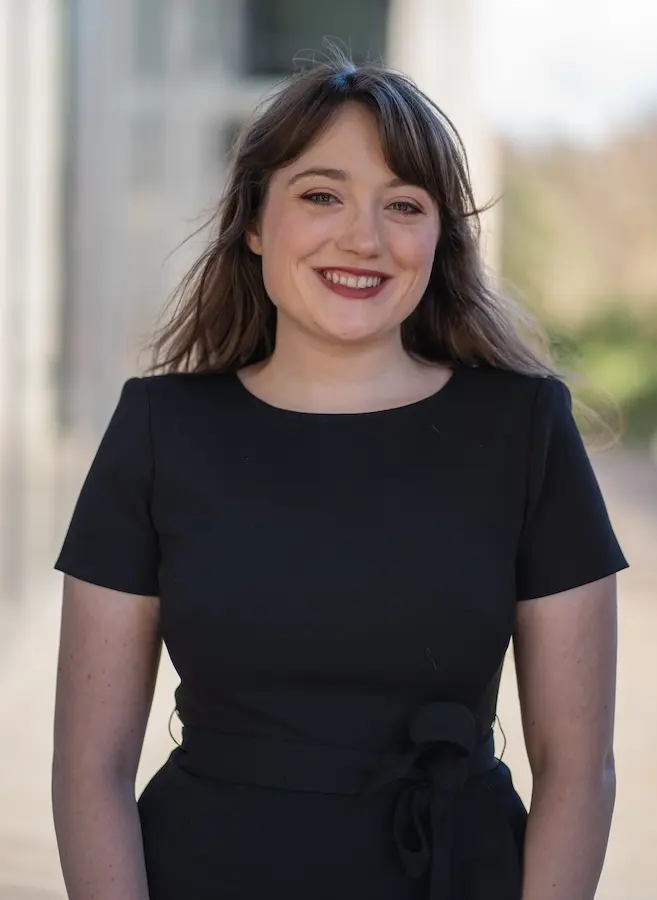
woman in black dress smiling

Cassandra Grinstead

By Taylor Pedersen, CLA Student Writer - January 26, 2026

For as long as she can remember, Cassandra Grinstead has been playing video games. She has fond memories of playing games like Minecraft with her siblings, and the night her family got a Wii and played Wii Sports for hours. As she grew up, she made lifelong friendships through online games and communities such as Destiny 2. But while gaming was her hobby, she wanted a different career path.

“I always knew I wanted to be a psychologist, but I wasn’t sure what path to take,” she said. “I interviewed people and asked, ‘how do I become a psychologist?’ Most of them told me, ‘do research and see if you like it.”

So she did.

At the University of Arizona, where she was a fifth-generation Wildcat, Grinstead majored in psychology and Japanese. She joined multiple research labs, including the Social Connectedness and Health Lab, as well as the Child Cognition Lab, where she eventually became lab manager.

After studying abroad in Japan as an undergraduate student, she ended up moving to Japan in 2021 to begin a master’s program at Ochanomizu University, a women’s national university in Tokyo. "I think learning about another culture and language is important for having a healthy brain,” she said. “It makes you a more positive member of society.”

Soon after, Grinstead joined Washington State University’s IMPACT Lab as a lab manager, where she focused on youth substance use and prevention research. “That job was actually perfect,” she said. “I was doing exactly what I wanted to be doing—learning how you can intervene across the healthcare continuum, from prevention to treatment to recovery. It really shaped the kind of research I’m doing now.”

When it came time to apply to graduate school, Grinstead looked for programs that would allow her to continue both research and clinical training. She found the right match at Oregon State, joining the inaugural cohort of the College of Liberal Arts’ clinical psychology Ph.D. program at the School of Psychological Science

Now working with Dr. David Kerr, she’s exploring a different but increasingly urgent form of addiction: gambling. Her research focuses on how online gaming environments, particularly those with built-in “loot box” systems, can condition players to engage in gambling-like behaviors.

“I play video games every single day. I love them,” she said. “They’ve had a really positive influence on my life; it’s how I met a lot of my favorite people.” Grinstead wants to research more about the psychology of players and games, specifically their monetization models. “Buying ‘loot boxes’ or playing ‘gacha games’ looks a lot like gambling, but this field needs more research to understand if loot boxes are truly risky or similar to gambling.”

Loot boxes: virtual items that players can purchase for a random in-game reward, are often dismissed as harmless. But for many young players, Grinstead said, they can be an early introduction to the mechanics and psychology of gambling. “Gamers actually tend to say they think it’s similar to gambling,” she said. “But because it’s in a game, it’s often free, legal, and not considered gambling in the U.S.” She pointed to the Entertainment Software Rating Board (ESRB), which has officially stated that loot boxes aren’t gambling. “But if you look at the scale of it—hundreds of millions of dollars spent every year—it deserves another look to truly understand if it is similar to gambling or not, especially considering other countries have enacted restrictions.”

Grinstead is looking to potentially collaborate with Japanese researchers to study loot box behavior among youth in Japan, where most kinds of gambling are illegal. “Japan is starting to open up to new forms of gambling; they’re building their first integrated gambling resort similar to what we have in Vegas,” she said. “So I’m interested in how people there perceive loot boxes. Are they seen by players as more harmful or less? What kinds of games are popular, and how does that shape attitudes? Even if the results show no difference, that’s still really important information.”

Despite focusing on addiction, Grinstead’s outlook is far from pessimistic. “Having a particular monetization model doesn’t make a game inherently harmful,,” she said. “There’s a lot of evidence that games can be positive and even therapeutic. And for people in rural or marginalized communities, online games can be their main source of friendship and connection. I know games have created amazing connections for me.”

That balanced perspective, one that recognizes both the risks and the potential of gaming, mirrors Grinstead’s larger goal as a researcher: to understand behavior without judgment, and to use that understanding to help people lead healthier, more connected lives.

“Psychology doesn’t always focus on the positive,” she said, “but I think it’s just as important to ask what protects people as what harms them. That’s the kind of research I want to do.”

One woman's evolution: From evangelical homeschooling to researching religious differences within families

By Colin Bowyer on Jan. 15, 2026

Toni Maisano, professor of teaching in the School of Communication, researches family communication and identity among young adults

Image
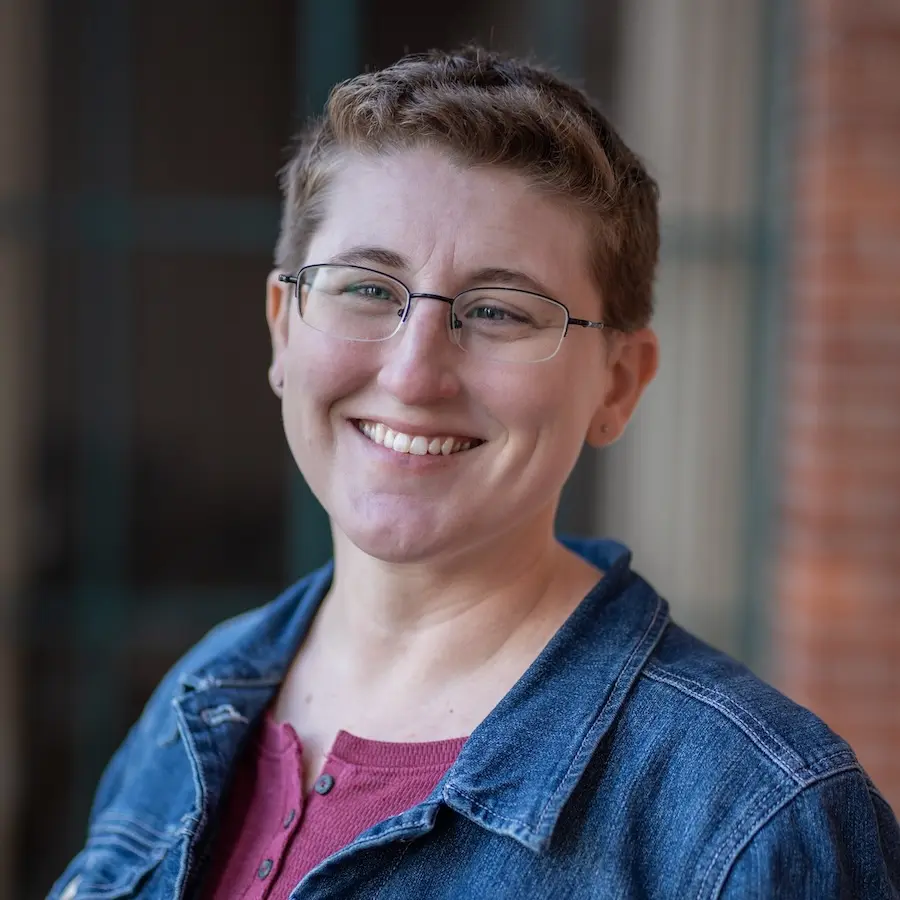
person wearing jean jacket and red shirt smiling

Toni Maisano

By Taylor Pedersen, CLA Student Writer - January 19, 2025

Toni Maisano grew up as the oldest of eight in a tight-knit Texas household where higher education wasn’t an expectation, especially not for girls. She was homeschooled from kindergarten through high school, shaped by once adhered to conservative evangelical values that she now recognizes as central to both who she is and the work she does. 

“Even though I’ve changed a lot and evolved,” she said, “I’m still very rooted in my family life.” That rootedness is the foundation of a research career built on understanding how families communicate, support, and sometimes struggle to accept one another.

Maisano didn’t set out to become a scholar. At 20, she backpacked through New Zealand and the Pacific, a spontaneous adventure that ended, somewhat shockingly, with her stumbling into the idea of going to college. “I probably didn’t think, ‘Oh, college is for me’ until I was at least a semester in,” she said with a laugh. But that changed quickly. A handful of professors at Abilene Christian University noticed something in her writing: curiosity, clarity, an instinct for asking questions others overlooked. Their encouragement was her first real glimpse of herself in an academic setting. “They really affirmed me,” she said, “and they nurtured that curiosity.”

At first, she was a marketing major at Abilene, a small university in west Texas, but her interests soon shifted. Speech and debate pushed her into the orbit of the communication department, where course titles alone sparked more excitement than anything in her business plan. She switched majors and found a community where her questions about people, relationships, identity, and belief felt not only welcome but important.

Graduate school at Texas State University in San Marcos solidified that sense of purpose. She entered her master’s program as both a researcher and a newly minted instructor; an intimidating leap for someone barely removed from her own undergraduate classes. But the more she taught, the more she realized she loved working with students. Confidence came slowly, she said, with repetition and support. “I had to grow into teaching as myself,” she explained. “Not the version of what I thought a professor was supposed to be.”

Her research at Texas State focused on family communication, specifically how parents talk with their children about sex and relationships, and how those early conversations shape development later in life. It was work steeped in her own upbringing and the broader homeschooling movement she grew up in. Over the years, she followed emerging conversations online, as more adults from similar backgrounds began publicly reflecting on their experiences. “It keeps the wheels turning,” she said. “I’m always wondering about the implications. How do people manage these relationships today?”

By the time she pursued her Ph.D. at the University of Nebraska—Lincoln, her research lens shifted to another question she knew intimately: how families communicate acceptance when religious beliefs diverge. Many of her findings resonated deeply with her own story. But what surprised her most were the families who, despite profound differences, found creative ways to sustain closeness. “Some participants couldn’t fully explain how it worked,” she said, “but they still had these positive, functional relationships. That was really lovely to witness.”

Now at Oregon State, Maisano is exploring what happens when people leave evangelicalism altogether, a process often referred to as faith deconstruction. She is part of a multi-university team using both interviews and found poetry to analyze the identity shifts that accompany leaving a tightly structured belief system. One participant’s description, “deconstruction is both loss and creation,” has become the project’s unofficial thesis. “There’s grief,” she explained. “There’s the loss of certainty. But there’s also this beautiful opportunity to step into a new chapter of life.”

Across her work, Maisano doesn’t pretend to be an objective outsider. As a qualitative researcher, she said transparency matters to her more than neutrality. She names her positionality openly and collaborates with researchers whose experiences differ from her own, creating balance rather than distance. “I don’t ever want to fully separate myself from what I study,” she said.

As the instructor of several communication courses, including interpersonal (COMM 218), family (COMM 332), and gender and communication (NMC 432), she’s focused on helping students navigate deeply personal subjects. Her classes begin with a simple, but demanding question: who am I? She integrates reflective writing, journaling, discussion, and art-based assignments to encourage students to approach topics through the lens of their own identities. For her, teaching is less about content and more about cultivating space, one where students can wrestle with identity, faith, relationships, and uncertainty without fear of judgment. “I love hearing students’ stories,” she said. “It’s one of my favorite things.”

Looking back on her path, from a home where college wasn’t encouraged, to teaching at a major research university, Maisano hopes students who feel out of place remember that there is no single “correct” academic journey. What matters most, she said, is compassion for yourself along the way. “We’re our own worst critics. But everyone comes to college with a unique collection of experiences. You have to run your own race. Self-compassion. Radical self acceptance. There’s always room to grow, no matter where you start.”

A love letter to theatrical design

By Colin Bowyer on Jan. 12, 2026

Senior Instructor and Costumer DeMara Cabrera reflects on her career in celebration of her tenth year with CLA

Image
woman standing in front of white background smiling

DeMara Cabrera

By Selene Lawrence, CLA Student Writer - January 12, 2026

DeMara Cabrera, M.S. ‘06, has always lived and breathed theatre. “I’d always been a performer,” she recalled, “when I was a child, I did theatre, I played piano, I sang in choirs, I danced; I was always on stage in one form or another.” Even though she was a natural performer, Cabrera found early on that her primary creative outlet was actually offstage. She was just five years old when she learned how to sew, but it wasn’t until high school that her involvement in costume design began. From that point on, Cabrera’s love of theatre remained her anchor as she moved from coast to coast, completed two master’s degrees, switched career fields, and finally found her dream job as a teacher and costumer in the theatre arts department at the School of Visual, Performing, and Design Arts.

When Cabrera attended Stanford University for her undergraduate degree, she had plans to become an English professor. “After my sophomore year, I realized that it wasn’t what I wanted to do,” she confessed. “I had to do a lot of soul-searching. That’s when I decided that the thing that really gets me going is theatrical design, creating the visual world that all these characters live in, whether it's scenery or costumes.” After taking a semester off to reflect on her path, Cabrera returned to finish her undergraduate degree and dropped her second major of English to continue her study of theatre with a focus in theatrical design.

During her semester off, Cabrera realized that she saw a future for herself in interior design, and that further education would allow her to pursue that career while taking occasional jobs in theatre. Just a few short months after finishing her undergraduate degree, Cabrera hit the ground running at Oregon State University in the now-discontinued interior design graduate program. As a grad student, Cabrera had her first experiences in teaching. “As soon as I started teaching here at Oregon State, I realized that I loved it, and that it really felt like it was who I was meant to be and what I was meant to do,” Cabrera said. “I come from a long line of educators. Growing up, my brother and I both swore we wouldn’t become teachers, and of course, we’re both teachers now. I do feel like part of it is just in our blood, but it's also how we were raised and the type of people we are.” 

Outside of her studies, Cabrera worked doing in-home consultations at a furniture store in Corvallis. After graduating, she moved to Portland to work as a kitchen and bath designer with Home Depot. Throughout her career in interior design, Cabrera took on occasional theatrical design jobs in Portland’s theatre community. “I loved interior design; I was good at it, but I was never going to not do theatre,” Cabrera said. “That was always going to be my passion.” Shortly after completing her master’s degree, she took an adjunct position at Linfield University in her hometown of McMinnville, where she taught costume design, managed the costume shop, and designed two productions for the school. It was there that Cabrera’s love of teaching, design, and theatre arts converged into a single role, one that she knew was perfect for her.

After her contract at the university ended, Cabrera decided it was time to attain the M.F.A. in costume design needed to pursue a permanent position teaching theatre at a university level. The decision, however, was not made lightly. The lack of M.F.A. programs in costume design in Portland meant that, to follow her dream, Cabrera had to leave behind her house, her dogs, her community, and her professional connections in theatre. ”I had to give up my life and move across the country to get my M.F.A., and it was a little scary, but also exciting,” she said. “I had a very clear goal that I wanted to work at a university, I wanted to teach and mentor students, and I wanted to design. That excitement and clarity of purpose got me through some of the rougher times in graduate school and helped me when I was missing home.”

After completing her M.F.A. program at Boston University, Cabrera began teaching at Central Connecticut State University. Already battling a prolonged sense of homesickness, she was put in a tough position in her first teaching role after graduation. “My job right out of grad school was very challenging,” Cabrera explained. “I was the scenic designer and costume designer for the theatre department, and was teaching and running the costume shop. It was basically two positions combined into one. I was doing productions outside of the school as well, so I was working 70-80 hours a week on average.” Not backing down, she completed two years in the role before deciding to resign and move back home. Just a month later, she secured her current position as an instructor and costumer in OSU’s School of Visual, Performing, and Design Arts. “It was like Oregon was welcoming me back home with open arms,” she said. “I always felt a little out of place on the East Coast. I'm glad that I went, and I'm glad I lived there and got to see what it was like, but it really reinforced that I'm an Oregonian.” Teaching at OSU, Cabrera finally felt that she was where she was meant to be. However, fate would have it that big changes would be coming. 

Cabrera’s beginning years in the theatre department were shaped by the retirement of three faculty members and the adjustment to working at a faculty deficit. Soon after, the start of the COVID-19 pandemic restricted performances to virtual spaces. More recently, the department had to vacate its building and spend two years without a theatre. But through it all, Cabrera’s determination and dedication remained unshakeable. Today, theatre at OSU is flourishing. The 2024 opening of the Patricia Valian Reser Center for the Creative Arts (PRAx) and the recent reopening of Withycombe Hall have not only made theatre at OSU more accessible than ever, but have also given the department the space it needs to truly thrive. “I’m really excited to see the department start to grow, and to work as a team to be able to think long-term. We’ll be able to make bigger and better plans of what we can offer that other schools can't, and how we can become a unique and exciting program that will draw more students here.” OSU’s 2025-26 season explores the importance of building community in troubling times. The season began with Arthur Miller’s “An Enemy of the People” in the fall, and will progress with “Mr. Burns: A Post-Electric Play” in the winter and “Women in Congress” in the spring. 

Despite the challenges she’s faced, Cabrera’s love for theatre runs stronger than ever. Outside of teaching, she has a professional career in scenic and costume design, and works with a number of local companies, including the Oregon Contemporary Theatre, Eugene Opera, and the Artists Repertory Theatre in Portland. She is currently engaged in costume design for “A Mirror” by Sam Holcroft, which will open on February 25, 2026, at Portland’s Third Rail Repertory Theatre. “I love helping tell stories and finding new ways to tell stories that have been told many times before. I've also been part of some new plays recently; it's always exciting to be one of the first people to create that world,” she said. If anything has become clear in her past decade teaching at OSU, it’s that Cabrera is, and always was, meant to be a teacher. “Working with the students and seeing them grow as artists is a really big part of what keeps me going,” she said. “On days when I’m feeling a little less inspired, getting to teach the students and helping them find their passion reinvigorates that part of me.” 

Image
two theatre students in costumes

Romeo and Juliet, August 2019

Image
two theatre actors performing

On the Razzle, May 2022

Image
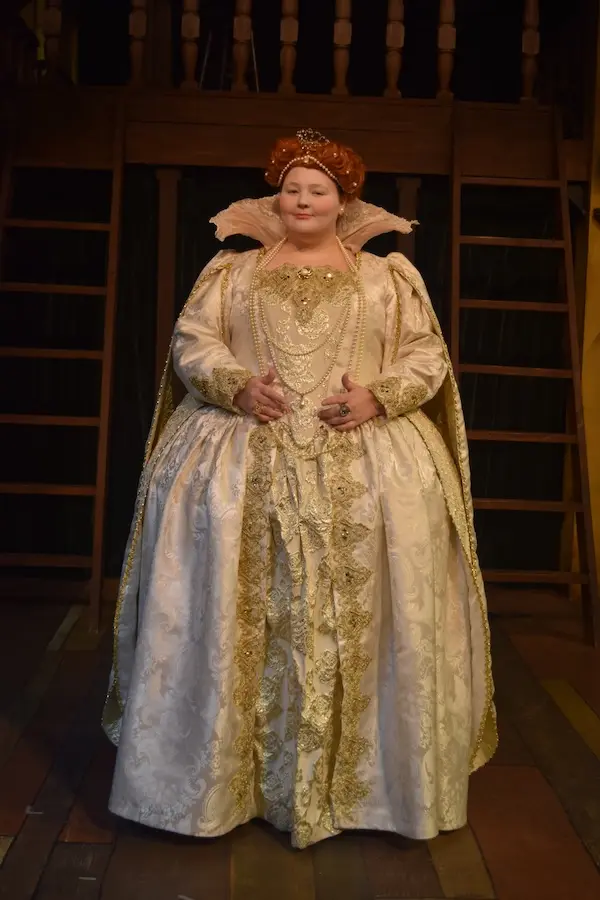
an actor dressed up as Queen Elizabeth

Shakespeare in Love, November 2019

How Nino Paoli built his journalism career one story at a time

By Colin Bowyer on Jan. 12, 2026

Creative writing and applied journalism alumnus Nino Paoli now works as a finance reporter at Bloomberg News in New York City

Image
person in blue shirt standing in front of green background smiling

Nino Paoli

By Hoku Tiwanak, CLA Student Writer - January 26, 2026

Nino Paoli, ‘23, arrived at  Oregon State as a sophomore after transferring from Seattle University. During his freshman year, the university, as well as the city itself, shut down for the COVID-19 Pandemic, which gave Paoli the opportunity to revisit his idea of becoming a novelist. Coincidentally, in 2020, the School of Writing, Literature, and Film began to offer creative writing as a major and instead of returning to Seattle amidst an ongoing pandemic, the Montana-native Paoli saw the opportunity to transfer into a program he was looking for despite having to move away from a bustling city life that he preferred. 

Through his creative writing coursework at the School of Writing, Literature, and FIlm, Paoli was exposed to  different writing styles and discovered his creative background could be adaptable to many forms of writing. “I came to the realization that becoming a novelist might not be the most sustainable career,” said Paoli. “I started looking for ways to expand my horizons, and that’s when I found journalism.”

After a year at OSU, Paoli added a minor in applied journalism, which blended creativity with real-world impact. The wide range of journalism classes helped Paoli discover all sides of the field. One of the first courses he took was Science Writing (WR 362), which he found surprisingly enjoyable compared to the types of writing he was used to. “It’s a testament to how vast and diverse the journalism classes at OSU are,” he said. Other mentors who led Paoli in his early journalism career were Assistant Professor Sindya Bhanoo and Assistant Professor of Teaching Liddy Detar.

His first real newsroom experience came as a campus reporter for The Daily Barometer, OSU’s student-run newspaper. The role introduced Paoli to the fundamentals of interviewing, sourcing, and writing on a deadline. “At first, it was nerve-wracking to walk up to strangers and ask questions,” he said. “I didn’t realize it at the time, but really it got me out of my shell and improved my writing in so many ways. It was eye opening and fun to be able to stretch yourself.” Some of Paoli’s articles covered homelessness, climate change, mental health funding, university governance, and more.  

After graduating, Paoli was looking to gain more experience working as a reporter. Paoli applied and was selected as a Snowden Fellow, a prestigious Oregon-based journalism fellowship where students are placed in newsrooms throughout the state. He spent three months reporting for The Observer in La Grande, in Eastern Oregon, where the pace was much faster than what he experienced at The Daily Barometer. “In a small newsroom, you learn to carry your own weight. It really taught me how to manage deadlines and stay adaptable,” Paoli said. “Working at The Observer was the best experience I could have. It was a crash course on what it’s like to be a local journalist working in a small community where everyone knows your name.”

When the fellowship ended, Paoli found himself unsure of how to make the leap to larger newsrooms, many of which are located on the East Coast. He started doing what he could from home in Missoula, cold-calling journalists he admired. “One told me, ‘find an internship and make the move.’ So I did.”

That advice led him to an internship with Marketplace by American Public Media in Washington D.C., and eventually, to New York, where he was a news fellow for Fortune. While on the global news desk, Paoli covered breaking stories on topics ranging from technology and artificial intelligence to corporate policy and trade. “Every morning, I pitch stories, and by midday I’m filing them,” he said. 

Among the many topics he’s covered, Paoli has been especially drawn to trade and tariffs. “It’s one of those areas where there’s so much to uncover,” he said. “Sometimes you find things no one else has reported on yet, and that's really satisfying.”

Now wrapping up his seven-months-long fellowship at Fortune, Paoli is moving on to become a finance report for Bloomberg News. His advice to aspiring journalists is to “reach out to people you admire, most journalists are very willing to talk to you,” he said. While every journalist wants to chase big name outlets, “no job is too small. Every experience teaches you something.”

CLA to CEO: Maggie Gauger's trip from first-generation student to the top of Athleta

By Colin Bowyer on Jan. 12, 2026

While a student at the College of Liberal Arts, Gauger learned independence, resilience, grit, accountability, as well as statistics, to help navigate the apparel design world

Image
woman in blue jacket sitting and smiling in front of a gray background

Maggie Gauger

By Taylor Pedersen, CLA Student Writer - January 12, 2026

When Maggie Gauger, ‘97, answered a video call from her office high above San Francisco’s financial district, the late-afternoon sun bounced off the glass towers behind her. “I know, it looks fake,” she joked, shifting out of the glare. These days, this skyline is her backdrop as she shapes the future of women’s performance apparel as Global Brand President and CEO of Athleta.

It’s a long way from Hillsboro, Oregon, where she grew up.

When she applied to Oregon State as a first-generation student in the early ’90s, she filled out a paper form—“I swear you ripped it off a pad,” she laughed—and mailed it in. No search engines, no cell phones, no comparison charts. But OSU, just 73 miles from home, felt big enough to hold possibility.

“It felt like independence,” Gauger said.

Once on campus, she threw herself into everything. She joined ASOSU and the Panhellenic Council and made friends across majors and backgrounds. At the same time, she held down three jobs: flipping burgers at Jamie’s Hamburgers (formerly in the Kings-Circle Shopping Center), nannying, and even selling typed-up class notes she took for other students.

“I’ve been a hustler from the get-go,” she said. “I approached college with open arms. My natural curiosity shaped my whole OSU experience: asking questions, getting involved, wanting to understand how things worked. It’s honestly what built my career.”

She majored in communications with a minor in Spanish, but the lessons she values most weren’t confined to any syllabus. “Do I think the curriculum alone set me up to be a CEO? We can debate that. But the experience absolutely did.”

She still leans on what OSU taught her: independence, resilience, grit, accountability, collaboration, and the discipline to start something and finish it.

One class, though, remains vivid: economics and statistics; “my professor brought emotion to numbers,” she said. “He showed us numbers were patterns, ways to diagnose problems, ways to see the future. That unlocked something for me. It was the first time I truly loved business.”

Still, when she graduated, she didn’t picture a corporate path. She imagined becoming a lawyer, thanks, in part, to the late-’90s television dramedy Ally McBeal. “They looked like they were having fun,” she laughed. But her academic advisor at the time encouraged her to wait and get some life experience first. She listened.

A recruiter from Meier & Frank department store (then owned by The May Department Stores Company) hired her as a merchandise buyer for the Portland flagship store straight out of OSU. She stayed five years before moving to Nike, where she spent the next 23 years in merchandising, sales, and leadership roles overseeing entire apparel lines and hundreds of employees.

At Nike, Gauger was surrounded by colleagues with M.B.A.s and Ivy League degrees. She noticed.

“I had a chip on my shoulder,” she admitted. “I kept thinking, should I go back to school?”

Then everything shifted.

“That feeling faded when those same people started working for me,” she said. “It doesn’t matter where you went. It matters what you do with your four years. And I think I got the best deal with Oregon State.”

Her leadership style also became part of her identity: direct, honest, unafraid of conflict. Qualities that, she noted, aren’t always welcomed when they come from women.

People have called her “intimidating,” “too much,” “too direct.”

“You may be intimidated by me, but I’m not intimidating,” she said firmly. “I won’t compromise who I am.”

When she stepped into Athleta’s top job, she entered an industry where consumer habits, digital trends, supply chains, and fashion cycles shift faster than ever.

“Being a CEO is planning, patience, and ambition,” she said. “I ask my team: how do we become the company to beat?”

For her, the answer starts with culture.

“We have to be resilient. We have to be adaptable. The rate of change is immense.”

Athleta also has a distinctive mission. Unlike many performance and athleisure brands, it is unapologetically built by women, for women. Every product starts with a question: what problem are we solving for real women?

As Gauger’s own daughters enter adulthood, one in college, one in high school, she thinks often about the beginning of her own career.

“Students who don’t take advantage of the full ecosystem at Oregon State are crazy,” she said. “It’s not just classes. It’s the community, the clubs, the different cultures, the people you meet, the ways you learn to collaborate.”

And beneath all of that: curiosity. The thing she credits most.

“I was curious about everything at OSU. That’s what got me into rooms that changed the trajectory of my career. That’s what built friendships and led to my first job and my second job and every job after that.”

She glanced back at the skyline behind her.

“You never know where four years will take you. For me, Oregon State was the first place that opened a world I didn’t know existed.”

CLA Research: Linking extreme cold and domestic violence in Peru

By Colin Bowyer on Jan. 6, 2026

A new article co-authored by Assistant Professor of Economics Katie Bollman reveals how income loss due to cold shocks affecting agricultural production drives increases in intimate partner violence

Image
cityscape of Puno, Peru

Puno, Peru | Credit: Diego Delso

By Colin Bowyer, Communications Manager - January 7, 2025

Violence against women, particularly Intimate Partner Violence (IPV), affects one in three women worldwide. IPV victims suffer long-term physical and mental health problems, as well as losses in productivity and income. In emerging economies, IPV costs an estimated one and a half percent to four percent of GDP. Relatedly, rising global temperatures due to climate change continue to cause intense cold waves that endanger vulnerable populations and agricultural production, especially in highland areas of low- and middle-income countries. 

In a new first-of-its-kind study, researchers from Oregon State University, Colorado State University, Wake Forest University, and the United Nations’ Food and Agriculture Organization examine the effect of cold exposure on IPV. Forthcoming in the Journal of Development Economics, the study focused on the Peruvian Highlands, where IPV is common and where extreme cold events have become more frequent, affecting millions of residents. 

When comparing socioeconomic survey data with weather trends from 2010-2018, the results show that cold shocks, measured as cumulative degree hours below harmful temperature thresholds, raise the likelihood of IPV. Specifically, 10 degree hours below -9°C increase the probability of domestic violence by 0.5 percentage points. During the agricultural growing season, the effect is intensified, jumping to 1.6 percentage points.

“Cold influences IPV through two main channels,” explained Katie Bollman, an economist in the School of Public Policy at Oregon State. “First, extreme cold reduces income from agriculture. Second, extreme cold may limit time spent outside of the household, potentially increasing exposure of women to violent partners.”

The study identifies income loss as the primary driver of cold-induced increases in IPV, accounting for roughly three-quarters of the total effect of cold shocks on IPV. While reduced mobility during cold spells also may play a role, the economic impact of cold damage on agriculture is far more significant. Importantly, the research suggests that social assistance programs can mitigate these effects, as regions with higher baseline coverage of government support show no significant increase in IPV during cold events.

Prior research suggests income loss can increase IPV through stress, anxiety, and impulsive decision-making. Anecdotal evidence from higher call volume to assault hotlines during severe cold spells supports research exploring the causation between weather-induced “cabin fever” and domestic violence cases. This is the first study to quantify the relationship between cold exposure and IPV, by looking at how cold shocks affect income and social well-being. 

In a context in which climate change increases extreme weather events, the authors show that exposure to cold increases IPV victimization, in which loss of income is more influential than time spent inside. Furthermore, households dependent on agriculture are particularly vulnerable to the effects of cold shocks during their crop growing season.

“Our findings highlight an overlooked consequence of climate variability,” said Bollman. “Extreme cold doesn’t just harm crops, it disrupts household income and increases stress, which can lead to violence.”

Why Chris Chen wants us to rethink our relationship with AI

By Colin Bowyer on Dec. 29, 2025

As artificial intelligence reshapes communication and culture, the College of Liberal Arts welcomes Chris Chen, a new assistant professor whose research examines the psychological and social effects of AI

Image
a woman in a black shirt and pink jacket looking at the camera

Cheng "Chris" Chen

By Hoku Tiwanak, CLA Student Writer - December 30, 2025

When Cheng “Chris” Chen first heard about Alexa and Siri during her Ph.D. program at Penn State University, she found herself intrigued by these new conversational agents. “I wanted to understand why people talk to these devices, what they can do, and how those interactions shape the way we think and behave,” she said. That curiosity set her on a path that now defines her research at the intersection of artificial intelligence, social psychology, and human behavior.

Chen recently started her new role as a tenure-track faculty member in the College of Liberal Arts’s School of Communication, bringing her experience as an AI researcher and designer. Before arriving in Corvallis, she taught at Elon University in North Carolina as an assistant professor of communication design, specializing in user experience and user interface design and human-computer interaction. 

Now as assistant professor of emerging media and technology, Chen teaches courses such as Global Media (NMC 280) and, this winter, Media Effects of AI (NMC 535). Her classes encourage students to think critically about the quickly evolving relationship between humans and technology while helping her students understand both the opportunities and the risks that come with AI. “Technology can enhance our lives, but we shouldn’t become overly reliant on it or let it replace our cognitive abilities.” she said. 

Chen’s most recent research, published in Media Psychology, examines racial bias in AI training data. Her study asked participants to assess image datasets used in AI training, revealing how often people fail to recognize bias, such as misrepresentation of certain racial groups. 

“When AI is trained on data that doesn’t reflect diverse populations, its performance suffers,” she explained. “The people designing AI bring their own perspectives and biases to the process, we have to keep human welfare and wellbeing in the loop.” Her goal is to help people identify and mitigate these biases before they become embedded in the systems we all use.

Looking ahead, Chen plans to continue her collaborations with researchers at Penn State, Elon University, and international partners to study how people can become more aware of and resilient to AI bias and its defects. She finds her work most rewarding when it has real-world applications, in hopes that her findings will someday shape the way AI is developed. The greatest challenge she has identified is the lack of access to proprietary AI design processes. “We often have to study the effects of AI after products are already released,” she said. “That makes it harder to prevent issues upfront, but it also makes our research more essential.”

As Chen begins her journey at the College of Liberal Arts, she looks ahead to advancing the conversation about how humans and technology can coexist more responsibly. She looks to inspire students and researchers to think critically about the ethical and social implications of AI, ensuring that innovation continues to serve people first.

Jade Egger: Designing community through creativity and connection

By Colin Bowyer on Dec. 29, 2025

Egger balances creativity with functionality in her visual designs for organizations across campus

Image
a woman wearing a black shirt and red jeans sitting on a balcony railing

Jade Egger | Credit: Rudy Uhlman

By Taylor Pedersen, CLA Student Writer - January 5, 2026

As a senior in the College of Liberal Arts’ graphic design program with a minor in user experience research design, Jade Egger has spent her college career leaving a lasting mark across campus. From rebranding student organizations to curating exhibitions at the Memorial Union (MU) Art Gallery, Egger’s work reflects both a meticulous eye for design and a deep commitment to community.

Egger’s impact is visible across OSU’s campus. She has contributed to projects with the Pride Center, the MU Teaching Kitchen, the MU Creative Studio, and the MU Art Gallery and Restoration. Each role, she said, shaped her approach to design in unique ways.

“One of my favorite projects was rebranding the MU Teaching Kitchen,” she explained. “It was transitioning from a department-level program in Student Experiences and Engagement to a department in the MU, and I wanted to honor its roots while creating something new. For smaller clubs and organizations, that’s a big deal; what seems like a small design change actually helps communicate their identity and history to the community.”

Her work with the Pride Center has pushed her to think inclusively and critically about design choices. “They let me explore freely, which was great, but it also meant I had to be thoughtful. Colors, symbols, and even small design details can have layers of meaning. It taught me to research deeply and consider the audience carefully.”

Challenges, too, have left their mark. At the MU Creative Studio, Egger is currently designing a logo for a newly rebranded program called ROOTS (Reaching Our Opportunities Through STEM), aimed at supporting underrepresented STEM students. “It’s tricky because the program is still finding its identity, and we need a logo that nods to the old branding while signaling the new direction. I’m trying to balance subtlety with clarity, conveying connection and belonging without being too literal.”

Egger’s design process blends research, iteration, and experimentation. She begins with research; examining prior work, themes, and audience needs, then sketches and develops concepts. “I play with text, color palettes, and composition until I find something that resonates,” she said. Feedback is crucial: “You show your work, get critiques, and go back and forth until it feels right.”

Balancing creativity with functionality, especially in UX design, is central to her approach. “I try to make designs intuitive. If someone sees it for the first time, can they understand it without confusion? I focus on space, and simplicity. Pretty design alone isn’t enough; it has to work for the user, too.”

Looking ahead, Egger hopes to continue shaping user experiences and visual identities in meaningful ways. “I’d love to work in branding and packaging design, making things visually appealing while improving usability. My dream is to create work that’s functional, beautiful, and impactful.”

For Egger, student designers do more than create aesthetics, they help shape the campus culture itself. “Design helps draw people in and spark curiosity. A poster, a logo, or an exhibition can engage students, highlight events, and connect the community. That engagement is really powerful.”

Reflecting on her time in the program, one lesson stands out: scale matters. “A logo or design might look amazing on paper, but if it’s too small or doesn’t translate well, it loses its impact. Thinking about how work functions in real spaces is something I’ve carried with me through every project.”

From her first high school doodles to her current work on campus-wide initiatives, Egger has proven that design is more than visual, it’s a tool for connection, inclusivity, and storytelling. As she prepares to graduate, one thing is clear: her work will continue to make spaces more accessible, meaningful, and beautiful for those who experience them.

CLA Research: Study uncovers how artificial intelligence is shaping innovation in manufacturing and advanced materials sector

By Colin Bowyer on Dec. 22, 2025

Through qualitative methods, Assistant Professor John P. Nelson explores the possibilities of how AI can help and hurt technological progress

Image
a headshot of a man

John Nelson

By Colin Bowyer, Communications Manager - December 23, 2025

In recent years, improvements in artificial intelligence (AI) have driven increasing attention to AI’s applications and implications for scientific research and technological development. It’s presumed that AI will help to accelerate scientific advancement, leading to economic growth and the development of solutions to global problems. But how plausible are these expectations for AI?

A new study lead-authored by School of Public Policy Assistant Professor John P. Nelson sheds light on the real-world impact of AI and machine learning (ML) on technological progress in manufacturing and materials science. Contrary to popular narratives of AI as a revolutionary force, the research suggests that AI is best understood as a powerful research and development tool, but one in keeping with the historical arc of scientific methods development.

Published as a preprint, titled "Can Artificial Intelligence Accelerate Technological Progress? Researchers’ Perspectives on AI in Manufacturing and Materials Science," the study draws on 32 in-depth interviews with U.S.-based academic researchers actively using AI/ML in their work.

“AI and machine learning allow scientists to search for promising candidate designs or technologies more cheaply and quickly, but those candidates still need to be validated by more conventional theory and empirical trials,” said Nelson. “For now, they’re tools, not magic bullets.”

The authors’ key findings include:

  • Surrogate modeling: AI/ML can be used to create surrogate models for physics-based simulations, significantly reducing the cost and time of computational modeling and exploration of design spaces for materials and manufacturing processes.
  • Phenomenological modeling: AI can model poorly understood phenomena, offering predictive capabilities where traditional theory falls short.
  • Conditional benefits: While AI can solve previously intractable problems and identify patterns in large datasets, its reliability depends on dense, high-quality training data.
  • Not a substitute for theory: Interviewees expressed skepticism about AI’s ability to generate disruptive scientific theories. AI complements traditional methods rather than replacing them.
  • Risks and limitations: Concerns include over-reliance on AI, interpretability issues, high energy consumption, and the possibility that shortcuts enabled by AI could hinder long-term scientific discovery.

“We hope our study may also illustrate the value of contextualizing study of AI/ML within extant theories of technological change,” writes Nelson. “A detailed understanding of knowledge creation and technological development clarifies what AI/ML will need to do to genuinely transform these processes; and what its consequences may be.”

The study calls for balanced investment strategies that integrate AI/ML with conventional research methods, ensuring continued progress in both incremental and potentially disruptive innovations.

Aspen McCallum helps others explore the wonders of art

By Colin Bowyer on Dec. 18, 2025

B.F.A. alumna McCallum leads printmaking and glass works at OSU’s Craft Center

Image
person wearing a green sweater smiling at the camera

Aspen McCallum

By Jessica Krueger, CLA Student Writer - December 29, 2025

If you’ve ever been to Oregon State University’s Craft Center in the basement of the Student Experience Center, there’s a good chance you’ve met Aspen McCallum, ‘25.

A versatile artist who specializes in printmaking, McCallum graduated from OSU with a Bachelor of Fine Arts and a minor in art history. 

During their undergraduate degree, McCallum spent much of their time at the Craft Center, where they worked as a tech to help other students navigate the vast and eclectic art studio. After graduation, McCallum became an official instructor, teaching classes in stained glass and printmaking. 

“Surprisingly, I get a lot of engineering students over there and I’m glad,” McCallum said. “I think it’s very important to have some sort of creative outlet.”

McCallum’s other job is at Living Studios, an art studio for neurodiverse adults with locations in Corvallis and Salem. At Living Studios, McCallum provides artists with the tools they need to explore different mediums of art. The goal is not to teach a certain way of creating art, McCallum explained, but to foster a supportive and accessible environment where artists can let their creativity flow.

McCallum’s own art spans the gamut of color, design, and material. McCallum is inspired by the world around them, sometimes by seemingly random things, but also by personal experience and memory. McCallum also likes to incorporate a sense of whimsy or fantasy into their art. 

Though McCallum works with a wide range of art materials, they find themselves drawn to printmaking especially. “It’s very meditative," McCallum said.

McCallum begins by carving a design into a block or plate, which can require much forethought and subtractive thinking. After the design is finished, McCallum applies ink to the surface and places it on paper. Then, the finished piece is revealed. 

A benefit of printmaking, McCallum explained, is that you can print an image however many times you want. “I have one plate that I made my first year (in Corvallis) and every year I return to it and print it a different way,” McCallum said. 

“I really like that about the whole process. You don’t just pull one print and it’s the same. You can move it slightly, you can do a different color, you can do all these things. It’s just these little details within the process that I am really drawn to.”

One of McCallum’s pieces is called “Honesty.” The process for creating it was unique in that McCallum added writing to the piece after the ink had already been applied to the plate, but before it hit paper. The piece was largely unplanned. On a whim, McCallum decided to incorporate a written reflection into a print that they had already been working on. The end result was exhibited and awarded the Cherry Pick award at The Arts Center in Corvallis and later purchased by the College of Liberal Arts.

McCallum always knew they wanted to pursue art. Both of McCallum’s parents are artists, so McCallum was surrounded by art from an early age. Before coming to Oregon State, McCallum lived in Colorado and took art classes at a local community college. After earning an associate’s degree at Front Range Community College, McCallum was ready for something new. They wanted a place where they could continue to advance their skills in art. 

The Craft Center played a large role in McCallum’s decision to attend. “I’ve utilized it a lot for my own practice and for networking,” they said, reflecting on their time there. “There’s some really cool people there that I wouldn’t have been connected with otherwise.”

“To be successful in the arts you really need to network, and that was one of my biggest takeaways from OSU,” McCallum said. “I made a lot of really good connections with a lot of my professors.”

One of McCallum’s favorite classes was a photography field course that they took with School of Visual, Performing, and Design Arts (SVPDA) faculty Evan Baden. Over the course of eight days, McCallum and other OSU students traveled through much of the Southwestern United States on a roadtrip. The class took photos along the way as Baden taught them useful tips and tricks for better photography.

In the summer of 2024, McCallum studied abroad in Italy with SVPDA faculty Daniele Di Lodovico to study Italian Renaissance art and architecture. Thanks to the Sponenburgh  Scholarship, McCallum was able to stay in Italy for an extra week to conduct a research project. For this, McCallum compared and contrasted a sculpture, a painting, and an architectural design that Italian sculptor and painter Michelangelo had created some five hundred years ago. The goal was to determine what defining factors exist in Michelangelo’s artwork. Doing this research, McCallum said, helped them to think about their own artwork in a new light. 

“It was an awesome experience to go over there and see firsthand the art that we had been talking about for years,” McCallum said. “It was really nice to apply my knowledge and do it on my own terms.”