Guided by curiosity, driven by care: Julia Martin navigates the ethics, empathy, and human side of medicine

By Colin Bowyer on April 14, 2026

Martin’s work in religious studies and bioethics highlights how moral reasoning informs medicine, leadership, and social responsibility
Image
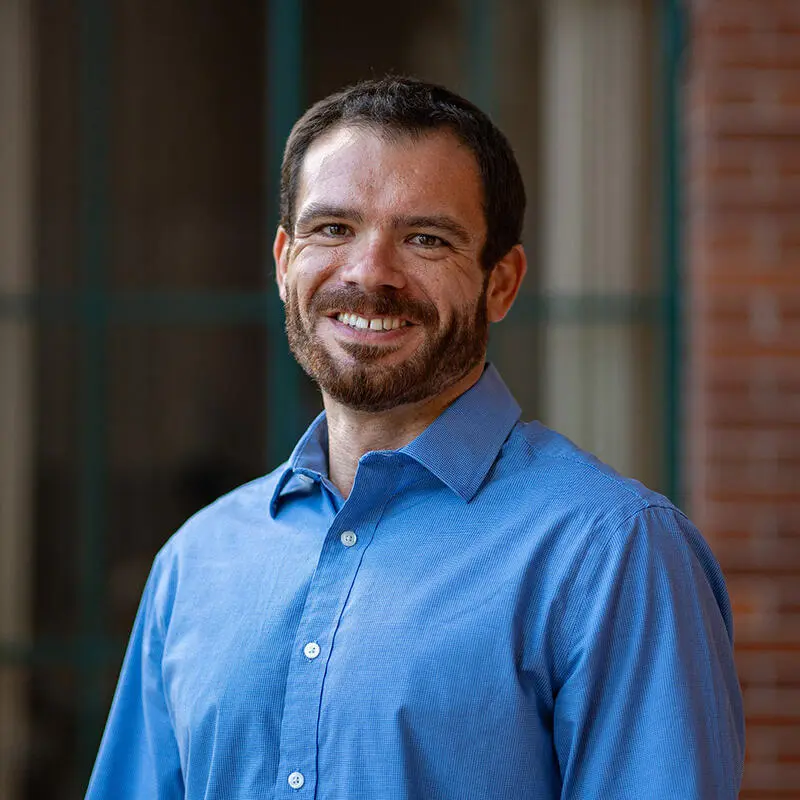
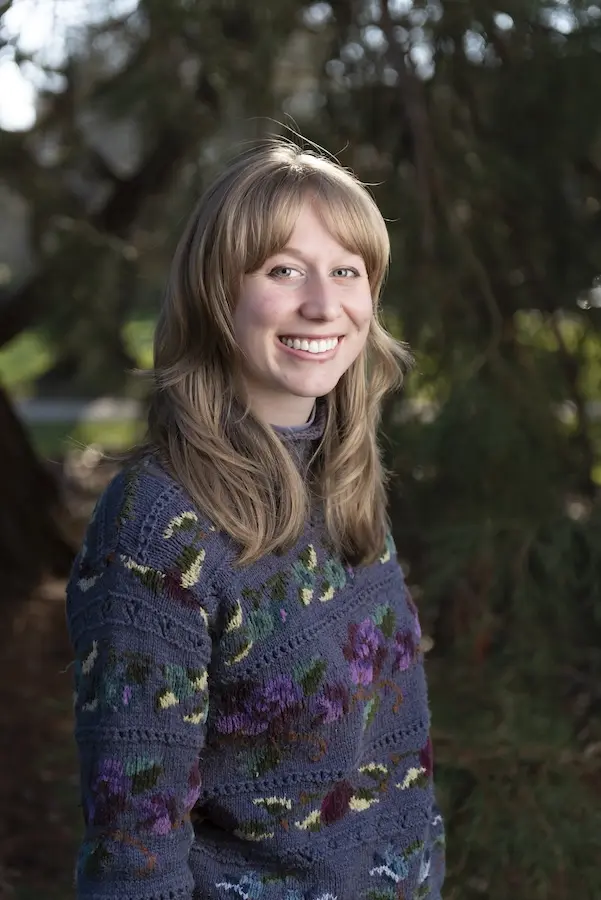
Julia Martin

Julia Martin | Credit Rudy Uhlman

By Taylor Pedersen, CLA Student Writer - April 14, 2026

Julia Martin grew up in Santa Cruz, California, a small beach town where the ocean and the redwoods meet. She attended a private Christian high school, even though she doesn’t identify as religious. At first, her participation in youth groups was more social than spiritual. “I just wanted to hang out with my friends,” she recalled. Yet the experience unexpectedly opened a window into the ways faith can shape lives.

She told the story of her junior-year physics teacher, who walked away from the final term of his Ph.D. program to enter ministry. “That story really resonated with me,” she said. “It was my first real understanding that faith isn’t just about going to church or youth group, it can guide life choices in incredibly meaningful ways.”

Her college journey began at Cabrillo Community College, just outside of Santa Cruz, where she initially pursued an English degree. “I loved the close reading, the writing, the analytical thinking,” she explained, “but I wanted to apply those skills to something that felt more alive, something that explored human questions and real-world dilemmas.” Philosophy and religious studies offered that. “I just had this open curiosity,” Martin said. “I wanted to explore the what, why, and how of people’s beliefs and ethical choices.”

Family connections to the area and repeated visits to Corvallis made Oregon State University an appealing transfer option. “I just loved the feel of the campus; the trees, the bricks, the sense of community,” she said. Arriving at OSU as an Honors College student studying religious studies in the College of Liberal Arts, Martin discovered a close-knit program that allowed her to cultivate meaningful relationships with professors and peers. One of her first major milestones came when a professor encouraged her to present a paper at a conference. “I hated public speaking at first,” Martin laughed. “I thought, ‘no way am I going up there.’ But I did it, and it changed everything. That was my first real push out of my comfort zone, and it taught me that opportunities often come disguised as challenges.”

Over time, Martin’s academic focus broadened. Complementing her religious studies degree, she also earned certificates in peace studies and medical humanities, drawn to the intersection of ethics, conflict resolution, and human-centered care. Classes like Pacifism, Just War, and Terrorism (REL 344), Biomedical Ethics (PHL 444), and Science, Politics, and Peace Literacy (PAX 481) challenged her to think critically about moral frameworks and global responsibility. “In ethics classes, you’re forced to really analyze why you think the way you do,” she explained.

“It’s one thing to say, ‘oh, that’s right,’ and another to defend it with reasoning. And you start to see that other people, people who seem to have completely different views, are often working from their own, equally valid ethical base. That changes how you approach every decision, big or small.”

As president of the Bioethics Society, Martin leads weekly discussions on medical and ethical dilemmas, from gene editing and prosthetics in sports to assisted suicide. She’s learned that even divisive topics can yield common ground when people take the time to listen and engage thoughtfully. “It’s easy to see these issues as black and white,” she said. “But when you break them down, there’s a lot of agreement hiding under the surface. That perspective has been invaluable. Not just in class, but in how I interact with people in everyday life.”

Her campus involvement extends beyond the classroom and the society she leads. She serves as secretary of the philosophy club, a CLA student ambassador, and a member of the Hiroshima and Nagasaki Commemoration Committee. “When you’re looking at global issues like nuclear disarmament, it can feel overwhelming,” Martin said. “Being part of a committee makes it tangible. We may not single-handedly solve the world’s problems, but we’re raising awareness, fostering dialogue, and making local change. That teaches you responsibility and agency; how to make a difference even when the challenge seems insurmountable.”

Perhaps the most transformative experiences for Martin have been outside academia, volunteering at Lumina Hospice Center in downtown Corvallis. There, she has spent time with patients in end-of-life care, many of whom live with dementia or Alzheimer’s. One interaction stands out: a patient who never recognized her until their last encounter remembered her, and in that moment, Martin felt the profound importance of presence. “It reminded me that medical care can’t always fix everything,” she reflected. “It’s about seeing the person, not just their condition. Recognizing their humanity is what matters most, especially in hospice. The patient, not the process of dying, should always be the focal point.”

These experiences have cemented her interest in social work, particularly advocacy for patients navigating medical systems. Martin is motivated by the idea that systemic flaws in healthcare can be mitigated by human connection, understanding, and empathy. “Even small interventions, helping someone navigate paperwork, making sure their wishes are respected, make a huge difference,” she said. “I want to be that person who ensures patients are heard, cared for, and treated with dignity.”

This fall, Martin will begin a dual degree in social work and bioethics at Case Western Reserve University. Her goal is both practical and deeply human: to influence medical practice in ways that honor the voices and autonomy of patients. “The broad goal is ensuring that people feel respected, listened to, and empowered, especially at life’s most vulnerable moments,” she said. “Even impacting just one person’s experience in the system makes the effort worthwhile.”

For Martin, the journey from Santa Cruz to Corvallis to Cleveland is a path defined by intellectual curiosity, ethical reflection, and a commitment to empathy. In a world that often treats ethical dilemmas and medical care as abstract or procedural, Martin’s approach reminds us that at the heart of every decision, policy, or treatment is a human being with a story that deserves to be heard.

Whether leading campus discussions on complex bioethical issues, commemorating the victims of nuclear warfare, or sitting quietly with a patient at the end of life, Martin approaches every challenge with a grounded belief: that ethics, empathy, and action are inseparable, and that meaningful change often begins with small, deliberate steps.
Preparing for law school through public policy

By Colin Bowyer on April 14, 2026

Colby Beck’s lifelong connection to Oregon State led him to law, public service, and an accelerated path to his M.P.P.

Image
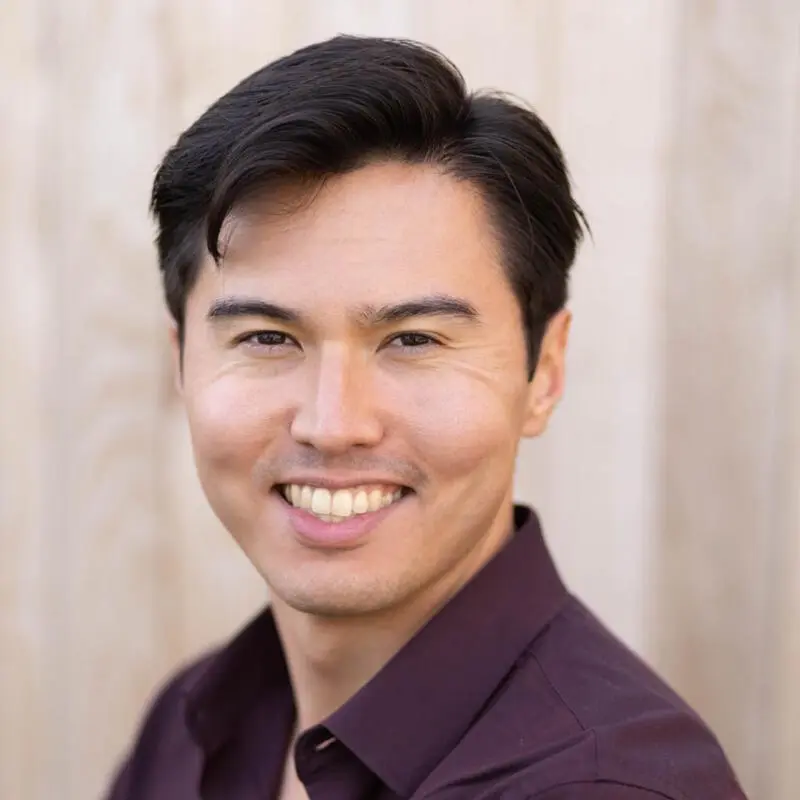
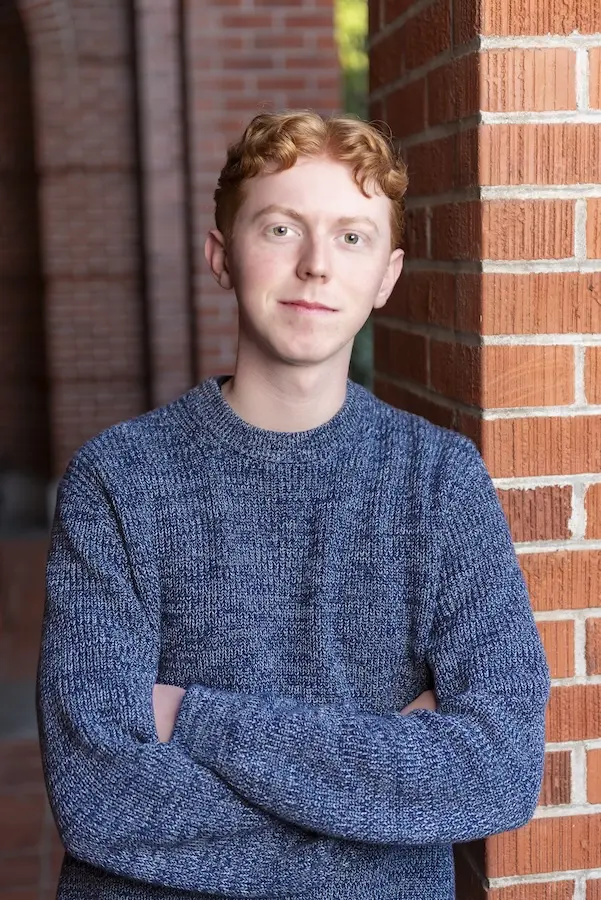
Colby Beck

Colby Beck | Credit: Rudy Uhlman

By Jessica Florescu, CLA Student Writer - April 20, 2026

Political science undergraduate student Colby Beck was a part of the Oregon State University community from a very young age. Both his parents are alumni and the entire family would make the short trip down to Corvallis from Canby, Oregon, every fall for football games and spring for baseball games. Joining Beaver Nation was always the plan, but Beck never imagined majoring in public policy, let alone earning a graduate degree. 

Things began to change during his final months of senior year in high school and over the summer before starting at OSU. The COVID-19 Pandemic had already begun and the worldwide protests prompted by the murder of George Floyd were just getting started. Beck became fascinated with learning about U.S. institutions, policymaking process, and the role of democracy. The idea of law school was something he had been ruminating on, but his time on a mock trial team also bolstered his plan to start OSU at the School of Public Policy.

“Things all came together in 2020 and attending OSU looked more and more appealing,” said Beck. “I had a realization that I was interested in a career in law and it has been the aspiration I’ve chosen to pursue since then. Also, the land-grant values and OSU mission to serve all Oregonians also really resonated with me and aligned with my own purpose and values.”

Beck started on the law and politics track of the political science major, which provided him with a roadmap of more relevant classes to his interests. Courses such as Intro to U.S. Government (PS 201) by Professor Chris Stout, Environmental Politics and Policy (PS 475) with Associate Professor Erika Wolters, and Constitutional Law (PS 381) with Professor Rorie Solberg. Beck also continued his run at mock trial by joining OSU’s team, and gained valuable public speaking and critical speaking skills applicable to any career in law. 

He shared, “It was honestly intimidating to join and compete at first as a young member, but forcing myself to still do it helped me get over those fears. I learned to think on my feet when public speaking, and my experiences taught me better ways to formulate an argument in front of people I don’t know.”

While in the School of Public Policy, Beck also landed a handful of critical internships that added even more public policy and law experience to his repertoire. First, at the Linn County Juvenile Department, Beck worked with probation officers in guiding juveniles through the detention court processes. This opportunity led to a second internship at the Linn County district attorney's office, working with victim advocates representing all ages in preparing necessary court documents and accompanying them to court hearings. 

“This position reminded me of the reason I wanted to pursue law school, which is to advocate for people who are unable to advocate for themselves,” explained Beck. “Working alongside the DA and victim advocates in this intimate way  confirmed that this is what I wanted to be doing and instilled more confidence in me about the judicial system in a lot of ways.”

In between his positions at Linn County, Beck worked as a district intern at the office of Congresswoman Andrea Salinas (OR-6) in Salem. Routinely, he fielded calls from constituents, managed the day-to-day in the office, as well as worked alongside Congresswoman Salinas when she returned from Washington D.C. When not interacting with residents of Oregon’s sixth district, Beck worked to find ways for Rep. Salinas to engage with her constituents, as well as keep her aware of what’s going on in her district while she worked in Washington D.C. Beck also attended constituent events, like roundtable meetings with community stakeholders surrounding certain topics, like veterans affairs.

“It was a very cool experience overall, especially because there were a lot of changes happening in the political landscape at the time,” shared Beck. “I was given an up close perspective of how the current administration is impacting Oregonians, and I received a lot of phone calls from people that were very worried about what was happening.” 

Outside of academics, Beck held multiple executive positions within his fraternity, Pi Kappa Alpha, in addition to being an ambassador for the College of Liberal Arts since his first year, a position he’s found “incredibly rewarding.” Beck and his peers on the ambassador team interact with students on a daily basis, answering questions and organizing events throughout the academic year, including Launch, CLA’s new student orientation. “It’s a cool experience that has allowed me to help first-generation and first-year students with any of their questions.”

With his final year as an undergraduate coming to an end and law school on the horizon, Beck decided to bolster his grasp on the intricacies of the U.S. judicial and legislative institutions by enrolling in the School of Public Policy’s accelerated master’s program, which allowed him to begin taking graduate-level courses during his senior year and then seamlessly transition into the one-year M.P.P. program. He will end up earning his public policy bachelor’s and master’s degrees in four years, with the intention of taking the LSAT in spring 2026. 

For students considering a career in law or policy, Beck recommends trying to explore experiential learning as much as you can to solidify your decision to continue that path. It’s important to not only learn about law from a textbook, but also gain practice by being part of court proceedings or holding a similar experience. 

Beck’s ideal plan is to attend law school in the Northeast and pursue working in areas of litigation, public sector, or in a legislative capacity.

CLA student sets sail on mission to teach about the wonders of the ocean

By Colin Bowyer on April 8, 2026

Marine studies and elementary education double-degree student Jeremy Schaffer is challenging misconceptions about the ocean and inspiring stewardship

Image
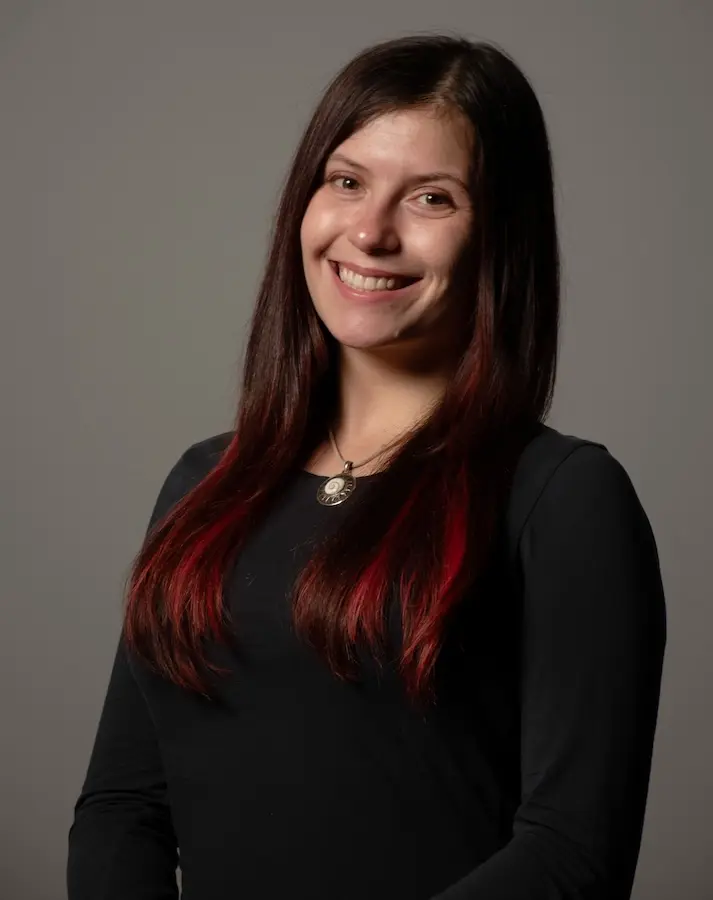
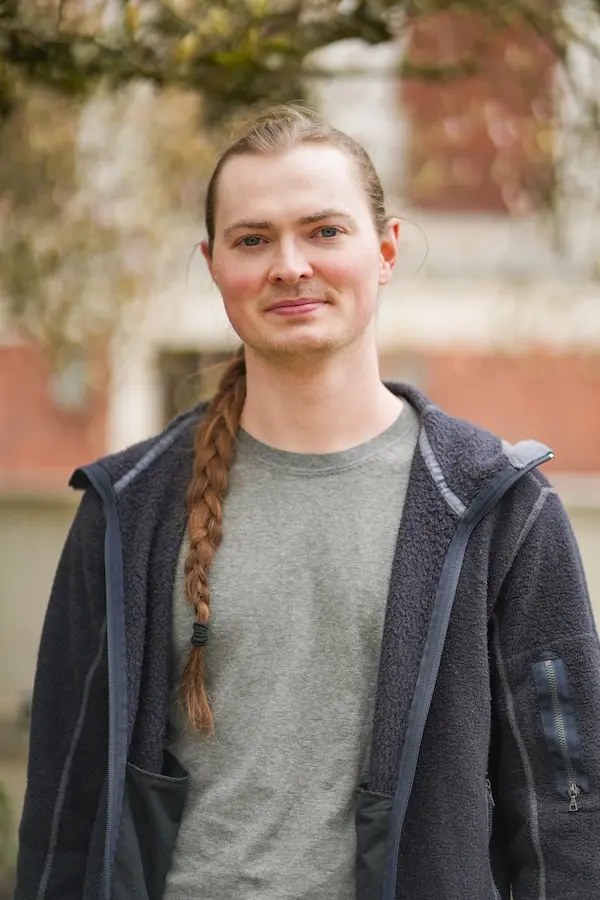
Jeremy Schaffer

Jeremy Shaffer

By Hoku Tiwanak, CLA Student Writer - April 13, 2026

Jeremy Schaffer moved to Newport, Oregon, when he was in seventh grade. While homeschooled as a child, Schaffer spent much of his time exploring the beach and slowly building his relationship with the ocean. Today, he spends his free time kayaking and seeking out ways to stay connected to marine life outside of the classroom, as well as advocating for sustainable practices. A double major in marine studies and elementary education, as well as an oceanography minor, Schaffer is passionate about working towards educating future generations about marine conservation. 

Every summer during high school, Schaffer worked as a volunteer educator at the Oregon Coast Aquarium in Newport. His role as a youth interpretive volunteer was answering questions from visitors and explaining interesting facts about marine life to people encountering it for the first time. Day after day, he noticed the same pattern. “I realized how little most people actually know about the ocean,” he said.

Schaffer began to see education as a powerful tool not just for sharing information, but for shaping how people relate to nature. That desire to become an advocate on behalf of the ocean ultimately led him to Oregon State. 

Schaffer came across the College of Liberal Arts’ marine studies (MAST) program through a connection at the aquarium. He wasn’t keen on entering a heavier STEM-related field, but thought MAST could be an apt middle ground, where the social sciences and humanities are emphasized in a marine-related curriculum. With Schaffer’s minor in oceanography, he is receiving an even more comprehensive education on marine ecology that will only enhance his future career in education.

As a student in three distinct colleges, Schaffer also interned with OSU’s Marine and Coastal Opportunities (MACO), where he worked at Cascade Head Biosphere Collaborative Preserve, assisting habitat leaders within the Coastal Climate Change + Community Art, Science & Tradition (4CAST) project. His work involved training and working alongside citizen-science volunteers to develop data collection and monitoring protocols, as well as conducted research on species habitats, and much more. 

Perhaps Schaffer’s most impactful experience required him to step away from OSU for a year. Last year, he joined AmeriCorp and served with World Ocean School, an experiential education program based aboard an old-school schooner. 

The ship, called the Denis Sullivan, traveled in the Caribbean and up and down the East Coast, hosting ocean-focused programming for students ranging from elementary to high school. “Every day was different,” Schaffer says. “You really had to learn to adapt. Plans changed constantly.”

Days began early with cleaning and preparation before students arrived. During day sails, students rotated through stations, where Schaffer would demonstrate how the schooner navigated.

Longer voyages brought high school students out for week-long sails. As a deckhand and educator, Schaffer taught small groups, often around five students at a time, while also helping to run the ship. The biggest challenge, Schaffer explained, was “it never really felt like you had a break,” he said. “You were always on call.” 

Teaching on a boat also meant letting go of traditional classroom comforts. There were no printed lesson packets, projectors, or laptops. Instead, Schaffer taught with reused materials and hands-on tutorials, while constantly adjusting to weather, schedules, and student needs.

Adaptability is one of the most valuable lessons he plans to carry into his future career. “Experiential learning is so much more powerful than just reading and watching,” he says. Being able to teach with what’s available in the moment is a skill he believes can translate anywhere in his career and personal life.

Schaffer looks toward a future in outdoor and outreach-based education, potentially working with organizations like the National Oceanic and Atmospheric Administration (NOAA), where he can engage with people directly.  

What continues to motivate him is the many misconceptions people hold about the ocean. Popular media, especially films that portray sharks as evil or constantly highlight the dangers of the ocean, fuel fear and disconnects people from the ocean’s beauty and importance. Schaffer believes change is possible, one lesson, one experience at a time. 

Understanding AI in the classroom

By Colin Bowyer on April 8, 2026

Ph.D. student Joseph Slade researches the intersection of artificial intelligence and the psychology of education

Image
Joseph Slade

Joseph Slade

By Jessica Florescu, CLA Student Writer - April 13, 2026

As a current Ph.D. student in the School of Psychological Science, Joseph Slade, has focused most of his research on the uses and effects of artificial intelligence (AI) in a classroom setting as a member of Dr. Regan Gurung’s lab focused on social cognition.

“I have Dr. Gurung and other supportive mentors to turn to for guidance, but it’s definitely a lot of work,” said Slade. “There’s always so much to do, though much of the teaching and research can be incredibly rewarding.”

Artificial intelligence use has been on the rise, but, according to Slade, there still isn’t a lot of data about the long-term effects on student performance and outcomes in the classroom. Furthermore, universities are still determining the acceptable amount of AI that can be used to help students. For large language models like ChatGPT, Slade sees clear upsides and downsides for AI to help benefit student learning.

“It’s still an open-ended question as to whether or not artificial intelligence can be used as an educational tool without negatively impacting learning or critical thinking. It is very easy for AI to provide ways to skip right to the answer, so we need to be cautious to ensure that students also learn the process behind the solution.”

Prior to starting his Ph.D. journey, Slade worked in construction and as an emergency medical technician (EMT) in Colorado, before spending four years travelling the country in a campervan trying to kickstart a fiction writing career. After spending nine-months at a silent meditation retreat center in North Fork, California, Slade decided to go back to school, enrolling in OSU’s undergraduate psychology program via Ecampus

“My time at the meditation center was transformative and  influenced my decision to go back to school,” said Slade. “I had been trying to be a fiction writer and wasn’t able to make that a sustainable career. I used the nine months to decompress and try to figure out something new. I met a sociology professor at the center, and she suggested graduate school.”

As an online student, Slade had the opportunity to work in both Dr. Gurung’s and Dr. John Edwards’ research labs, conducting research on social cognition at a fundamental level. During Slade’s senior year, a manuscript he co-authored with Dr. Gurung and Ph.D. student Stephanie Byers was accepted into the journal of Scholarship of Teaching and Learning in Psychology.

“Seeing a first academic publication in print was so impactful,” said Slade. “It’s hard to put into words how much that affected my decision to continue into doctoral studies.”

Slade’s research agenda during his doctoral studies turned towards focusing on AI and the psychology of learning.

“When I first used ChatGPT about a month after it came out, it seemed like magic,” he explained. “It felt like I was talking to a real person, even though I knew I was interacting with a machine.” 

Currently, Slade has several studies in the works, most of which are randomized controlled trials under different conditions, testing to see how students use LLMs and the resulting effect on their motivation to learn.

Outside of his research, Slade co-founded a startup company, AI Education Labs, Inc., with the goal of developing AI educational tools. He has co-authored several peer-reviewed publications, as well as delivered talks and posters at academic conferences.

“AI can be really good for things like coding projects, brainstorming ideas, or organizing thoughts,” explained Slade. “But there’s a lot left to learn about how to use AI well and its downstream effects on learning.”

CLA Research: Rethinking hydropower’s role in the energy transition

By Colin Bowyer on April 8, 2026

Anthropologist Bryan Tilt co-authored a new global review published in Nature Sustainability that examines the social, environmental, and political challenges shaping the next era of large dam development

By Colin Bowyer, Communications Manager - April 10, 2026

Image
Bryan Tilt

Bryan Tilt

As countries race to reduce carbon emissions and expand renewable energy, hydropower is once again at the center of global energy debates. A new international review published in Nature Sustainability examines the rapidly changing landscape of hydropower development and outlines opportunities to improve how large dam projects are planned and governed worldwide.

The review, co-authored by Bryan Tilt, an anthropologist in the College of Liberal Arts’ School of Language, Culture, and Society, gathered an interdisciplinary team of scholars from Europe, North America, Asia, and Latin America, to assess the social, environmental, and political dynamics shaping today’s global boom in hydropower construction, particularly in the Global South.

Currently, more than 3,700 hydropower dams producing over one megawatt of electricity are currently planned or under construction worldwide, primarily in emerging economies. While hydropower remains one of the world’s largest sources of low‑carbon electricity, the authors emphasize that large dams continue to cause significant ecological disruption, social displacement, governance failures, and uneven distribution of benefits. 

In 2000, the World Commission on Dams issued the most comprehensive and independent global review ever conducted on large dams. The key findings from survey data, case studies, and literature reviews highlighted widespread benefits in electricity produced and irrigated water supplied, but oftentimes with high social and environmental costs. The March 2026 report co-authored by Tilt and his colleagues is widely viewed as a follow up to the commission’s findings.

“Hydropower is a low carbon and reliable solution for climate mitigation,” said Tilt, whose research is focused on contemporary energy production in China and the U.S. “But the drawbacks of population displacement, environmental degradation are severe. There are pluses and minuses, heroes and villains; it’s not necessarily a straightforward story.” 

What’s different today? The conditions shaping hydropower development differ significantly from those of past dam‑building eras. Climate change motivations, the growth of private and Chinese-backed financing, stronger environmental justice movements, and new governance frameworks have reshaped the decision-making landscape.

The report’s central finding is that the success of hydropower's future depends on better governance. The outcomes are less dependent on engineering and more on how decisions are made, who is involved, and how trade-offs are managed. The evolving role of national governments, private investors, multilateral institutions, industry organizations, and environmental justice movements led the researchers to argue for more polycentric and participatory governance models, where decision-making authority is shared across multiple levels and actors. 

What’s been observed by the researchers is that decisions are made far from affected communities, rushed by political or financial pressure, and more often influenced by profit. Additionally, alternatives are frequently ignored by government officials, like complementing hydropower with solar and wind energy production, or upgrading or maintaining  current dams instead of building new ones.

Rushed oversight has also contributed to large dams still causing serious social and environmental harm, despite decades of research and guidelines. River fragmentation and loss of wildlife, deforestation and biodiversity decline, as well as displacement of Indigenous and rural communities continue to be consequential effects

“Overall, the world has gotten better at doing comprehensive social and environmental impact assessments of the entire river system rather than just the immediate area around the dam and downstream,” said Tilt. “But now that a vast majority of the dams are being built in emerging economies and at such speed, governments should still ask themselves how we can continue to build these large-scale dams more responsibly and sustainably for communities and ecosystems.”

One of the more striking findings from the report is that hydropower decisions are increasingly affecting international relations. “Hydropower governance is no longer dominated solely by national governments and engineers,” the authors note in the report. “Civil society, affected communities, and non‑state actors are increasingly shaping outcomes.”

About 70 percent of planned dams are located on rivers shared by multiple countries, whereby new dams can create tensions between countries. Weak international cooperation around shared rivers raises the risk of political conflict and downstream harm. 

The funding model for hydropower has also changed in the past 25 years. From what would be traditionally funded by international development organizations, presently, the China Development Bank and the Export-Import Bank of China is fueling hydropower’s growth. $41.2 billion have been invested abroad, most of which has been used for the construction of large dams in Africa, Asia, and Latin America. Also, with the support of the Chinese government, shareholder and state-owned Chinese companies have become global leaders in the construction of approximately 380 large dam projects in more than 70 countries, mostly in the Global South.

“15 years ago, the World Bank would be funding these projects,” explained Tilt. “Now through the Belt and Road Initiative, China is fueling hydropower’s growth outside of its borders. However, China's commitment to environmental impact assessments as well as resettlement and mitigation plans can differ depending on its contract with the state government. The same strings are being pulled as if it were the World Bank, but the players doing the pulling are different.”

The bottom line is that hydropower itself is not the problem, how it is planned and governed is. If current practices continue unchanged, new dams will likely deepen inequality, environmental damage, and conflict rather than support a fair energy transition. The solutions the authors put forward consist of: 

  • planning hydroelectric projects at the river-basin scale  to holistically evaluate the river system and avoid environmental damage, displacement, and conflict;
  • complementing hydropower with existing renewable energy systems alongside solar, wind, and energy storage; 
  • improving governance by adopting a polycentric approach, where responsibility is shared among national and local governments, regulators, communities, and industry actors;
  • and strengthening environmental and social impact assessments and including regional participation of Indigenous communities to enact a larger shared benefits approach. 

The authors stress that hydropower’s role in a low‑carbon future should be reconsidered. In some contexts, alternative renewable portfolios may deliver energy security with fewer social and environmental costs. Published at a time of renewed global investment in energy infrastructure, the review provides a comprehensive framework for policymakers, researchers, and practitioners seeking more equitable and sustainable approaches to hydropower development.

Who is technology for? John Nelson’s push to align innovation with public values

By Colin Bowyer on April 6, 2026

Raised to believe in service and responsibility, Assistant Professor John Nelson now examines why some technologies advance while others stall and how society can ensure innovation genuinely benefits the public

Image
a headshot of a man

John Nelson

By Taylor Pedersen, CLA Student Writer - April 8, 2026

When John Nelson arrived at Oregon State University, he brought with him a question that has followed him since adolescence: How can science genuinely serve the public good?

Now an assistant professor in the School of Public Policy, Nelson studies the societal dimensions of emerging technologies, from genome editing to artificial intelligence, and the policies that shape how those technologies improve people’s lives.

He grew up in Eau Claire, Wisconsin, the son of two public school teachers. “I always liked books,” he said simply. “I always felt most comfortable in the classroom: reading and writing, and researching.”

As a teenager, Nelson was described as “academically inclined.” With a perfect score on the ACT, he decided to attend Arizona State University for academics, while also walking on the cross country team.

In high school, amid the political tenor of the Bush and early Obama years, climate change filtered into his consciousness. There wasn’t a single moment. Instead, there was a growing sense of obligation.

“I always felt like I had to do something to help people,” he said. “And I felt like I had a responsibility to do something big.”

At the time, that meant nuclear physics. Clean energy felt like a tangible way to “serve humanity as a whole.” If you were good at school, he reasoned, you became a researcher. You solved a problem.

He began at ASU in physics. But because he entered with a stockpile of high school credits, he had space to explore. During his sophomore year, he took a semester to step outside his major and enrolled in a graduate-level course called Science, Technology, and Public Affairs.

The shift was immediate. 

That fall, he found himself enrolled in quantum physics and classical mechanics, and, alongside them, a graduate seminar called Uncertainty and Decision Making, focused on how human institutions make choices under the inescapable uncertainty of the world. 

“The contrast between how happy I was in that class and how I felt in my physics classes,” he said, trailing off. “That told me something.” 

One day, midway through a classical mechanics lecture, he stood up and walked out. He never went back.

The lab would not be his area of focus. Policy would.

Now, Nelson’s research asks a deceptively simple question: Why do some technologies advance rapidly while others stagnate?

The common assumption, he explained, is that progress follows money and desire. If society wants something badly enough and funds it generously enough, innovation will follow. But the story is more complicated.

Some fields are primed for breakthroughs; others face structural scientific constraints. And beyond the lab bench lies another decisive factor: public trust. 

In focus groups he conducted on human genome editing, participants expressed fascination and distance. The technology seemed impressive, but irrelevant. 

“I can’t afford healthcare,” one participant told him. “So what does this have to do with me?”

For Nelson, that comment captured a very important truth. A technology cannot be considered progress if it fails to improve most people’s lives. Public opinion, he argues, should not merely react to innovation; it should help define what counts as progress in the first place.

His first book, co-authored with longtime mentor Barry Bozeman,  was released last summer and advances that argument. Titled  Advanced Introduction to Innovation and Public Values, it challenges the notion that profitability is the primary yardstick for technological success. Many innovations make money, he noted, without advancing broadly shared societal goals, such as prosperity, safety, civil liberties, and public health.

Some innovations actively undermine them. 

In the book, Nelson introduces the concept of “public value innovations”: new ideas that can advance public priorities; and “anti-public-value innovations,” which can harm public priorities. Public value innovations include antibiotics and the polio vaccine, while more obvious anti-public value innovations may  include Ponzi schemes and the mass marketing of fentanyl. The existence of such cases, he argued, should force society to rethink how technologies are evaluated and governed.

That concern intensified during his postdoctoral work at the Georgia Institute of Technology, where he was embedded in a $65 million AI manufacturing initiative. There, working closely with engineers, he saw what artificial intelligence looks like on the ground; not as an abstraction, but as infrastructure.

AI systems require vast data centers, immense energy, and rare earth minerals. They are designed by people and deployed by institutions. And yet, Nelson argued, the governance structures shaping them fall behind their societal impact.

“We decided long ago that the immense power of government ought to be guided by the will of the people,” he said. “But we haven’t said that kind of thing about technology.”  

Right now, he observed, the bar for technology governance is low. But AI’s visibility offers an opportunity.

Governments can prohibit certain harms, such as nonconsensual intimate imagery generated by AI, and experiment with market structures that reward companies for serving public needs rather than exploiting vulnerabilities. Firms, too, could incorporate stakeholder governance models that give workers and communities a voice in decision-making.

“Technologies come from somewhere,” he said. “They’re made by people.” 

At the School of Public Policy, Nelson described himself as occupying a “niche”; an interdisciplinary space that sits on the fringes of political science, sociology, engineering, and applied ethics. Few departments are built precisely for scholars who examine the societal dimensions of emerging technologies.

When he saw the job posting at OSU, focused on science, technology, and AI policy, he forwarded it to his mentor. “This looks like you,” the mentor replied. 

The fit felt exact. The university’s growing investment in AI research provides fertile ground for collaboration with computer scientists and engineers, while the policy school offers a home for the normative questions that drive his work.

As a teenager, Nelson wanted to solve climate change by building better reactors. As a scholar, he still wants to solve big problems. But now he believes the urgent challenge is not in inventing the next breakthrough, but in deciding what breakthroughs are for.

Meet Leanne Giordono, OPAL’s new associate director

By Colin Bowyer on April 2, 2026

Giordono joins sociology professor Mark Edwards in co-leading the innovative OSU Policy Analysis Lab

Image
Leanne Giordono

Leanne Giordono

By Colin Bowyer, Communications Manager - April 2, 2026

As the new Associate Director of the OSU Policy Analysis Lab (OPAL), Leanne Giordono, Ph.D. ‘18, will bring over 20 years of experience as a program evaluator and analyst to the vibrant student-operated social science lab.

Since 2013, OPAL has offered opportunities for students to conduct important applied policy research addressing real, systemic issues with independent partners in the public and private sector. Giordono will be joining Mark Edwards, professor of sociology, in co-leading the lab as it continues to take on external clients in the region. Giordono joined the faculty at the School of Public Policy (SPP) in Winter 2026. In addition to co-leading OPAL, Giordono is also an associate professor of teaching and will be offering regular contributions to the SPP graduate program.

What drives your interest in studying public policy and contributing to public policy decisions?

For as long as I can remember, I have believed in the capacity of government and other non-government actors, such as non-profits, philanthropists, and even private industry, to influence peoples’ lives and environments, both by making policy decisions that both directly impact their lives and by shaping the conditions in which they live. I recognize that government decisions yield positive outcomes only under selected conditions, and that’s where the study of public policy comes in—we have the opportunity to learn about the impacts of public policy (what outcomes occur in the wake of public policy decisions) as well as the public policy process (when/how/why do particular policy outcomes occur). In fact, my training began in the former with an M.P.A. from Princeton University, where I studied policy analysis, i.e., assessing alternative policy decisions on the basis of their likely impacts, followed by more than a decade conducting program evaluation, i.e., analyzing the impacts of policy decisions and related programming. In 2014, I returned to graduate school for my Ph.D. with the OSU School of Public Policy, where I pivoted toward research on the policy process, i.e., researching the conditions and factors that affect the policy decisions themselves.

We live in a complex society where public policy can and must be leveraged to address the “wicked problems” of today’s world, from climate change to homelessness to artificial intelligence. The study of public policy gives us the tools to address some of these issues through evidence-based decision-making, though admittedly, not all problems are public policy problems (and that distinction is also an important component of the study of public policy). Perhaps more importantly, however, is the opportunity for public policy to support ongoing discourse about what we want our future to look like. 

You’ve conducted both academic/scholarly research and more applied/client-focused analysis. What can you tell us about the distinction between these two approaches to generating evidence about the public policy process and/or impacts?

There is considerable overlap between scholarly research and applied analysis, but they differ in important ways. Scholarly research is generally intended to contribute new and generalizable knowledge (e.g., developing and testing theory). Scholars who conduct academic research are often responsible for identifying gaps in knowledge, generating the research questions that can address them, and conducting relevant research. They often have considerable freedom to develop a broad research agenda and follow the leads that arise in the course of conducting their research, and peer-reviewed journal articles are often the main result of their research activities. Applied analysis is typically more “client-focused,” often informed by the organization or agency that solicited the research (e.g., regarding research questions, theory and/or methods), or else conducted to produce information about a specific situation or policy problem for a more general (public) audience. Both approaches can be conducted using rigorous and discipline-specific methods, and both can yield a variety of products, although scholarly research tends toward peer-reviewed journal articles, while applied analysis tends toward reports for client consumption and/or broad distribution, often described as “grey” literature. Both approaches are valuable for contributing to public policy that serves people and the world around us.

Tell us about your research interests and your work in progress.

From a policy process perspective, I am most interested in how/why and under what conditions that policy changes, especially for low-income or other disadvantaged populations, and under changing economic and environmental conditions. I have conducted policy process research in the area of social/safety net policy and also environmental/energy policy, including community and individual responses to extreme events. Most recently, I published a scoping review article that explored the overlap between the US government safety net and responses to extreme events and climate change. My applied research has broader substantive coverage, with several recent program evaluation projects related to OSU Extension & Engagement outreach programming (e.g., fire, food systems and agriculture), as well as new projects with OPAL in transportation and rural health. 

I sometimes tell my classes that my superpower is that I am a generalist. This means that I have lots of interests and the capacity to jump onto different types of projects, often spanning boundaries between disciplines. The downside to my superpower is that I often spend a lot of time on the steep part of the learning curve and have fewer opportunities to “go deep” into specific topics and methods. The upside is that I’ve had to the opportunity to participate in projects across a variety of substantive areas, using multiple methods and with a wide variety of collaborators.

What are you looking forward to in joining the team at OPAL? 

OPAL is, as its name implies, a jewel of the School of Public Policy, so I’m joining a line of strong leaders and students who have built its reputation for conducting high-quality analysis over the years. I’m excited to continue and grow that legacy, while also considering strategies for taking OPAL to the “next level.” The best part for me, though, is getting the opportunity to work closely with students on a wide variety of research and applied analysis projects that offer both experiential learning and exposure to potential career paths in the context of important and policy-relevant work that is intended to impact Oregonians and the broader region. 

Not just one thing: Spencer Daniel’s life between art, radio, and research

By Colin Bowyer on March 31, 2026

Daniel “tiptoes between worlds” as a marine studies and geology student, incorporating both hard and soft sciences into her academic pursuits

Image
Spencer Daniel

Spencer Daniel

By Taylor Pedersen, CLA Student Writer - April 1, 2025

Spencer Daniel grew up riding BMX bikes through the outskirts of Bend, Oregon, a place she once thought of as gray, dry, and, if she’s being honest, “kind of boring.” The high desert didn’t feel lush or cinematic. It didn’t feel like the kind of place that inspired awe. So she chased movement instead: snowmobiling, biking, being constantly in motion.

“Initially, I didn’t feel very connected to Bend growing up,” Daniel said. “If anything, I thought the town was kind of unappealing, which may have motivated me to look elsewhere for college. But, after moving away, I have a wider appreciation for Bend and the region.” 

That sense of distance, paired with a craving for something more fantastical, may be what ultimately pulled her toward the ocean. Water, after all, was everything Bend was not. New, dynamic, mysterious. And it was far away.

Daniel’s path to marine studies wasn’t particularly intentional. She described choosing her major as less like a calling and more like throwing a dart at a dartboard. But what appears, from the outside, to be a neat blend of art, science, and communication is actually the result of years of negotiation between who she was told she could be and who she felt herself becoming.

She was always an artist. That part was never in question. Drawing cartoons and characters, as well as  painting, were the things she could confidently say she was good at. Science, on the other hand, felt alienating. In high school, it seemed like a clumsy mashup of subjects she already had to learn: math, writing, and rigid rules. Passion, for her, was not apparent.

“I didn’t have scientists in my life,” she said. “Not real ones.”

Her art teachers, by contrast, cared deeply. They practiced what they taught. And for Daniel, passion is contagious. If the person in front of her believed in the subject, she could too.

COVID hit during her sophomore year of high school, derailing her plan to attend art school. Even before the pandemic, though, she felt uneasy about the idea. Not because she doubted her talent, but because she didn’t want to lose the one thing that felt fully her own. Her dad, a mechanic who turned what he loved into a business, had shown her how easily passion could sour when tied too tightly to money.

“I never wanted that to happen with my art,” she said.

Art school also felt risky in more practical ways. She didn’t feel her portfolio was strong enough, nor did  she know how to assemble one. Most options would take her out of state, far from home, at a moment when she wasn’t sure what the dream was anymore.

So she stayed close. She toured Oregon State University and the University of Oregon. UO felt chaotic. OSU felt contained, legible, and solid. So late one night, scrolling through majors on OSU’s website, she landed on marine studies.

It wasn’t marine biology: too technical, too close to the science experiences she didn’t care for. Marine studies, housed in the College of Liberal Arts, promised something else: interdisciplinarity, flexibility, what Daniel called “wiggle room.” It connects science with communication, the humanities, and art. It felt like a way to learn without forcing herself into a mold.

An “artistic approach to science,” for Daniel, was never about painting coral reefs for class, though she sometimes did turn finals into art projects when given the chance; it was about mindset. Art, she said, allows emotion. It invites curiosity, bending rules, and sitting with complexity. Science, she came to believe, is already emotional, especially when it deals with conservation, climate change, and loss. She just refused to pretend otherwise.

Her first term confirmed she’d landed somewhere different. Intro to Oceanography (OC 201) with College of Earth, Oceanic, and Atmospheric Sciences Associate Professor Jennifer Fehrenbacher was challenging, structured, and demanding, but it was taught by someone who genuinely loved learning. Daniel remembers Fehrenbacher’s obsession with foraminifera, tiny microfossils used to reconstruct past ocean climates. That kind of niche passion was new to her. It was also magnetic.

Assistant Professor of Ethnic Studies Patricia Fifita’s course on the Pacific Islands and Oceania (ES 243) offered a sharp contrast. Where oceanography emphasized systems and structure, Fifita centered communication, colonial histories, and discussion. Daniel saw, for the first time, that science could make space for grief and responsibility without collapsing into hopelessness.

“You can feel both,” she said. “Those professors taught me that.”

Fieldwork sealed the deal. In FW 115, a popular course that takes students to Willapa Bay to tag sharks, Daniel found herself doing hands-on science: cold, messy, and unforgettable. It wasn’t only about sharks; it was about realizing she belonged out there.

Then, geology entered her life.

Daniel described falling in love with geology “like a serial partier who swears they’ll never settle down and then gets married immediately.” The catalyst was geology professor Kaplan Yalcin, whose enthusiasm for rocks was unapologetic and contagious. Geology, she realized, offered something rare: the ability to learn something in class and then walk outside and see it everywhere.

“That’s wisdom to me,” she said. “Being able to look at the world and understand how it formed.”

A freezing field trip to Mary’s Peak, led with little sympathy for student discomfort, only deepened her affection. Geology provided technical grounding to her liberal arts major, reframing her understanding of coastal hazards, earthquakes, erosion, and sea level rise. It wasn’t abstract anymore. It was about people, place, and protection.

Now a senior, Daniel described marine studies as giving her permission to “tiptoe between two worlds” without choosing one. That balance is most visible in her capstone project, where she volunteers in microbiologist Corbin Schuster’s lab examining adult Chinook salmon tissues. Twice a week, she spends hours extracting DNA, running Polymerase Chain Reaction (PCRs) Assays, and contributing data that will become part of published research.

For someone who once avoided labs altogether, the transformation felt surreal.

“I’m cutting up fish guts in a lab coat, and it’s going into a study,” she said. “That feels really cool.”

Salmon, for Daniel, are symbolic of the Pacific Northwest, where she hopes to stay, of what’s at stake environmentally. Being trusted with real research, alongside graduate students and professional scientists, has given her a perspective on how demanding and undervalued scientific work can be.

Outside the lab, Daniel found another unexpected home at KBVR, Oregon State’s student radio station. Joining Orange Media Network  and becoming a DJ, under the name Broadzilla the Pop Monster, was, she said, one of the best decisions she made in college. Her show plays exclusively pop music by women, blending hyperfeminine energy, celebrity gossip, and joy.

Radio gave her choice, flexibility, and confidence. It also helped her overcome a fear of speaking to large audiences, an essential skill for someone interested in science communication. The persona of DJ Broadzilla is intentionally larger than life, a reminder that being a scientist doesn’t require shrinking other parts of yourself.

“I like being multifaceted,” she said.

Graduating in the spring, Daniel is considering a future in science communication and possibly graduate school somewhere in the Pacific Northwest. She said she doesn’t see her identities as separate anymore (artist, communicator, scientist) but as mutually reinforcing. What once felt like uncertainty now reads as range. And the ocean that once seemed distant and fantastical has become a place where all of Daniel’s worlds blend beautifully.

A global journey leads one student home to OSU

By Colin Bowyer on March 19, 2026

A year in Japan, a summer in India, and a search for new perspectives led transfer student Sophie Rasmussen to pursue anthropology and international studies at OSU

Image
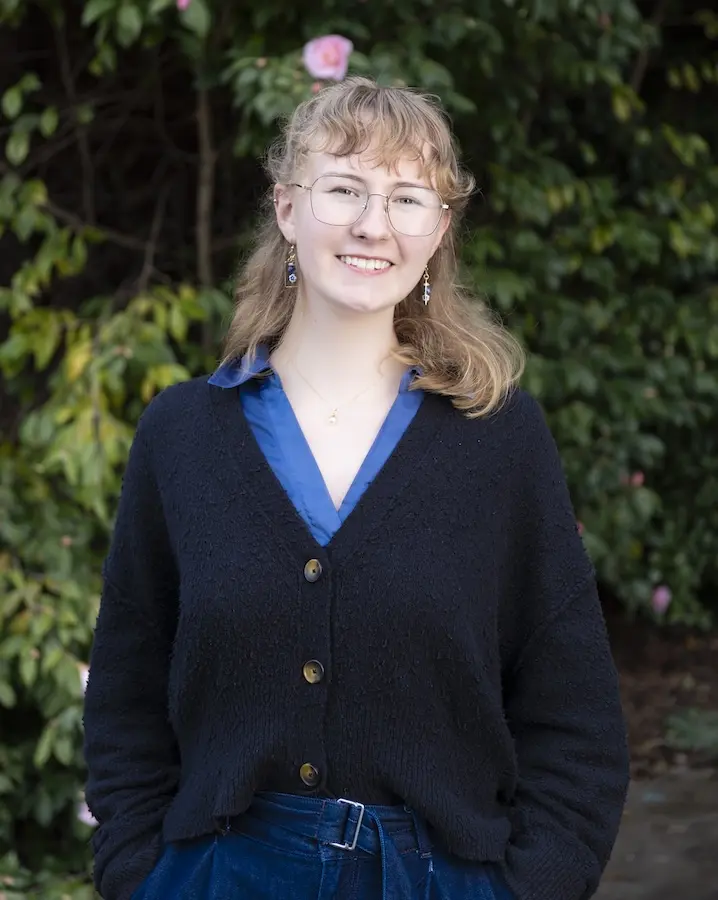
woman in black sweater standing in front of flowering bush

Sophie Rasmussen | Credit: Rudy Uhlman

By Halle Sheppard, CLA Student Writer - March 25, 2026

Traveling internationally is a coveted opportunity that broadens horizons both personally, culturally, and academically, as well as takes you to places you’d never expect. For junior Sophie Rasmussen, her journeys across the world led her to find a home at Oregon State University’s College of Liberal Arts, double majoring in international studies and anthropology.

Ultimately, arriving at the School of Language, Culture, and Society, as well as the Honors College, amusingly began in a psychology class at Linn-Benton Community College (LBCC).

“While in [Philomath] high school, I took a few psychology courses at LBCC,” said Rasmussen. “I loved learning about how people operate and the history of how people perceive behavior, but the part that didn’t quite stick was the clinical aspect of psychology. I didn’t like the idea of putting people in boxes or defining them by one thing.”

Not able to envision herself in a medical setting, Rasmussen still wanted to explore how the brain worked and reasons behind a person's decision-making, but from a more social and historical perspective. This pursuit shifted to her current course of study in anthropology.

Originally starting her collegiate career at Southern Oregon University (SOU) in Ashland, Rasmussen entered as an anthropology and sociology student through SOU’s unique joint degree program. At first, she was planning on pursuing deeper studies in sociology, but a series of courses in cultural anthropology began to take over.

“I loved learning about the different philosophies of life and how that affects people’s perception of the world, which connected my interests in psychology, anthropology, and philosophy.” Studying cultural anthropology naturally fueled her interest in studying abroad, which eventually took her to both South and East Asia.

In summer 2024, SOU’s Democracy Project brought students to India, where Rasmussen and her peers in the Honors College experienced a unique, hands-on immersion of Indian democracy, politics, and civil society, as well as an opportunity to engage with professionals, academics, and local communities.

“It was fascinating,” said Rasmussen. “As India is a young country politically, I loved seeing how it was both similar and different from American democracy—unique, but drawing inspiration from foreign governments.”

Over the summer spent in India, Rasmussen was already planning her next study abroad experience; this time it would take her even farther and longer. 

“Aside from India, I’ve experienced a lot of Western culture through travel, and I wanted to undergo something different, especially as someone who desires to go into the field of anthropology. I feel I cannot be a good anthropologist if my only frame of reference is from Western culture. It's so limited and hard to see from other people's perspectives if you haven’t stepped in their shoes.”

Rasmussen eagerly seized the opportunity and spent her entire sophomore year at the Nagoya University of Foreign Studies in Japan, primarily in language-intensive courses. Her time devoted to learning Japanese “rewired” her brain and changed her perspective of the world through language. During her second semester, Rasmussen even tested into the upper level of Japanese classes, a gargantuan feat, adding more complexities (and alphabets) into her repertoire. She also took up Kendo and Iaido sword fighting, as well as Taiko drum lessons. When her mom came to visit over winter break, they spent a week hiking the historic Nakasendo Trail between Nagoya and Tokyo, stopping at post town inns along the way.

“My confidence in not only speaking Japanese, but also in myself, grew immensely,” said Rasmussen. “I was determined to not feel ashamed for things I was working on. By the end, I wasn’t afraid of having to ask for help or speaking casually with people in Japanese.”

When Rasmussen’s transformative time in Japan was coming to an end, she began to rethink returning to SOU for her junior year. Having been living near the bustling city center of Nagoya, Rasmussen recognized that both SOU and the town of Ashland were looking a little too small for comfort.

“I love the school [SOU] and I love the people there, but I couldn’t see myself returning to Ashland after having this time in Japan.”

Growing up in Philomath, she originally wanted to expand her horizons and find a smaller university outside the Willamette Valley. SOU was the right fit for her at the time, but during her experience abroad, she began to reconsider OSU and the opportunities it offered.

“What intrigued me was the international studies program,” said Rasmussen. “It occurred to me that anthropology is often viewed through a Western lens. Studying topics outside of the U.S. and the West has provided me with a much different perspective on how to perceive my own culture. That perspective shift has been really important to me in my growth.” As OSU’s international studies double-degree program is one of the few on the West Coast, she decided to enroll in the College of Liberal Arts and Honors College upon returning from Japan.

While Rasmussen hasn’t been at OSU for very long, she’s enjoyed classes in the School of Language, Culture, and Society that have expanded her own views, such as Associate Professor David Lewis’ Contemporary Native Issues (ANTH 472), which opened her eyes to “all things ‘American’” she didn’t know previously and led to a greater understanding and critique of U.S. history. The Honors College has supplemented her coursework with unique colloquia classes and provided an added amount of responsibility and expectations with the faster pace. Her international experience is also tied into her honors thesis, the focus of which is still murky, but something along the lines of the “movements of foreign philosophies in culture through art.”

In terms of post graduation ideas, Rasmussen is taking it day-by-day, intentionally remarking, “I have no idea. I’m focusing on what I need to get done now. I’m going to flow wherever the world takes me.” While no plans have been made, Rasmussen has been enriched by her international experiences and educational journey, and is ready to use her skills wherever they may lead her.

A life in film: Jon Lewis’ enduring impact on OSU and Hollywood scholarship

By Colin Bowyer on March 16, 2026

Retiring in 2026 after 40 years, Lewis leaves behind a legacy of teaching film studies to over 15,000 students and writing nearly 20 books dissecting 20th century film history

Image
Jon Lewis

Jon Lewis

By Hoku Tiwanak, CLA Student Writer - April 6, 2026

Jon Lewis, University Distinguished Professor in the School of Writing, Literature, and Film, hadn’t set out to become a film scholar. In fact, for a time, he was certain he’d be a novelist. In the 1960s, growing up on Long Island, New York, Lewis was always a “good student,” and prioritized going to college because his parents didn’t get that chance.

At Hobart College in upstate New York, Lewis studied English and was still planning to enter the literary world. With no prior interest in film, a showing of 1947 noir/thriller Out of the Past at Hobart, starring Robert Mitchum, Kirk Douglas, and Jane Greer, was an experience Lewis said, “felt like a lightning bolt.”

“I had an epiphany. I absolutely understood what I was looking at in a way that I never felt with literature,” said Lewis in a 2017 oral history project for Oregon State’s sesquicentennial. Film became more than entertainment; it became a way of reading the world for Lewis. Yet, Hobart didn’t offer any film courses, so he “left it at that.”

In 1977, Lewis started an M.F.A. program in creative writing at the University of Buffalo, still hoping to become a novelist, but things began to change. After some lukewarm feedback from Buffalo’s writing faculty, an uneasy truth began to settle in. He didn’t actually want to teach creative writing. And he wasn’t sure he wanted to be a novelist anymore, either. What he did know was that the path he was on wasn’t quite right, but he had no alternative in mind. 

Then, chance intervened. At a careerdaytype event, Lewis struck up a conversation with a recruiter from the University of Southern California (USC) who was promoting a Ph.D. program in literature. Lewis, not keen on the literature program the recruiter was selling, mentioned his enjoyment of film. The recruiter smiled and said something that changed everything, “You do know you can get a PhD in film studies.”

Jon hadn’t known. But the moment the possibility landed, it clicked. Within months he was headed to Los Angeles, but not to USC’s film program, instead at the University of California, Los Angeles (UCLA), sight unseen, never having set foot in LA.

LA hit him like a revelation. “Awesome,” Lewis would add later. The scale, the sprawl, the cultural buzz, it was all thrilling. He moved into the Miracle Mile, an older Jewish neighborhood that felt worlds away from the Hollywood icons he was studying, but close enough to feel the industry’s pulse.

“As a student in film, you couldn’t ask for anything better,” he said recently. UCLA was paying him to study film history while living in the capital of the industry itself.

Initially he imagined himself a theorist, but was gradually pulled into cultural history as he progressed in his program. His dissertation examined the films of Marilyn Monroe and Jerry Lewis as cultural artifacts of 1950s America, asking what those stars revealed about postwar masculinity, feminism, power, and ideology. He examined Jerry Lewis as a symbol of a crisis in masculinity following the war, and Marilyn Monroe as a complicated feminist icon forged by a culture struggling with its own expectations of femininity.

While earning his doctorate, Lewis stepped into the industry as a market researcher at Lieberman Research West, an advertising company in the film industry. He saw firsthand how volatile Hollywood could be and understood that the “constant hustle” wasn’t his style. Academia offered something different. It was a path that felt stable and a role he found deeply fulfilling. Lewis wasn’t interested in making movies. He was interested in understanding them.

Lewis landed a visiting professorship at his alma mater Hobart College for a year where he taught film studies. Then, in 1982, he interviewed for a position in the English department at OSU. The English department was looking to branch out and attract more students by offering film courses (which would help to fund more traditional offerings), which worked in his favor as a film historian and not a producer. Lewis flew up to Corvallis to meet with English chair Bob Frank.

“It was a really traditional department,” said Lewis. “I was definitely not what the doctor ordered for a lot of people in the department, I'm sure…I could read a room, and I could definitely see people sort-of rolling their eyes and asking ‘What are we doing? We can't hire this Hollywood guy.’”

And yet, the department needed a film historian and one with credentials. Lewis was brought aboard and started teaching in the fall of 1983.

When he first arrived, OSU offered two film courses, “Film Comedy” and “Film Tragedy,” both taught by a Charles Dickens scholar. Essentially developing a curriculum from scratch, Lewis started by asking himself: “What do students need to know about film in the short time I have with them?”

“If an OSU student comes in and only takes one film class, then they should have some film literacy,” Lewis said. “They should understand how films operate in a kind of cultural history.” From the beginning, his focus was not on plot or performance, but on context. Understanding movies as reflections of politics, economics, and culture.

The teaching of film in 1983 looked very different from what it does today. There was no streaming, DVDs, or YouTube. Showing a film required advance booking through a campus office, often weeks ahead of time, like scheduling a theatrical run. Clips could not be shown instantly on a projector during classes like they are today. 

He described himself as essentially the same teacher he was decades ago, extremely passionate and comfortable in front of the class. What has changed is his perspective. After becoming a parent himself, he’s grown more understanding of students’ lives and daily pressures.

Professors often begin their careers wondering why students aren’t exactly like them. They were exceptional students who genuinely loved school. With time, he came to see his role less as expecting students to mirror him and more as meeting them where they are.

Reflecting on his time at OSU, he said he “couldn’t imagine a better place to have been. I did the right thing by coming here. I’ve seen everything, but I am still surprised by students. I’m lucky that film is engaging and that students want to keep learning.”

Over time, he became a oneman department of sorts. Without GTAs and with separate class sections, he estimates he taught somewhere between 15,000 and 20,000 students. It became the defining joy of his career. “The best times,” he said, “were working with students.”

And yet Lewis still wrote, constantly. 18 books over the years, each shaped by his curiosity and his commitment to understanding Hollywood from the angles others overlooked. His first book, The Road to Romance and Ruin: Teen Films and Youth Culture (1992), emerged from a teaching stint in Bath, England. While in the UK, he became fascinated by the emerging scholarship on British youth culture. The book, published by Routledge, developed his argument that teen films functioned as a kind of “conservative re-assurance,” a promise that adolescence, with all its instability and angst, wouldn’t last forever.

His breakthrough and perhaps most impactful book remains Hollywood v. Hard Core: How the Struggle over Censorship Created the Modern Film Industry (2000); a book Lewis has said “put him on the map.” By tracing film censorship debates from the 1930s through the 1990s, he argued that film censorship is driven by money and not morality. The book was reviewed in Sunday’s The New York Times Book Review and selected as a “New and Noteworthy” paperback. For an academic book to receive mainstream newspaper reviews was rare. It was proof that his questions about power, morality, money, and control resonated.

Other books by Lewis include exposés of Hollywood blacklists, countercultural influence, the meaning of celebrity and stardom, the role of independent cinema, and Francis Ford Coppola’s The Godfather. His favorite among the books he’s written is Hard-Boiled Hollywood: Crime and Punishment in Post-war Los Angeles (2017), which follows the lives of aspiring actors who never found success in Hollywood. Rather than spotlighting stars, Lewis examined the film industry through those left behind and tells the history of people at the margins and working behind the scenes.

“We tend to focus on celebrity history,” he said, “but that’s not the entirety of what makes up history.”

After 40 years of teaching, Lewis is retiring from the School of Writing, Literature, and Film and OSU after spring term 2026. He leaves behind a legacy of film literacy, of students who learned to see movies not just as stories, but as artifacts of culture, politics, and history.

“You don’t stay at a place for this long if you don’t have great colleagues,” concluded Lewis. “I found a world that made sense to me, as a film historian working in academia, and I can’t imagine a better place to have been. I did the right thing about coming to OSU and that’s made me happy.”

Lewis often describes the 1970s as a glorious era of American cinema, intertwined with his own coming of age as a filmgoer. Nothing, he says, quite compares to watching The Godfather or Apocalypse Now for the first time. For Lewis, movies are time capsules; they are, in a sense, markers of his life lived alongside cinema.

He remains fascinated by Los Angeles and by postwar cultural history. He plans to continue writing, still offering perspectives about how we should understand history through film, and not just through the famous and the successful, but through the overlooked and sidelined.

He is not finished asking what movies can teach us about who we are.