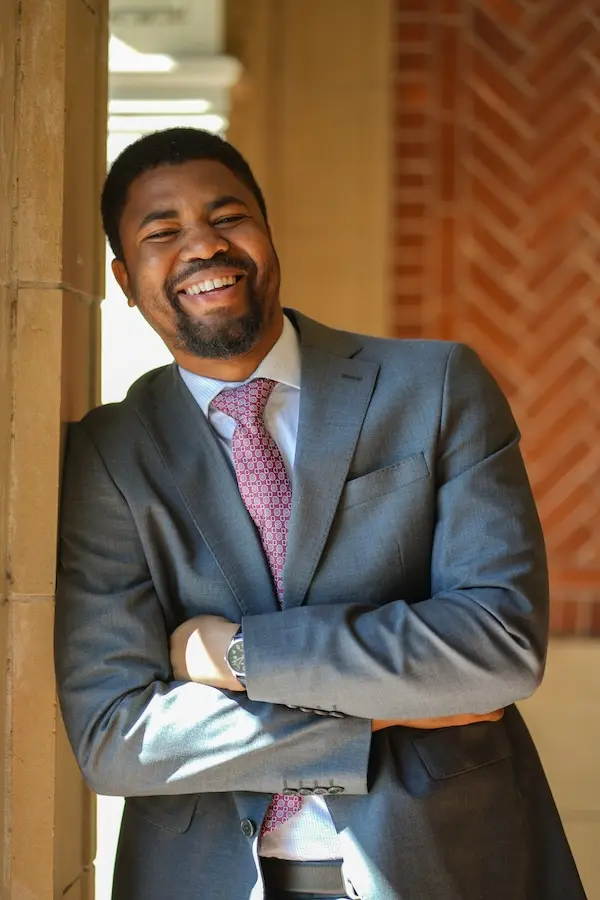
Tayah Whitaker

I am a fourth-year honors psychology student, graduating this Spring term 2026. I am involved in the Applied Social Cognition Lab on campus, where I conducted research and successfully defended my thesis titled “Engagement in Yoga Among College Students: Examining the Impact of Race and Attire on Instructor Credibility, Demeanor, and Cultural Attitudes,” where I explored the complex interplay of appearance and perceptions. It is available to read on OSU’s honors college archive. 

By Keith Van Norman on April 30, 2026

Honoring culture while pursuing sustainability: Sydney Mijo’s journey to empowering her community

By Colin Bowyer on April 28, 2026

How the marine studies program helped Mijo shape a future in law and community advocacy

Image
Sydney Mijo

Sydney Mijo

By Halle Sheppard, CLA Student Writer - May 4, 2026

Rooted in the land and waters of Kāneʻohe, Oʻahu, Sydney Mijo’s academic and personal journey is guided by a deep sense of responsibility to community, culture, and environment. Shaped by an upbringing immersed in the ocean and local Hawaiian culture, Mijo has long understood the connection between environmental stewardship and Indigenous knowledge. 

At Oregon State University, she sought an education that honored this intersection, one that allowed her to explore environmental conservation, law, and Indigenous studies not as separate paths, but as an intertwined academic pursuit. 

From an early age, Mijo’s parents instilled within her the importance of community and rootedness in the local and Hawaiian culture. Her father, who works at Kamehameha Schools, introduced Mijo to a plethora of ocean-related hobbies such as surfing, fishing, and diving. Her mom owns and operates Koʻolau Farmers, a local plant store, and Waimānalo Feed Supply, a local agricultural and aquaponics store.

When considering where to go for college, Mijo hoped to find a program that contained an interdisciplinary blend of law, policy, and environmental conservation. To Mijo, the universities in Hawaiʻi tended to draw a strict divide between programs such as pre-law and marine biology, so she began to expand her search to the mainland to seek a broader and potentially more inclusive approach.

As recommended by a college counselor, discovering OSU College of Liberal Arts’ interdisciplinary marine studies program revealed a new possibility: one where environmentalism, Indigenous knowledge, and law could exist together. That moment reshaped her vision, marked by a willingness to leave home in order to one day return equipped to serve and uplift her community in Hawaiʻi.

“I could study law, I could do environmental work, I could do Indigenous studies. It was everything I was looking for,” shared Mijo. There was no other school where I could just create my own pathway and explore this intersectionality.”

She soon dove head first into the marine studies program with the goal of attending law school after graduating.

Driven by her desire to protect the environment, she began taking law and policy-related classes. Mijo came to the realization that public policy was not exactly what she wanted.

“I realized from my time here that the policymaking side can be such a long and enduring process. You might spend your entire life lobbying and researching and writing up one bill that may or might not get passed.” Preferring a more hands on and community-oriented approach, Mijo began to reevaluate her career trajectory and found herself inspired by her mom’s businesses.

The classes she was taking showed that her mother’s role as a local business owner created the community impact she wanted to make, but in a more personal way. “Learning about law and Indigenous studies at OSU, I would talk to her and realize that everything she's doing as a local business owner is pretty much what all these policies we're trying to create and push for are doing, but in a very local and direct way.”

Her mom’s business, Koʻolau Farmers, is more than a plant store, it’s a living classroom rooted in care for the land and community. Her mom bought the business a little over a year ago and changed the company’s business and community goals to represent their family’s community and cultural values. The space now centers endemic and native Hawaiian plants, including seedlings and medicinal plants, to better reflect a commitment to lāʻau lapaʻau. Through workshops and hands-on educational classes, Koʻolau Farmers hopes to raise awareness around traditional Hawaiian healing practices and ensure they’re more accessible to the wider public. 

Drawn to her mom’s intentional steps to revitalize Hawaiian practices, Mijo decided she wanted to use the skills she developed at OSU to still pursue law, but away from focusing on public policy and more towards business. “Pivoting my law career to support small businesses that promote and empower native Hawaiian culture, native Hawaiian plants, and local agriculture felt like a natural shift.”

Ethnic studies professor Patricia Fifita’s mentorship played a central role in shaping Sydney Mijo’s OSU experience, offering both guidance and a deeply supportive space grounded in Indigenous studies. Fifita encouraged Mijo to explore her history and interests, reinforcing her plan to return to Hawaiʻi. Through the MAST capstone, Mijo centered her project on her mom’s new plant business, approaching it as a form of legal aid by developing a business strategy, identifying potential legal challenges, and researching areas such as plant procurement and food handling. The project became both academic and personal, resulting in concrete recommendations that could strengthen and expand the business while honoring its cultural and community-based mission.

Mijo's time at OSU also helped her retain and showcase Hawaiian culture. A key member of the student group Hui O Hawaiʻi, as well as a Hula instructor and dancer, she took her involvement and leadership even further by organizing the 71st Annual Hōʻike, “From Mauka to Makai: Ka Moʻolelo O Naupaka” as the Hōʻike Show Coordinator. The Lūʻau and Hōʻike at OSU is an annual celebration of Hawaiian culture with over 200 dancers participating in the performance.

While initially finding it difficult to leave home, Mijo knows that OSU was the right choice and where she needs to be in order to go home to serve and uplift her community in the best way that she can. “I need to be here first,” she stated. “I needed to leave my home to be able to come back and better protect and serve my community.”

Her mother’s businesses offered a pathway home, and she now hopes to eventually take over the family business. This is not something that she can merely inherit though; she must be equipped to take on the family legacy. Her mother recognizes the importance of pursuing education and encourages Mijo to attend law school, to learn more about the relevant policies and issues she will need to be aware of in running and expanding a business. Mijo will be attending University of Hawaiʻi William S. Richardson School of Law in the fall.

Throughout her time at OSU, Mijo explains how much stronger her experience has made her. “One of the big words that has stuck with me throughout my time at Oregon State has been resiliency. I think that's something I've learned not only from my professors, but also my mentors.” Throughout her time at OSU, Mijo is grateful to have been supported by many people, including Barry Evans, her supervisor at Dixon Recreational Center.

Balancing her capstone, job as a student worker at Dixon Recreational Center, and classes, along with her leadership roles within Hui O Hawaiʻi, Mijo has found resiliency to be a key trait in ensuring her success. She plans to take these lessons from OSU into an ever modernizing world, and bring change to the local community of Hawaiʻi.

Finding her voice: How Brenda Olvera turned song into story

By Colin Bowyer on April 28, 2026

First-generation student Brenda Olvera uses music, culture, and care to build community in and beyond the classroom

Image
Brenda Olvera

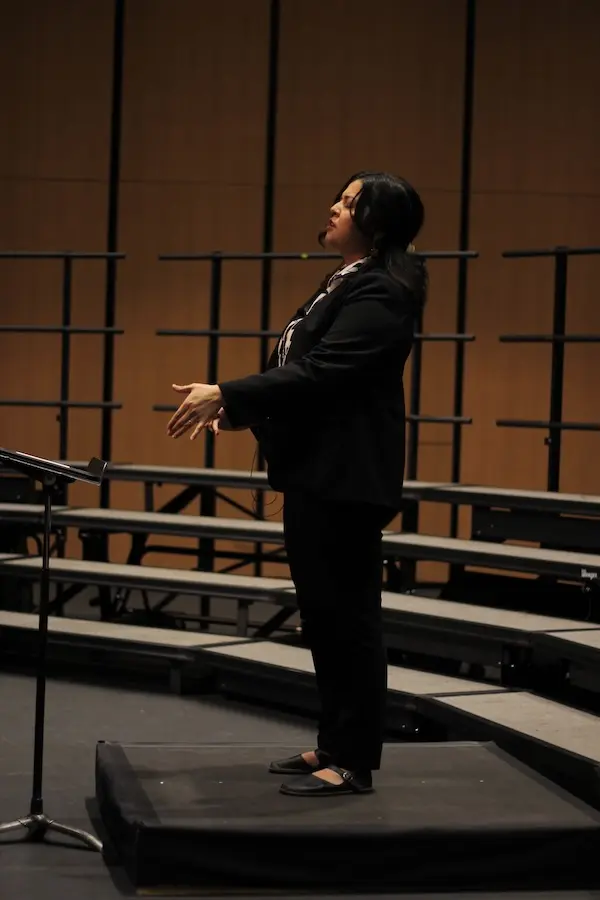
Brenda Olvera participating in a masterclass at the Northwest American Choral Directors Association in March 2026

By Hoku Tiwanak, CLA Student Writer - April 29, 2026

Brenda Olvera, a senior in music education specializing in choral instruction, has built her college career around voice, community, and leadership. As a first-generation student with roots in El Salvador and Mexico, singing has guided her through new spaces and opportunities. “I look back and think, if my high school self could see me now, she would not believe it,” said Olvera.

Growing up, music was deeply tied to faith and family. Her mother, raised in a devout Christian environment, grew up singing constantly. Olvera remembers nights when her family would sing psalms before bed. 

“All musical instruction was taught orally,” Olvera explained. “My family never learned to read music or went to formal lessons.” 

Her first real exposure came in middle school, when she stepped into a choir room during a high school campus visit. “It was the last stop on the tour, but it changed everything for me,” she said. “Once I stepped into that choir room, I knew that's where I needed to be.”

Olvera leaned into choral music specifically because of its intimacy. The human voice, she believes, is unlike any other instrument. “Your own breath and tone associated with your voice is so special.” Singing in a choir isn’t just about harmony; it’s about unity. “You’re making art together,” she said. “Music explains things and makes you feel things that can’t be described in any other way.” 

Now a senior in the School of Visual, Performing, and Design Arts, Olvera had the opportunity to apply for a masterclass with the Northwest American Choral Directors Association (NWACDA). This regional honor award entails conducting a choral group in front of an audience, then, receiving live feedback from a guest clinician, typically a nationally-known top conductor. She remembers submitting her application at the last minute. To her surprise, she was accepted and performed at NWACDA’s conference in Tacoma, Washington, this past March. 

“That moment really made me realize how far I have come and affirmed to me I really do know what I am doing,” she said. 

Receiving her acceptance email “felt like I won the lottery,” said Olvera. The recognition wasn’t just about accomplishment. It was validation of years spent finding her rhythm in a world that felt unfamiliar. 

At the ACDA conference, Olvera conducted two pieces, guiding a choir of singers she had never met before. “It was cool how everyone clicked,” she said.

Her approach to conducting is fluid and expressive, focused on letting the music connect the group. One of her pieces, by Eric Whitacre, based on a Robert Frost poem, was quite magical on stage. “I wanted to let the music flow through me,” she said. “I’ve never experienced that sort of connection before; it's a feeling that is still unmatched.”

As a student teacher at a middle school in Salem, she works with young singers navigating both music and identity. “Classroom management can be hard,” she admitted. “I love their humor and liveliness, so I have to practice ways to control the environment without taking away their personality and fun.”

Through mentorship and training, especially in nonverbal communication techniques, she’s learning how to balance structure with empathy. “Kids want to know they are cared for,” she said, especially in a Title 1 school setting. “They want to be heard.”

Olvera builds students' confidence by getting to know them, joking with them, and creating a space where they feel safe to express themselves. She understands that middle school is a time of change vocally, emotionally, and socially. Instead of focusing solely on perfection, she emphasizes growth, effort, and self-expression. “I just ask that they try their best and put in good effort. I am not worried about perfection,” she says.

In her classroom, she’s exploring ways to connect music to broader cultural and historical themes by helping students use their voices not just to sing, but to tell stories and raise awareness.

Singing boosts serotonin and dopamine, chemicals linked to happiness and well-being. Olvera shared that scientific research indicates that when choir members sing together, their heart rates synchronize, speeding up and slowing down in unison. Music brings people together; it’s about connection, finding your voice, and helping others find theirs.

What makes a revolutionary?

By Colin Bowyer on April 28, 2026

Dr. Razan Ghazzawi reflects on their start as a grassroots activist during the Syrian Revolution and the journey behind their current research on Syria and sexuality politics at times of revolution and counter-revolution

Image
Razan Ghazzawi

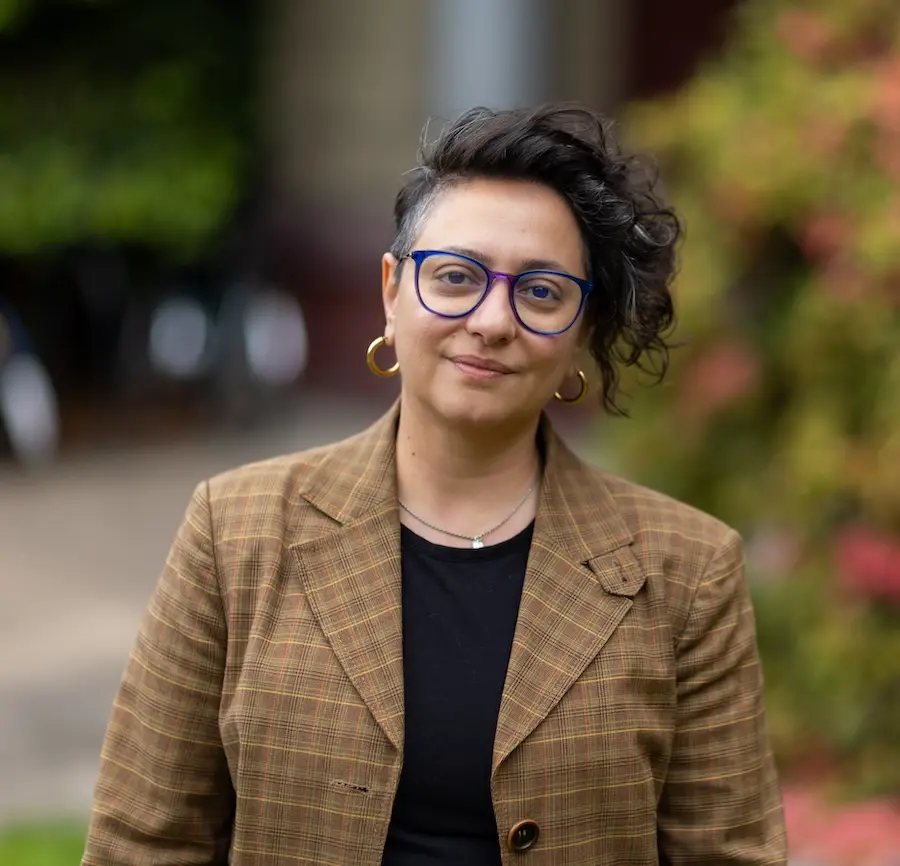
Razan Ghazzawi | Credit: Blake Brown

By Selene Lawrence, CLA Student Writer - May 4, 2026

As a young community organizer and activist, Razan Ghazzawi launched a blog documenting their daily life and commentary on human rights movements in Syria and its surrounding countries. Their work would span over a decade, during which time they would return to school to switch fields, make international news, and witness the start of a revolution. Now, long retired from blogging, Ghazzawi has made a name for themself as an international, interdisciplinary scholar-practitioner. From working in Syria, Lebanon, the United Kingdom, and the United States, Ghazzawi has shown that no matter where life takes them, their voice will never be silenced.

Ghazzawi grew up in Damascus. Having been an introverted child, they discovered early on their great love for writing. It seemed natural that they would go on to study English literature for their undergraduate degree. However, the class sizes and digital grading system made it difficult for Ghazzawi to explore their potential as a scholar. “It was very computerized. The idea of the class was not really applicable; we’d have lectures, and in each lecture, there would be thousands of students. I did not learn how to write an essay, how to write a critique—all of the things you usually learn as a first year in college,” said Ghazzawi. “My parents really pushed me towards my graduate studies. I owe it to them that I’m here today.” Shortly after finishing their bachelor’s degree at the University of Damascus, Ghazzawi began to pursue what would be their first master’s degree.

Traveling frequently between Lebanon and Syria, they studied part-time at the University of Balamand. Ghazzawi’s master’s degree in comparative literature centered on Arab-Jewish Iraqi literature in Israel and the work of author Shimon Ballas. Their studies drew upon their involvement in activism, as well as their personal history and place in society as a Syrian-Palestinian. “Being Syrian-Palestinian, I was particularly interested at that time in connecting to my Palestinian heritage,” Ghazzawi said. “My mom is Syrian, and my dad is kind of assimilated into Syrian culture, but my grandfather is someone who has always talked to me about being Palestinian. I lived with him for a few months when I did my first year of college. It was something that shaped that part of my identity.”

In the summer of 2006, while Ghazzawi was in grad school, war broke out in Lebanon between the Israel Defense Forces (IDF) and Hezbollah, a Shi’a political party and militia formed in response to Israeli invasion during the Lebanese Civil War. In an attempt to bargain for the release of Lebanese citizens imprisoned during Israel’s long-term occupation of South Lebanon, Hezbollah staged an armed abduction of two IDF soldiers, killing eight Israeli soldiers in the process. The IDF then initiated a large-scale artillery and airstrike attack, marking the start of what would become a 34-day war between the two parties. 55 Israeli and 1,109 Lebanese citizens were killed in the conflict, with most Lebanese deaths being civilian noncombatants. Most attacks were concentrated on Lebanese civilian infrastructure, including homes, water, facilities, and hospitals. Some of the greatest destruction occurred in Dahieh, a Beirut suburb just an hour’s drive down the coast from the University of Balamand.

It was at this time that Ghazzawi started blogging. “Blogging started to become the new big thing; today it would be like TikTok or Instagram,” Ghazzawi explained. “I saw that there was an opportunity to talk about settler colonialism and the war against South Lebanon. At that time, a lot of us looked up to bloggers in the region, so I started blogging as part of that community.” As time passed, Ghazzawi’s blogging became an important component of their existing work as a queer feminist activist and Syrian Palestinian in Lebanon. But back home in Syria, pressures were brewing, and a cataclysmic change was hurtling toward the life Ghazzawi was building.

In March 2011, an escalating violent crackdown on protesters invoked the start of the Syrian Revolution. Over the preceding months, a number of demonstrations had been held calling for an end to the country’s state of emergency and operation under emergency laws, which had been established nearly 50 years prior with the coup that allowed the Ba’ath Party to take control of the government and dissolve other political parties. In 1970, Minister of Defense Hafez al-Assad seized power and became Syria’s President, marking the start of the Assad Regime. The period was marked by mass human rights violations, including widespread arrests and detentions, physical, sexual, and psychological torture of detainees; abductions and forced disappearances, violence against protesters with denial of medical assistance, and a ban on public gatherings.

With the start of the revolution, activists became disproportionately targeted victims of state violence and arbitrary arrests. During this time, Ghazzawi joined the Syrian Center for Media and Freedom of Expression (SCM) as a media officer. “I documented the detention and imprisonment of media workers, and if there were any murders targeting journalists, photographers, or filmmakers. I coordinated with a lot of those contacts as well,” they said. “I was so lucky to work in that position in Syria and be paid for it; it was like a dream. At the time, it was new territory for us. We had never lived through a revolution before. There was a lot of trial and error. I don't think it was safe for us to do that job, but we tried our best to be secure. Our manager, Mazen Darwish, did his best to think about these issues.” Ghazzawi’s blogging platform and work as a media officer led them to later publish journalistic articles on human rights in Syria with prominent news sources, including openDemocracy and Al Jazeera.

In November 2011, Ghazzawi was arrested on the Jordan-Syria border on their way to attend a workshop on media freedom organized by human rights organizations in Jordan. They were imprisoned for nearly a month. Shortly after their release, Ghazzawi was detained again, along with several of their colleagues, in a raid on SCM. “The first detention was because of my blogging and organizing on the ground. The second detention was with the center because it had been targeted,” they explained. The experience of detainment was a significant interruption to Ghazzawi’s life, but there was still another storm they would have to contend with after their release: the international media’s coverage of their arrests.

“I struggled with it, and it took me a long time to understand how to deal with it. I think I've only managed to deal with it very recently, specifically at OSU, to be honest,” Ghazzawi said. “I felt like a lot of the attention was focused on the individual me rather than the collective movement. It was very personifying—I think that’s how mainstream media works, trying to make icons so people can relate to the revolution rather than actually focus on the revolution as being something that was very decentralized but still collective and collaborative across classes and religions. That was a beauty that was not represented, and I think that created some tension in the revolutionary community itself. With my portrayal and how the international media represented me, there was a lot of emphasis on me having been born in the U.S. and being queer. They outed me. When I was in prison, I didn’t know what was happening; it was very disturbing to see when I was released.”

After being released from their second detention, Ghazzawi moved north to Kafr Nabl. The town had been liberated by the local community and the Free Syrian Army in late 2012, and would remain liberated until Al-Qaeda seized control of the area in 2014. There, they organized a support program for displaced children. In December 2013, Syria’s activist community suffered a devastating blow with the abduction of four prominent human rights defenders—later referred to as the Douma Four—by unidentified masked gunmen: Samira al-Khalil, Razan Zaitouneh, Wael Hammadeh, and Nazem Hammadi. All four activists were members of the SCM. Razan Zaitouneh, founder of the Violations Documentation Center in Syria, was a mentor and essential inspiration to Ghazzawi’s activist work. The fate of the Douma Four is still unknown today. 

As time went on, it was all Ghazzawi could do to pick themself up and try to move in a meaningful direction, even if that meant letting go of their online presence. “I did not blog much during the revolution,” they confessed. “Staying alive and staying safe was taking a lot of energy, and then when I was exiled, there was also the labor of surviving exile. I was burnt out. I stopped blogging after that.” Exiled from Syria, Ghazzawi lived for a period in Lebanon, and then in Turkey, before moving to Europe, where they eventually began to build an academic home for themself in the United Kingdom. “I did not want to be part of the NGO-ization of the revolution,” they explained. “That term was used by the Palestinian anthropologist Islah Jad, who talked about the individualization of the Palestinian movement after the Oslo Accords. We’ve seen that kind of thing happen after a social movement where a hierarchy of those who are experts or organizers is created. I did not want to be a part of that. That’s why I shifted to academic work.” In 2016, Ghazzawi earned a second master’s degree from the University of Leeds, where their focus on gender studies allowed them to research queerness in the social context of revolutions. Soon after, they began their Ph.D. in gender studies at the University of Sussex.

 “The first year was hard. During my master’s, I was really struggling with being homesick, and feeling like, ‘what am I doing here?’ But with my Ph.D., it was very supportive, I didn’t feel alone,” they said. “My cohort and the working groups I met during conferences were all part of creating this community that would offer a lot of mentorship and support, especially my supervisors, Malcolm James and Cynthia Weber. They really appreciated my experience and my reflection about my activism in Syria, which I wrote about for my Ph.D.” Ghazzawi is currently in the process of reworking their Ph.D. research into a monograph that unites queer theory and ethnography. At the heart of the book are Ghazzawi’s interviews with fellow queer Syrian-Palestinians on their individual relationships with their identity while navigating checkpoints, prison, and queer exile in Syria and Lebanon. Their research also served as the subject of their article Popular Sovereignty and Trans Mothering of Antiwar Syrian Soldiers,published earlier this year. Other recent works include chapters in I Will Always Be Looking For You – A Queer Anthology on Arab Art and in OSU’s openly accessible textbook, Resisting Gender Violence.”

“I’m hoping to make an intervention in Syrian curricula in the future,” said Ghazzawi. “I'm definitely interested in challenging mainstream ideas about citizenry, like who gets to be a citizen? What is it to be a revolutionary? Does it have to be against the government alone, or can we protest in other ways against the regime and social violence? I’m trying to shift the cisnormative or heteronormative way of thinking about revolutionaries by highlighting different kinds of dissent stories. In my book, I hold that the sex workers who I have met in prison, who were protesting the prison management, are also revolutionary and they should be considered revolutionaries. The trans women I have interviewed who were misgendered and taken in the army and asked to carry a gun and go fight on the front lines, who did not want to be a part of the war and escaped, they should not be considered today as the remnants of the regime. People like that who protest the war, who protest army officers, people who are not necessarily revolutionaries or activists the way that I was, but are still challenging everyday structures, they are also anti-military and anti-authoritarian in their own ways.” 

After graduating from the University of Sussex and completing a postdoctoral fellowship in Berlin, Ghazzawi sought out tenure-track positions so that they could continue their research while teaching. In 2023, they moved to the United States and began working as an assistant professor in Oregon State’s women, gender, and sexuality studies (WGSS) program. After spending nearly a decade in British academia, Ghazzawi has embraced the differences in OSU’s curriculum. “In WGSS, we encourage merging critical responses with reflections on personal experience,” they said. “There’s more of a conversational style in assignments, so I really enjoy that I get to know the students more. I’m also bringing bits and pieces of my work and interests to my teaching. The curriculum is more focused on American scholarship, but I discuss how it applies globally as well as in transnational contexts.” 

The past three years have marked the start of a welcome new chapter in Ghazzawi’s life and research, but, living in America, the landscape of authoritarianism and political upheaval that defined Ghazzawi’s young adulthood is far from fading into memory. Over the course of the past year, the start of the second Trump presidency has swept fear and uncertainty across much of the population, especially given wavering democratic structures, increases in state-sanctioned violence, and widespread attacks on LGBTQ rights. For Ghazzawi, the pursuit of knowledge and justice go hand in hand. “I feel like I have a lot to offer because I've already been through authoritarianism; they definitely have different contexts and circumstances, but there's a lot to learn from Global South cultures and movements,” they said. “I think that it's okay to have that shift of the hierarchy, because the U.S. has always been the center of knowledge. Now, maybe it's time to collaborate more and to hear from other perspectives.” Ghazzawi describes their scholarship as building on a cross-cultural knowledge base of revolutionary theory and action. Even outside of the classroom, activism remains a meaningful outlet in their life. 

“I love being a part of organizing,” Ghazzawi said, “and I'm feeling I want to be part of it, but it’s only my third year here, so I'm still kind of new at the same time. I'm starting to build my community and my networks. I'm trying to continue my political activism in a different way, but of course, that's going to take time, and it's going to look different from before. I'm very inspired by the anti-ICE movement and activism, and by the student organizing and Palestinian encampments. I feel like there needs to be more opportunities and space created on campus for those students to be visible in their movement and to bring back this kind of energy and mobilization.”

In December 2024, Bashar al-Assad fled Syria and was granted asylum in Russia, marking the fall of the Assad regime. Ahmed al-Sharaa became Syria’s new president in January 2025 and implemented a transitional government two months later. In the summer of 2025, Ghazzawi finally returned to their home country for the first time in 12 years. “I've seen people I haven't seen in a long time,” they shared. “I spent time with my family there; that was beautiful. I wanted to go to my friend's funeral, but I couldn't. I just felt it was too much for me. I think next summer is going to be different, but for now, I’m focused on seeing friends and trying to reestablish and repair the connections that we've lost because of geography and time differences.” However, the end of the Assad regime has not ended sociopolitical turmoil in Syria. The new government has brought about new worries for the Syrian people as they continue the fight for justice and freedom. While al-Sharaa presents himself as a moderate technocrat, his past affiliation with Al-Qaeda has brought criticism to his leadership, as have concerns about the ongoing sectarian and gender-based violence crisis.

“It's very worrying that Trump and al-Sharaa are close. People kind of see the success of al-Sharaa as a success of Trump,” Ghazzawi shared. “The talk has already started about Syria's economy being privatized. Education in Syria is public; a lot of other social services are public and state-owned. Now there's a lot of talk about privatization, of investing in Syria and the new Syrian economy and the new state. Our issue with Assad was not just authoritarianism in the political, disciplinary, and punitive form, but also as a neoliberal kind of authoritarian capitalism. This is all coming together; it's becoming an upper-class, political elite, and that has not changed. I think this is what's becoming the expense of minorities today, which we have seen with the massacres, with the kidnapping of women, and the crackdown against trans women and the LGBTQ community. This interim government has committed two massacres so far, the first in the coastal areas and the second in Sweida, two weeks after I’d been staying there. I had visited a friend, her husband, and her kids; she was my colleague and my classmate, so it was beautiful to see her again. Then the massacre happened, and she had to leave the village. We’re trying to see how she can apply for asylum. I don't have any hope whatsoever for the new government. I'm very much feeling that the revolution is not over yet.”


Sources:

Abouzeid, Rania. "Is Syria About to Jettison Its Emergency Law?” Israeli attacks on civilian infrastructure." TIME, 27 Mar. 2011, time.com/archive/6956986/is-syria-about-to-jettison-its-emergency-law/.

Amnesty International. "Israel/Lebanon: Deliberate destruction or “collateral damage”? Israeli attacks on civilian infrastructure." Amnesty International, 22 Aug. 2006, www.amnesty.org/en/documents/mde18/007/2006/en/.

Amnesty International. "Israel/Lebanon: Out of all proportion – civilians bear the brunt of the war." Amnesty International, 21 Nov. 2006, www.amnesty.org/en/documents/mde02/033/2006/en/.

Human Rights Watch. "No Room to Breathe: State Repression of Human Rights Activism in Syria." Human Rights Watch, 16 Oct. 2007, www.hrw.org/reports/2007/syria1007/3.htm.

Human Rights Watch. "Why They Died: Civilian Casualties in Lebanon during the 2006 War." Human Rights Watch, 5 Sept. 2007, www.hrw.org/report/2007/09/05/why-they-died/civilian-casualties-lebanon….

Misty Glenn’s path to peace: How a religious studies major breaks barriers in pursuit of positive change

By Colin Bowyer on April 21, 2026

A religious studies senior explores how neurodivergent experiences challenge long‑standing theories of religion—while balancing full‑time work and a lifelong drive to create a more compassionate world

Image
misty glenn

Misty Glenn | Credit: Rudy Uhlman

By Jessica Krueger, CLA Student Writer - April 27, 2026

“My sleep paralysis demon is not me engaging with God,” Misty Glenn said, lightheartedly, as she reflected on her own research and debates within the field of religious studies. Glenn is interested in how the experiences of neurodiverse individuals complicate dominant theories of religion—theories, for instance, about how religion functions, is maintained, and is experienced. “Theories of religion,” Glenn explained, “don’t always make sense when contextualized through neurodivergence.”

Glenn is a senior majoring in religious studies at the College of Liberal Arts. She is also working on a certificate in peace studies, a multi-disciplinary, undergraduate program that teaches students crucial leadership, problem solving, and conflict resolution strategies necessary to achieve peace in any setting. “The world has been on fire my entire life,” Glenn said. “I want to fix things and after a certain age, you realize that if you want something done right, you have to do it yourself.”

This upcoming spring, Glenn will be presenting her research at the American Academy of Religion’s Pacific Northwest conference. Glenn’s paper, titled “Divine Creations,” discusses how the foundational theories used in religious studies exclude neurodivergent perspectives and how scholars should create a new theory of religion to welcome more perspectives and become more inclusive. Glenn is particularly interested in comparing Eastern versus Western religions within this framework.

Glenn wrote her research paper during a capstone class she took with Amy Koehlinger, an associate professor of history, philosophy, and religious studies. “I appreciate Koehlinger,” Glenn said, “because she meets you on a personal level, wherever you’re at. She is a great sounding board and wants the best for her students.”

Throughout her undergraduate studies, Glenn has also worked with instructors Mark Ward and Linda Richards. Ward is a veteran of the U.S. Foreign Service who teaches global conflict resolution for the School of History, Philosophy, and Religion and Richards specializes in the history of war and nuclear science. Richards is also a coordinator of the peace studies program.

“I’m a regular student. I just work hard,” Glenn said about herself, but this is clearly an understatement. Glenn supports her schooling by working a full-time, overnight job. That leaves her to focus on her studies during the day. Glenn is not unknown to arrive early for her 8 a.m. classes and engage with professors in early-morning philosophical conversations—having clocked out from work only an hour before, at 7 a.m.

After graduating high school, it was always Glenn’s dream to complete a post-secondary degree, but finances and difficult family circumstances made this almost impossible. Growing up in Ojai, California, Glenn was the head of her household from an early age. She briefly studied art history at Ventura Community College but dropped out so that she could work full time and support her family, especially her younger siblings. 

Still, Glenn found ways to explore. After her siblings graduated high school, Glenn bought a one-way ticket to Italy and lived there for a year with a close friend. After returning to the U.S., Glenn worked full-time at a hotel, then at a daycare for children whose parents were receiving outpatient drug addiction treatment. When Glenn’s job was phased out during the height of the COVID-19 pandemic in 2020, she decided it was time to go back to college. Having also faced a serious health scare in her mid-twenties, “the future,” Glenn said, “felt uncertain. In 2020, I finally ran out of excuses to pursue my dream.” 

To start, Glenn took classes in art history at Linn Benton Community College in Corvallis. After taking a religious studies course, however, Glenn decided to switch her focus. In 2023, Glenn transferred to Oregon State University to finish her degree. “I chose OSU,” Glenn said, “because there was such a wide variety of religious studies classes offered. I felt excited about all of the possibilities."

“The field of religious studies is so important,” Glenn said, “because it teaches you to look at all sides of an issue. It teaches you how to have an open mind, and how to approach people who are not like you with empathy, humanity, and compassion.”

Glenn first discovered her interest in religion as a child when she would attend church services with her Catholic grandmother. In church, Glenn enjoyed people watching and taking in the sights and sounds of the religious space. 

Glenn’s favorite religious thinkers, currently, are Émile Durkheim and Barbara J. King. “I appreciate Durkheim,” Glenn said, “because he believed that there is no such thing as a bad religion, that religions are just serving a human need.” Glenn also appreciates Durkheim’s belief in the importance of community. “As for King,” Glenn said, “I appreciate her emphasis on togetherness and belonging.” 

Glenn plans to graduate from OSU in 2027. After this, she intends to pursue graduate studies, with the hopes of one day teaching or working for a humanitarian cause of some sort. No matter her future path Glenn hopes to make the world a better place. 

Uncovering the hidden labor of Hollywood

By Colin Bowyer on April 21, 2026

Film historian Joshua Schulze of the School of Writing, Literature, and Film helps students look past the screen to understand the people and labor that make filmmaking possible

Image
josh schulze

Joshua Schulze | Credit: Kiarra Ruff

By Hoku Tiwanak, CLA Student Writer - April 28, 2026

In the University of Michigan’s Special Collections Research Center, Joshua Schulze found himself drawn to a collection of materials from the 1941 film Citizen Kane. While examining reshoots of the film’s final scene, he noticed laborers were labeled not by name, but by nationality, identified simply as “Mexican.” 

The discovery sparked Schulze's curiosity. Why were the people contributing to the back end of films reduced to categories, while others were celebrated as individuals?

Now an Assistant Professor of Teaching in OSU’s School of Writing, Literature, and Film, Schulze studies the relationship between race, labor, and material resources in media production. His work challenges the way audiences traditionally understand film, not only as a piece of entertainment, but as the product of a complex system of labor.

Growing up between South Africa and the United Kingdom, he spent much of his time watching films and collecting physical media. “In the UK, my friends and I would go into stores and collect DVDs and Blu-rays,” he said. “The ‘world cinema’ section was a wide variety of films from different cultures thrown into one bin. That made me curious.”

After completing his master’s degree in the UK, Schulze realized that traditional approaches to film studies, focused on close readings of scenes and texts, only told part of the story. “There’s a whole world of research out there that’s much more active and travel-based,” he said. 

Seeking more research opportunities, he moved to the United States to pursue his Ph.D. at the University of Michigan. Access to archives and production materials allowed him to build a research project about the conditions that make films possible. “Once I got a taste of studying film from that perspective, I wanted to keep exploring,” he said.

Schulze’s research focuses on Hollywood during World War II, a period when the film industry faced labor shortages, material restrictions, and shifting production practices. His work examines how studios adapted, often relying on racialized and marginalized labor to sustain production.

One example being the 1942 war film Wake Island, produced just after the attack on Pearl Harbor. With Japanese-American actors incarcerated in internment camps, studios turned to Filipino laborers to portray Japanese soldiers on screen.

“Filipino workers, many of whom had their own political tensions with Japan, were asked to play the enemy,” Schulze explained. “Some would intentionally disrupt scenes, derailing production as a form of political expression.”

Stories like this highlight the disconnect between Hollywood filmmakers and the diverse communities they depend on, exposing a lack of awareness of cultural distinctions and lived experiences.

“There’s a tendency to view Hollywood as a dream factory,” he said. “But it’s an industry like any other that's driven by labor and materials.”

During World War II, production began to move beyond centralized studio systems due to labor strikes and material shortages. That shift laid the groundwork for today’s globalized film industry.

“Hollywood is no longer just a geographical place,” he said. “Production is outsourced, visual effects, camera work, technical labor, it’s happening all over the world.”

This decentralization has made labor even more difficult to trace. “What you see on screen is possible because of a chain of labor that’s designed not to be thought about,” he said.

Schulze brings these ideas into the classroom, encouraging students to rethink not just what they watch, but where it comes from. 

One of the key tools he uses is audiovisual essays, a format that allows students to analyze film using the medium itself. “For most of film history, it’s been difficult to write about moving images,” he said. “Audiovisual essays let you work directly with the material, using clips, voiceover, and editing to make your argument.”

This approach not only deepens analysis but also equips students with practical skills in media production. “They’re making media while still engaging with critical ideas,” he said. 

For Schulze, the goal of his work is to change how people engage with media altogether. “Film is an industrial product; it’s the result of a series of labor decisions.”

“It’s about understanding what’s on your screen and how it got there,” he said. Beyond the credits, beyond the stars, and beyond the final cut, every film carries the imprint of the people who made it, whether their names appear on screen or not.

Five years of marine studies at CLA: Learning where oceans and humans meet

By Colin Bowyer on April 20, 2026

Associate Dean Nicole von Germeten reflects on the program’s growth, interdisciplinary roots, and experiential learning opportunities on Oregon’s coast

Image
Nicole von Germeten

Nicole von Germeten

By Colin Bowyer, Communications Manager - April 21, 2026

Now in its fifth year, the marine studies program at the College of Liberal Arts continues to grow and shape the next generation of ocean-focused educators, artists, thinkers, and more. Rooted in OSU’s long-standing commitment to coastal resilience, marine science, and experiential learning, the program brings together students and faculty across disciplines to address some of the most pressing challenges facing our ocean and coastal communities. 

Nicole von Germeten, associate dean and director of the marine studies program, offers insight into the program’s mission, opportunities, and the unique experiences that define marine studies at CLA.

Now that a few years have passed with marine studies as an official major/minor, what has stood out the most about the program’s development?

I am most impressed by the enthusiasm of every MAST major I meet, both online and on campus, as well as their love and dedication to the marine environment.

What are you planning or looking forward to in the next five years of offering marine studies?

I am excited for students to work with Professor Anna Guasco in Writing for Marine Studies (MAST 444). In our new WIC class, students will learn basic research (data) gathering techniques and methodologies, as well as how to translate their data in a research paper. It's going to be a great class for those early in their research careers and interested in carrying out their own novel qualitative or quantitative research. The best part is that the course is still entirely focused on marine studies. Outside of that, I’m excited to watch more MAST students pursue the work that they love, and graduate! 

Another exciting new addition to the MAST curriculum are a range of coastal learning classes run by CLA faculty. These include a class focused on the Fisher Poets gathering in Astoria and the Big Blue Film Festival in Newport, among other creative opportunities. MAST students can enroll in MAST courses which focus on experiential learning based on these events. The courses include preparatory work and class meetings in Corvallis, transportation as a group to the Oregon coast, and overnights and meals together as a group.  

With other marine-related majors and programs on campus, what makes marine studies at CLA stand out?

As compared to other programs on campus, like oceanography, aquatic biology, etc., marine studies at CLA is a humanities and social science-based program that explores the various layers of human and ocean interactions. Students are learning new perspectives from CLA faculty in various disciplines, like Indigenous studies, anthropology, public policy, and sociology. Experiential learning opportunities on the coast and at the Hatfield Marine Science Center take students out of the classroom and learn in the environments that they are studying.

Have there been any student projects, internships, or stories that have surprised or stuck out to you these past few years?

For over three years, I have personally worked with almost every MAST major, ranging from those just starting their coursework in MAST 201 to those who are finishing their capstones and internships. So many students have done creative and exciting projects as part of the MAST degree. We have students who focus on filmmaking, working in labs, advocating for marine conservation, and working internationally. Each and every student brings a unique passion to MAST. I appreciate their creativity and courage for daring to take on a new and innovative major, inspired by their personal love for the ocean. 

What are some classes or experiences marine studies students should take advantage of while they’re here?

In terms of classes, I made an effort to include all of these opportunities within the curriculum so CLA’s MAST advisors can guide students through a degree that includes a wide range of academic experiences available to them at OSU. I encourage them to speak with Prof. Guasco early about their dreams for an ideal internship so we can work to make those come true.

Interdisciplinary passions shape a CLA student’s journey at OSU

By Colin Bowyer on April 17, 2026

Kelbey Hilliard blends creative, academic, and community-building pursuits across three colleges while preparing for a future in scholarship

Image
Kelbey Hilliard

Kelbey Hilliard | Credit: Kiarra Ruff

By Ellie Webb-Bowen, CLA Student Writer - April 17, 2026

“The numerous clubs and opportunities I signed up for during freshman year have blossomed into fulfilling outlets for both my creative and academic pursuits,” said Kelbey Hilliard, a junior in the College of Liberal Arts, College of Earth, Atmospheric, and Oceanic Sciences, as well as the Honors College.

Hilliard, who’s majoring in English and sociology and minoring in philosophy and environmental sciences, likes to keep busy. Her interests growing up in Reno, Nevada, were always based in the humanities, particularly literature and philosophy, but tended to blend with the social and environmental sciences.

"I'm interested in pursuing broader ways of understanding the world," remarked Hilliard. “I like to find the intersection where distinct humanistic and scientific ideals intertwine.” This inquiry, perhaps partially influenced by her parents who were both public school teachers, continued when she enrolled at Oregon State University.

OSU appealed to Hilliard for a handful of reasons, including the beauty of campus, familiarity with the area, ability to earn a scholarship through the Western Undergraduate Exchange (WUE), and the interdisciplinary curriculum CLA, CEOAS, and the Honors College could provide, aligning with her wide-ranging interests in understanding humanity. 

Hilliard’s foundation remained in the School of Writing, Literature, and Film, despite her growing curiosity in sociology, prompted by classes she took in the School of Public Policy by Associate Professor Kelsy Kretschmer and Professor Dwaine Plaza, both of whom she assisted with projects outside of class, including attending the Pacific Sociological Association this spring with Dr. Plaza and other students. Professor Evan Gottlieb in the School of Writing, Literature, and Film was also an important English mentor and as Hilliard’s passion for environmental causes grew, so did her interest in CEOAS coursework, including Instructor Matthew Goslin’s geography and environmental sciences classes. 

“I started getting very interested in literature as another way of understanding society and these social issues that I was so interested in, even though they're separate for me, I think it's kind of like that link together that really interested me.” Hilliard said. 

On top of Hilliard’s consuming class schedule, she is currently president of OSU’s Student Literary Club, where she organizes events and hosts discussions about current and historical literary prose. Looking to grow her literary community on campus, Hilliard hopes to connect members to literary and arts events at PRAx (where she also works in the box office) for students to become engaged with literature.

She’s also an active member and media officer of the student-led Theatre Club, and has performed in the theatre department’s One-Act Festival for the last two years . Hilliard, who had been involved in theatre throughout high school, joined the club her first year at OSU in hopes of growing her own community. 

“Participating in the theatre club has been fantastic,” said Hilliard. “I get to explore my creative side, as well as perform with friends, which isn’t something you can always keep up after college.”

Hilliard's commitment to community building doesn’t end there; she has also reported for The Daily Barometer and is the current copy editor for DAMChic, Beaver Digest, and PRISM

“I realize it may come across as a lot to take on, but I like to have my time filled,” explained Hilliard. “And just about everything is something I’m interested in pursuing or becoming knowledgeable about.”

After graduating next spring, Hilliard is considering enrolling in a master's or Ph.D. in literature with a concentration in critical theory. "There's a lot of research that I want to follow and that I started working on as an undergrad. I'd like to see where that leads me." Law school could also be in her future, but for now, Hilliard is focusing on wrapping up her time at OSU and keeping a full schedule and an open mind.

Harnessing sunlight twice: OSU team seeking to bring agrivoltaics to West Africa

By Colin Bowyer on April 15, 2026

OSU researchers explore possibilities of dual-use solar–agriculture systems aimed at improving food security, expanding energy access, and building climate resilience

Image
a person presenting at a podium

Ph.D. student Patrick Dapaa Kwao presenting at the University of Ghana, in Accra

By Colin Bowyer, Communications Manager - April 17, 2026

Population growth, climate change, and shrinking arable land are straining natural resources across the Global South, particularly in West Africa, where countries are facing an increased demand for food and energy with limited land availability. Agrivoltaics—an emerging technology that combines solar energy generation and agriculture on the same land—could help countries address interconnected crises of food insecurity, energy shortages, land degradation, and climate change.

A team consisting of faculty and graduate students from Oregon State University’s College of Liberal Arts and College of Engineering have been working  with partners at the University of Ghana and engaging in Nigeria—building on the first workshop held at the University of Abuja while exploring broader partnerships with universities and stakeholders—to integrate technological research with policy analysis, enabling context-responsive adoption that strengthens food, energy, and water system resilience across the region.

Despite its abundant natural resources, Nigeria continues to face challenges in achieving reliable electricity access, particularly in rural areas. In response, the government is advancing renewable energy through initiatives led by the Rural Electrification Agency and the Nigeria Electrification Project, promoting decentralized solar systems, mini-grids, and broader private sector participation.

Ghana has made efforts to grow its renewable energy sector, but high costs and limited technical expertise slow progress. These pressures expose systemic vulnerabilities that require integrated solutions connecting land, food, and energy. By placing solar panels on active farmland, allowing crops and energy generation to coexist, the competition between land for food and land for solar farms decreases while energy production and crop yields increase.

"There are three major questions we’re looking to answer with possible projects in Ghana," said public policy Ph.D. student Patrick Dapaa Kwao. "What is the viability of technology itself in this region? What are the economic and labor costs and profit yield for farmers? And what kind of policy interventions and incentives are needed to support adoption and innovation?"

For Gabriel Sunday Ayayia, an engineering Ph.D. student under Associate Professor Chad Higgins, the focus in Nigeria is on how agrivoltaic systems function within the food–energy–water nexus, and how ecological performance, livelihoods, and community perceptions shape adoption and resilience.

"We need to treat food and energy as parts of an integrated system," Ayayia said. "Rather than optimizing land for a single use, agrivoltaics enables co-optimization—linking ecological performance, resource flows, and human decision-making to strengthen resilience under climate stress."

Kwao, Ayayia, Higgins, and Associate Professor David Bernell, another key member of the project, see agrivoltaics as a dual solution. Agrivoltaics places solar panels on active farmland, allowing crops and energy generation to exist one atop another. The technology helps resolve the competition between land for food and land for solar farms with continued crop production while generating energy. Additionally, shade from the panels protects crops from heat stress which reduces water use due to decreased evaporation. The energy generated can go to supporting local communities who may be remote or not have access to the central electric grid.

"The impact of agrivoltaics doesn’t stop at farms," said Bernell. "In regions where unreliable electricity limits everything from irrigation to refrigeration to household electricity, energy access transforms entire communities. Electricity availability affects education, health, and economic development—it goes far beyond food and energy."

Nigeria’s policy environment is increasingly positioned to support innovation. Although land-use and sectoral frameworks have historically separated agriculture and energy, current renewable energy efforts and institutional momentum are opening new pathways for integrated systems such as agrivoltaics to take hold

Ghana’s energy policy leans heavily toward hydropower, with little incentive for solar-agriculture hybrids. But even more than policy, Kwao stresses, the biggest barrier is perception. "It’s not that farmers don’t care about innovation," he explained. "It’s that they cannot afford to risk their livelihoods. Their margins are already so thin, so we need to demonstrate the value."

In July 2025, the team of four traveled to West Africa and co-sponsored two academic conferences. The trip was less about pitching the technology, and more about listening to those on the ground. They met with ministries of environment, agriculture, energy, and youth development; visited trade associations and NGOs; and spoke with smallholder farmers who grow crops like cassava and rice, the staples that feed millions.

As Kwao described it, "People see the direction the world is going. But they need to know this technology fits the climate, fits the crops, and fits their lives."

For Bernell, Kwao, Ayayia, and Higgins, agrivoltaics represents more than a research project. It is a chance to rewrite the land-use debate that has long pitted food production against renewable energy expansion.

"Agrivoltaics moves us beyond treating land as a single-use asset," Gabriel says. "It enables food production and energy generation to function within the same system. In a climate crisis, integrating these processes across the food–energy–water nexus is key to building resilience."

The road to adoption is long. New policies need to be written and infrastructure costs will remain a barrier, but the team remains optimistic. The potential for the sunlight to be harvested twice, once for food and once for energy, can help build a more resilient and sustainable future.

Rachad Bani Samari seeks to alleviate poverty through climate change resilience

By Colin Bowyer on April 14, 2026

As a Ph.D. student in the School of Public Policy, Bani Samari’s research assesses how resilience-based investments and policies can limit vulnerability to extreme weather events among low- and middle-income communities

Image
Rachad Bani Samari

Rachad Bani Samari | Credit: Kiarra Ruff

By Jessica Krueger, CLA Student Writer - April 14, 2026

“How can I end poverty?” is a question Rachad Bani Samari thinks about on a daily basis. A second-year public policy doctoral student at Oregon State University, Bani Samari is obsessed about this topic and is working on a solution.

One of the reasons Bani Samari chose OSU’s public policy program is because it allows him to address poverty alleviation through a lens of both rural development and environmental policy. His goal is to develop policies that help low- to middle-income communities build resilience to extreme weather events caused by climate change. Bani Samari thinks current policies in emerging economies are very limited in building resilience among disadvantaged communities. 

Bani Samari wants to see a world in which funding for disaster relief is allocated before a disaster strikes—not after a devastating loss occurred. Providing vulnerable communities with the resources they need to withstand climate change in a preventative way, he believes, will help communities truly thrive. There are existing policy frameworks that align with this philosophy, he said, but more work needs to be done to efficiently implement them. Likewise, he said, more studies are needed to prove, in a quantitative way, that resilience-based policies can lead to better outcomes for people living in poverty.

That’s where Bani Samari’s research comes in. Currently, he is  developing a study that he began during his master’s degree at The American University in Cairo, Egypt. Using climate data gathered by NASA and pooled datasets from the Egyptian Household Income Expenditure and Consumption Survey (HIECS), Bani Samari is creating econometric models to show how heatwaves “affect household income and vulnerability to poverty among construction workers in Egypt.” The goal is to  better understand what policies best protect service industry workers from poverty caused by, or made worse because of, heat stress. His study is potentially the first of its kind.

Bani Samari is also conducting research in agriculture and rural development. Last summer, with support from the School of Public Policy’s Experiential Learning Scholarship, Bani Samari worked as a research fellow for OKThink Inc., a California-based nonprofit managed by business executive turned philanthropist Kat Taylor. During the fellowship, Bani Samari met with high-ranking policy actors at the State Capitol and also interacted with smallholder farmers in California’s Sacramento Valley to better understand challenges they faced. In particular, Bani Samari focused on issues related to land access and regenerative agriculture (like organic and climate-smart farming). “If we have a better understanding of the world, and of why things work or do not work, maybe we can do something to address the structural issues that low-income farmers face in rural areas,” he said.

Bani Samari has been concerned about poverty since he was very young. He first witnessed poverty as a child when he traveled with his father, an engineer in rural development and hydrology, to rural villages in Benin in West Africa. As he returned again and again, Bani Samari noticed that his friends living there often wore the same clothes. Concerned for their well-being, Bani Samari asked his friends more about their daily lives. Not only did Bani Samari find out his friends did not have enough clothes, but they also struggled to get through school, and lived in precarious conditions. “I asked my dad,” Bani Samari reflected, “Why are these people poor? Why are they living in these difficult conditions?” Since then, the issue of poverty has never left his mind.

“The mere fact that I’m born in a city with electricity, and someone else is born in a village where there is none, automatically changes the opportunities we have in life,” he said. It’s essential, Bani Samari believes, that people come together to help others who are less fortunate. He constantly refers to his dad who often says, "Although we cannot be physically here forever, the love that we give to people will be”.

Throughout his academic and professional career, Bani Samari has held a wide variety of roles. After completing his bachelor’s degree in translation studies (French/English/Arabic) at the University of Ghana in Accra, Bani Samari was selected as part of the prestigious Next Generation Internship at the West Africa Civil Society Institute (WACSI). He then joined the Media Foundation for West Africa (MFWA) as program assistant, and was later promoted to program associate. In that role, he helped to promote healthy democracy and good governance across West Africa. After completing his master’s degree from The American University in Cairo (AUC), Bani Samari served briefly as a senior regional associate for Africa at the Worldwide Initiative for Grantmakers Support (WINGS) based in Brazil. Outside of his research, Bani Samari now works as a graduate teaching assistant for the School of Public Policy.

“I believe that we should do things that are valuable and important to us,” Bani Samari said. “People will do things they don't like, or that they hate. And I will say, if you hate it, what is the use? You have only one life. So do something that you really love, that matters, that goes beyond your single existence. And do it to the best of your abilities. Go 100 percent always. Because if you love it, if you are passionate about it, you will excel.”