

Ph.D. student Marisa Krauter’s research illuminates the societal biases towards people with facial differences
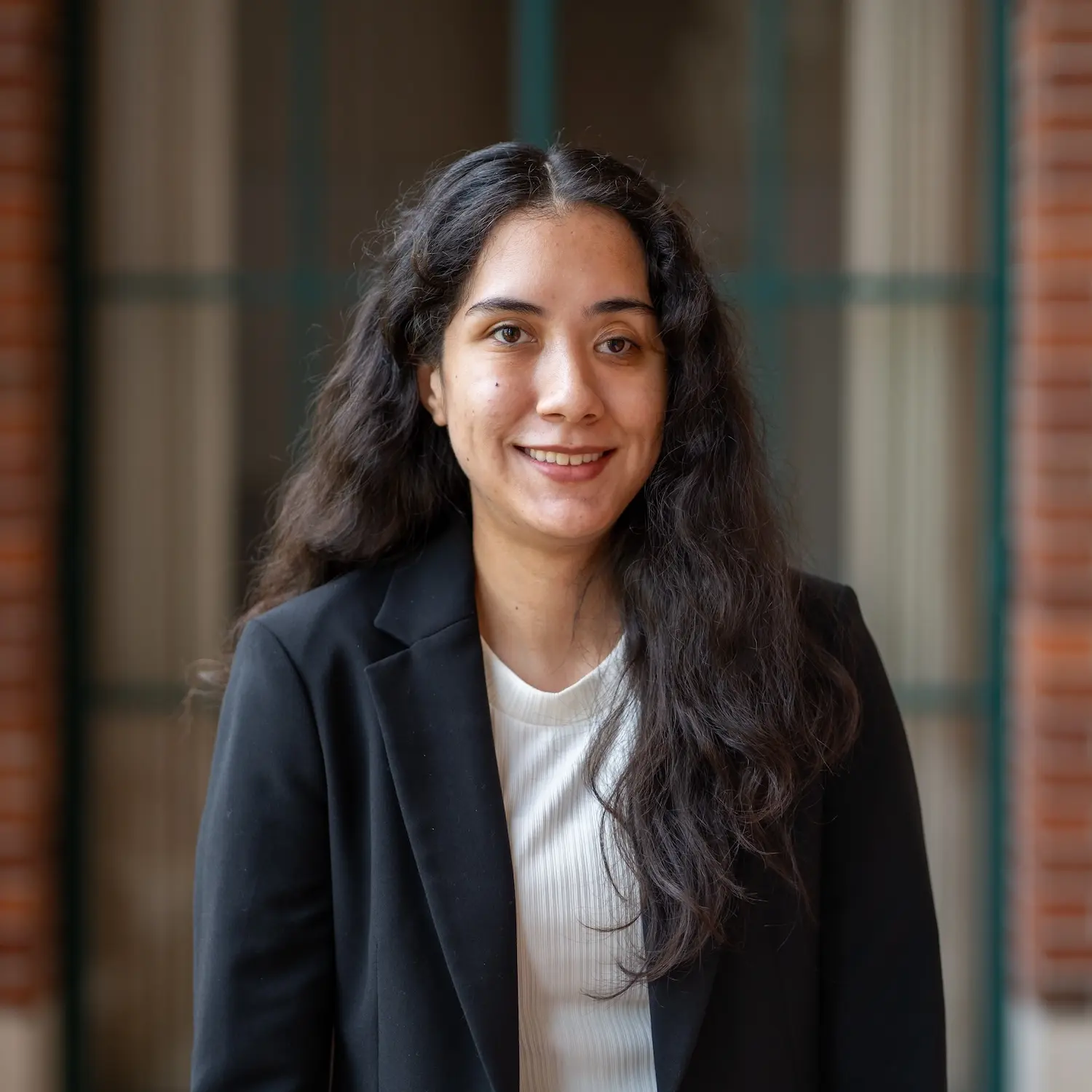
Marisa Krauter
By Taylor Pedersen, CLA Student Writer - December 23, 2025
Marisa Krauter, a fourth-year psychology Ph.D. candidate at the College of Liberal Arts, has spent her academic years probing questions that many shy away from: how society perceives disability, particularly among people of color, and how those perceptions affect mental health and social interaction. Working in Dr. Kathleen Bogart’s Disability and Social Interaction Lab, Krauter’s research explores the nuanced experiences of individuals living at the intersection of multiple minoritized identities.
Growing up in Fresno, California, in a bi-racial Hispanic household, Krauter recalled an early fascination with the mind. “I remember being in elementary school and saying I wanted to be a psychologist,” she recalled. “I thought if you understood how people’s brains worked, you’d understand everything. Even though I don’t think that’s true now, that curiosity stayed with me.”
Her undergraduate studies at San Diego State University initially focused on cognitive psychology, where she explored anxiety. But Krauter quickly realized she wanted her work to have a tangible impact. “The research was so theoretical… I wanted to do something that could actually benefit people.”
That realization led her to Dr. Bogart’s lab at the School of Psychological Science, a hub for research on disability and social interaction. “Kathleen’s research was the closest to what I wanted to do for my career,” Krauter said. “She’s one of the leaders in the field, and it was so easy to talk with her about my interests and goals. She’s an amazing mentor.”
Krauter’s master’s thesis examined how people of color with disabilities cope with discrimination. She found that individuals with visible disabilities often feel excluded from both their racial or ethnic communities and disability communities, creating a sense of not fully belonging anywhere. “People don’t really think of people of color as having disabilities or disabled people as people of color,” she explained. “That mismatch changes how they cope and who they turn to for support.”
Her doctoral research builds on this foundation, focusing on facial differences and the societal biases people with visible differences encounter. Although her dissertation is in the early stages, Krauter has observed patterns of public stigma: staring, intrusive questions, and unequal social treatment. “People with facial differences are remembered, but that visibility comes with stress,” she noted. “There’s ostracism, harassment, and privacy invasions. Strangers often feel entitled to ask about their medical history, which most people wouldn’t experience.”
Krauter’s interest in intersectionality is deeply personal. Growing up with multiple minoritized identities shaped her understanding of how discrimination can be ambiguous and multifaceted. “When someone is discriminating against a person with multiple marginalized identities, it’s sometimes unclear why. Is it their race, their disability, their gender? That ambiguity creates cognitive load and affects coping,” she said.
Despite barriers within psychology, including limited federal funding for intersectional research and skepticism toward scholars studying identities they share, Krauter remains undeterred. “People sometimes try to disenfranchise minoritized researchers from studying minoritized populations,” she said. “But I’ve learned how to navigate those challenges, and I’m not going to let them get in my way.”
Now in her fourth year of the Ph.D. program, Krauter balances research, teaching, mentoring, coursework, and involvement in student organizations. “The most rewarding part is the research; designing studies, analyzing results, and seeing findings that can have real meaning,” she said. “The most challenging part is juggling all the different roles and responsibilities, but it’s doable and worthwhile.”
Looking ahead, Krauter hopes her work will broaden society’s understanding of disability, race, and mental health. “I want people to see disability in combination with other identities, not as a siloed concept,” she said. “I hope my research leads to applied findings that can directly support communities and inform broader conversations about inclusion and social equity.”
For Krauter, psychology isn’t just about understanding the mind; it’s about using that understanding to reshape the social world, ensuring that the experiences of people at the intersections of marginalized identities are recognized, valued, and supported.